

My sister bought a flashy all in one washer dryer combo for her new apartment last year, drawn in by the idea of one machine doing both jobs without a vent or a second appliance taking up space. Eighteen months later she’s back to hauling towels to the laundromat twice a month because the thing takes nearly four hours to finish a single load and leaves everything smelling faintly of lint. She’s not wrong that it looked great in the showroom.
What she didn’t know going in is that combo units have a real reputation problem, and a plain separate washer and dryer would’ve served her better from day one. That’s usually how washer and dryer set shopping goes sideways. People get pulled in by a feature or a form factor without knowing what actually holds up once the machine’s been running for a year.
Why Combo Units Disappoint More Often Than Separate Sets
A washer dryer combo sounds like the smart, space saving choice on paper, one machine, one plug, done. In practice, it’s usually the choice people regret first.
The Real Problem With All in One Washer Dryer Combos
Combo units wash and dry in the same drum, which sounds efficient right up until you realize that single cycle routinely runs three to four hours for a full load. My sister’s unit does exactly that, and she’s mentioned more than once that she just gives up halfway through some evenings and finishes drying things on a rack instead. Repair technicians talk about this a lot too, and the general consensus is that combo machines simply aren’t as dependable as two separate appliances doing one job each.
None of this makes combos useless. If you’re in a tiny apartment with genuinely no room for two machines, a combo might still be the only option that fits. But if there’s any space at all for a stackable pair or a side by side setup, a real washer and a real dryer will almost always outperform a unit trying to do both jobs at once. My sister’s regretting the choice specifically because she had the closet space for a stacked pair and picked the combo anyway, purely because it seemed like the more modern option at the store.
Stackable Versus Side by Side, and What Actually Decides Which Fits
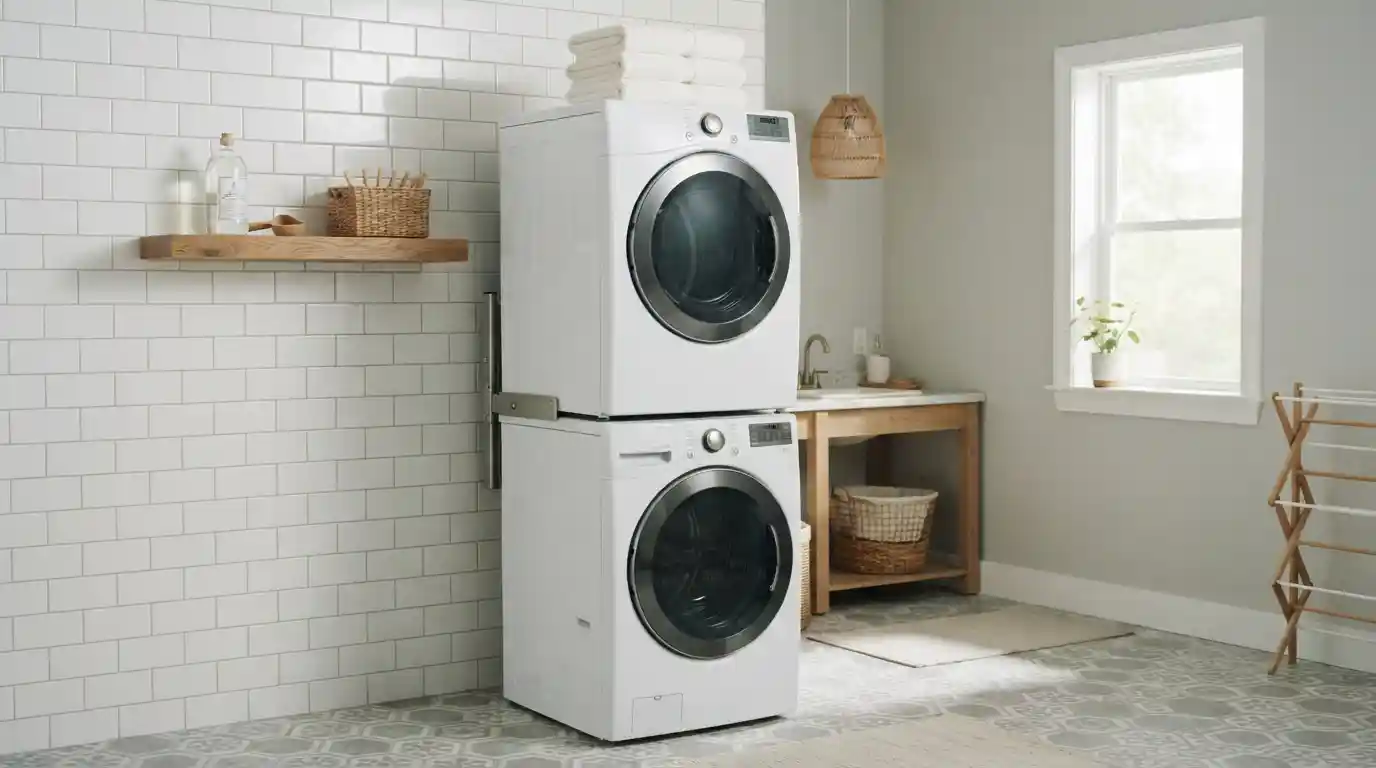
Stackable sets make sense for anyone working with a narrow laundry closet, since putting the dryer directly on top of the washer saves a genuinely significant amount of floor space compared to placing them next to each other. A stacking kit is required for this setup, and it’s not something you want to skip or improvise, since an improperly secured dryer sitting on top of a washer is a real safety issue during the spin cycle. Side by side installation needs more floor space overall, but it does make loading and unloading a little easier since you’re not reaching up or bending down awkwardly to access a stacked dryer.
My cousin has a side by side setup in her garage and specifically chose it because she does a lot of laundry for a big family and didn’t want to be constantly reaching overhead. Ventilation matters here too, since a vented dryer needs proper ducting run to the outside regardless of whether it’s stacked or side by side, and that ducting requirement can actually determine where in a house the laundry setup is even possible. Ventless dryers sidestep that ducting requirement entirely, which opens up stacking in spaces that wouldn’t otherwise support a vented setup, though they do tend to run a bit slower per cycle than a properly vented machine.
Front Load Versus Top Load, and Why the Difference Matters More Than People Think
Beyond the physical layout, the washer’s actual loading style shapes how well it cleans, how much it costs to run, and how loud it gets during a normal week.
What Front Load Washers Actually Do Better
Front load washers tend to dominate performance rankings for a reason, and it’s not just marketing. They’re genuinely gentler on fabric since clothes tumble through water rather than getting agitated by a central post, and that gentleness adds up over years of regular washing. Water and energy efficiency numbers consistently favor front loaders too, since they use less water per cycle while still getting clothes clean, typically somewhere in the twenty to sixty gallon range per load compared to the forty to one hundred gallons a conventional top loader might use.
One underrated benefit of front loaders is how much water they extract during the spin cycle compared to top loaders, which actually shortens dryer time and saves additional energy on the back half of laundry day. Normal wash cycles on most front loaders run somewhere between seventy and one hundred twenty minutes depending on soil level, longer than some top loaders, but the tradeoff in cleaning quality and water savings tends to be worth it for most households. The one real downside worth knowing is that front loaders sit lower to the ground, which can mean more bending unless a pedestal base gets added underneath.
Where Top Load Washers Still Make Sense
Top load washers haven’t disappeared for good reason, and for a lot of households they remain the more practical, comfortable choice day to day. Loading and unloading is simply easier without bending over, which matters more than people expect once you’re doing laundry regularly for a whole family. Traditional agitator models use more water per cycle than front loaders, but high efficiency top load washers have closed that gap significantly in recent years while keeping the easier loading style intact. My cousin picked a high efficiency top loader specifically because she didn’t want to deal with front load gaskets trapping moisture and smell, a maintenance headache she’d dealt with at a previous rental.
Cycle times on top loaders also tend to run shorter than front loaders for a standard wash, which matters on a day when there’s genuinely no time to wait two hours for one load to finish. No lid lock designs have become more common too, letting you add a forgotten sock mid cycle without waiting for the whole machine to unlock and pause properly. For households doing large volumes of laundry regularly, a top loader’s shorter cycle times can genuinely add up to real time saved across a busy week, even if the per load water usage runs a bit higher than a front load equivalent.
Reliability, Brand Choice and What Actually Justifies a Higher Price
Once configuration and loading style are settled, the brand and build quality decisions are what determine whether a set lasts five years or twenty five.
Why Some Brands Consistently Outlast Others
Speed Queen has built a reputation specifically around commercial grade components that outlast most residential competitors by a wide margin, and repair technicians tend to bring the brand up unprompted when reliability comes up in conversation. It’s not flashy. There’s no touchscreen or app connectivity involved, and that’s genuinely part of the appeal for buyers who’ve been burned by a smart feature failing years before the actual motor does. My uncle bought a Speed Queen top load washer specifically because he wanted a machine he wouldn’t have to think about again for two decades, and so far that’s exactly what he’s gotten.
Whirlpool and GE both carry strong reliability reputations too, particularly for buyers wanting straightforward functionality without paying a premium for smart features they may never actually use. Samsung and LG lean harder into smart connectivity and AI driven cycle adjustments, which genuinely appeals to tech comfortable households, though that added complexity does introduce more potential points of failure down the line compared to a simpler mechanical design. None of this means smart features are bad. It just means the reliability tradeoff is worth thinking through honestly before paying extra for a feature that might matter less in daily use than a motor that just keeps running.
Energy Star Certification and What It Actually Saves Long Term
Energy Star certified washers and dryers typically deliver fifteen to thirty percent in real utility savings compared to standard models, and that gap compounds meaningfully over a decade of regular use. Checking the FTC Energy Guide label before buying reveals the actual estimated annual operating cost, and even a difference of a hundred dollars a year adds up to real money over the lifespan of a typical set. Heat pump dryers push efficiency further still, using around half the energy of a standard electric dryer, though the upfront cost runs noticeably higher and the technology remains less common in budget tier machines.
My aunt’s front load set carries Energy Star certification on both the washer and dryer, and she’s noticed a real, measurable difference on her utility bill since making the switch. Water factor ratings matter specifically in areas prone to drought or water restrictions, since a lower gallons per cycle rating directly reduces water use regardless of what the energy side of the equation looks like. It’s worth noting that some genuinely efficient models run longer cycles to achieve those savings, so balancing total cycle time against water and energy use matters just as much as chasing the highest efficiency rating on paper alone.
Conclusion
My sister’s combo unit and my uncle’s two decade old Speed Queen sum up washer and dryer set shopping pretty well. The flashy, space saving option isn’t always the one that holds up, and the plain, reliable choice isn’t always the boring pick it seems like in the showroom. Getting the configuration right for the actual laundry space, choosing front load or top load based on real household habits rather than trend, and weighing brand reliability against smart features that might not matter day to day, is what actually determines whether a set earns its price over the next decade. A little research before buying saves a lot of laundromat trips later.
Frequently Asked Questions
Is a Washer Dryer Combo Reliable Compared to a Separate Set?
Combo units generally have a weaker reliability track record than separate washer and dryer appliances. They also tend to run significantly longer cycles and trap more lint, which can affect drying performance over time compared to a dedicated dryer.
Should I Buy a Stackable or Side by Side Washer and Dryer Set?
Stackable sets save floor space and suit narrower laundry closets, while side by side setups make loading and unloading easier without reaching overhead. The right choice really depends on the available space and how much laundry a household typically handles.
Is Front Load or Top Load Better for a Washer and Dryer Set?
Front load washers generally use less water and are gentler on fabric, while top load washers offer easier loading and often shorter cycle times. Neither option is universally better, since the right pick depends on priorities like water savings versus daily convenience.
Does Buying a Washer and Dryer Set Together Actually Save Money?
Yes, in many cases buying a matched set together costs meaningfully less than purchasing the washer and dryer separately, sometimes by around twenty percent depending on the retailer. Checking bundle pricing before buying individual units is generally worth the extra few minutes.
