
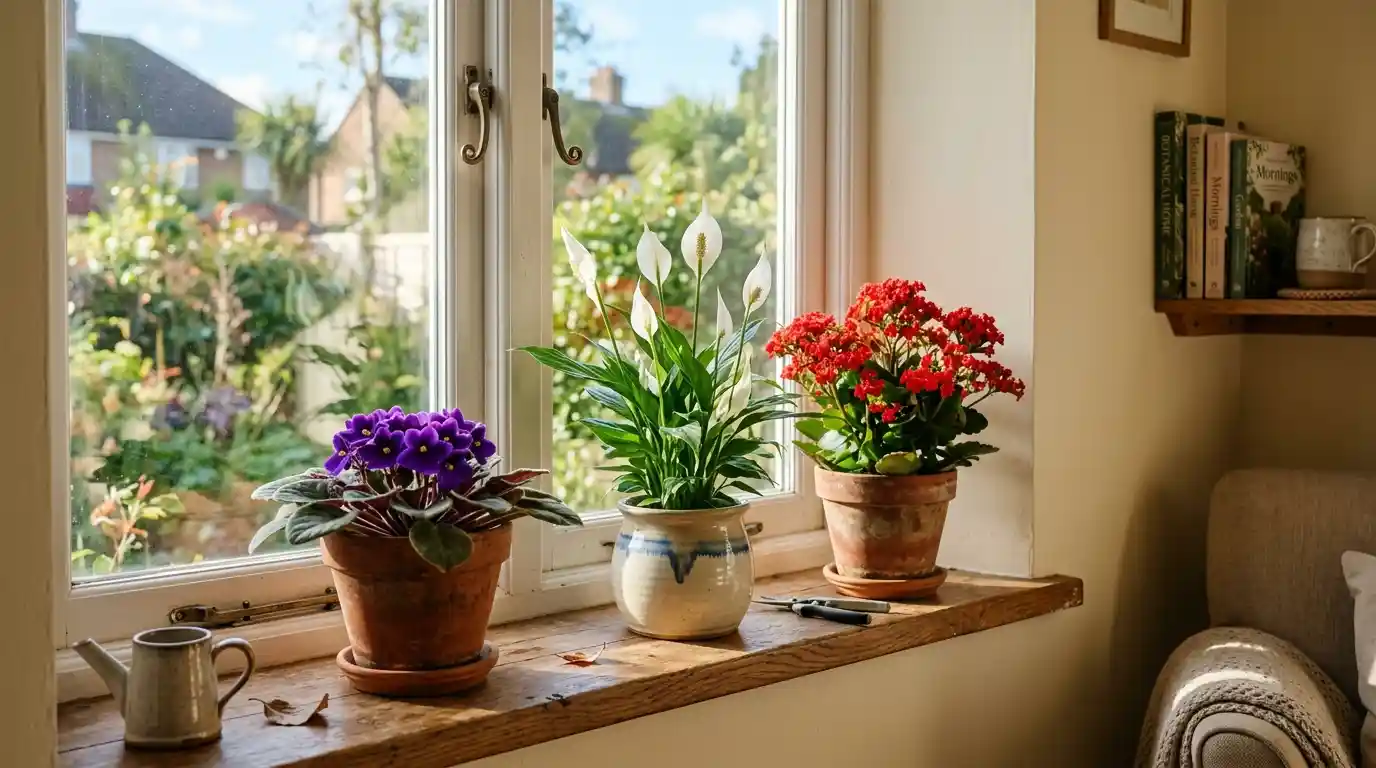

My first African Violet died because I watered it from the top. The leaves got wet, brown spots showed up within three days, and that was that. I did not know about bottom watering then. Now I do, and my current one has been blooming purple and pink continuously for eight months. That single mistake taught me more about indoor flowering plants than any written guide ever did.
So here is what I actually know, after years of killing things and occasionally keeping them alive.
Light is the thing nobody gets right at first
Most of these plants are tropical. They did not evolve under direct harsh window sun. They grew under a canopy where light filters down soft and diffused. East facing and west facing windows give you that. South facing works too. North facing is mostly useless for getting blooms, especially in winter when the sun barely shows up. If your home faces north and you want flowers, get a grow light. No shame in it. Bright indirect light is what almost every blooming houseplant on this list needs. That one fact covers more than half the battle.
Kalanchoe and Calandiva
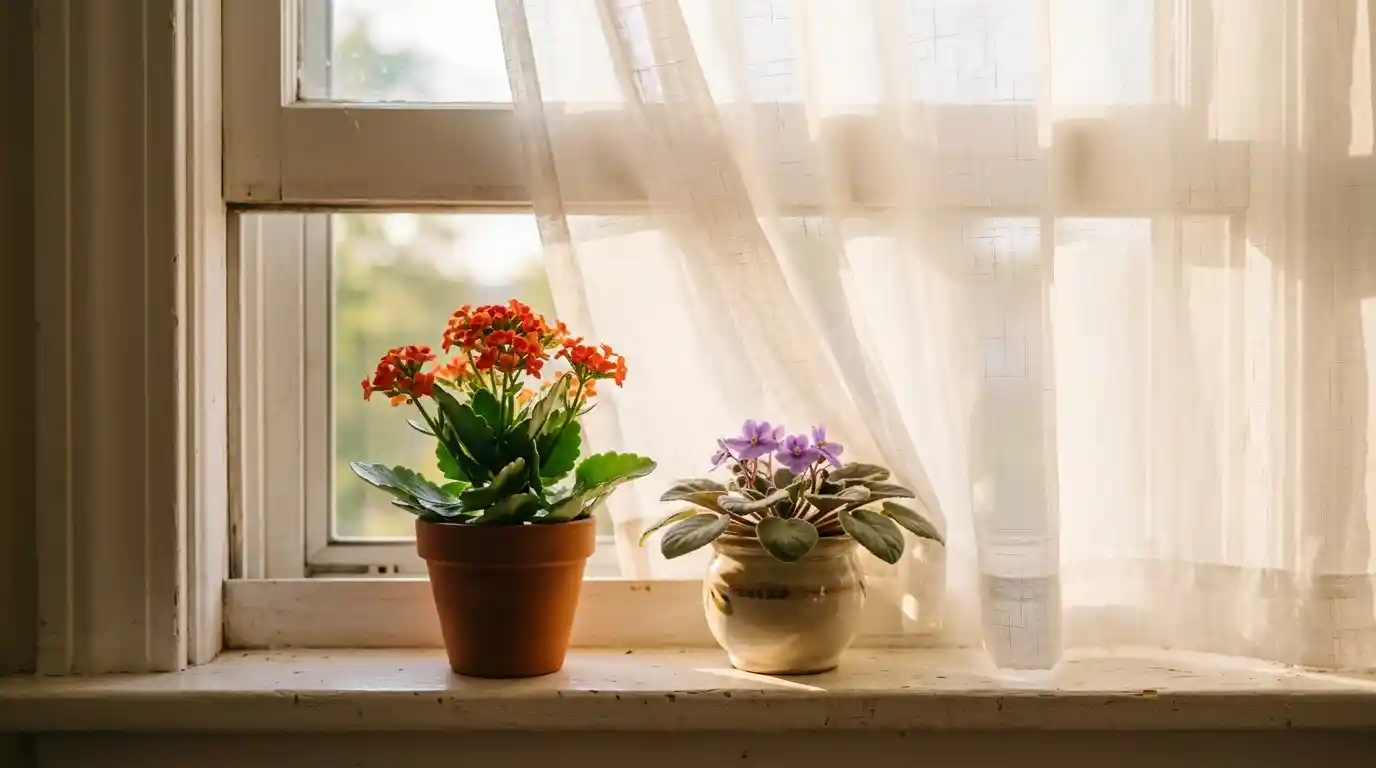
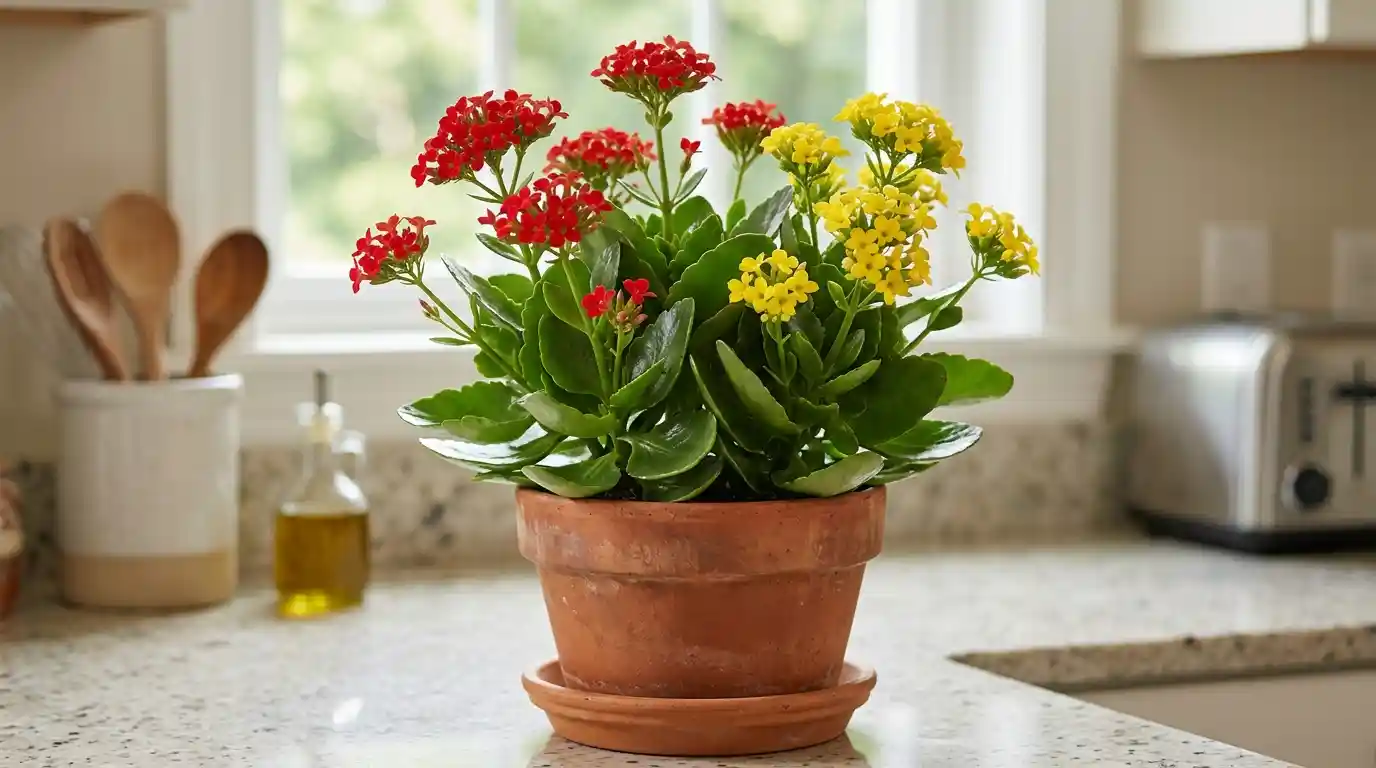
After the violet disaster, I chose Kalanchoe because it is considered to be very difficult to kill. The thick leaves of this succulent store water in them. Once I forgot to water it for 10 days and it didn’t mind. The small clusters of red, yellow, pink and orange flowers persisted for weeks. It prefers moderate temperatures, ranging from 60 to 85 degrees Fahrenheit and prefers bright indirect light. When they started to bloom out I removed the old flower head and allowed them a rest period. It came back.
Calandiva is a cultivar of Kalanchoe that features loftier double flowers and resembles little roses. The flowers stay on for 6-8 weeks and are longer lasting than the typical Kalanchoe varieties. Both are drought tolerant and genuinely forgiving for busy gardeners who forget watering schedules exist.
Peace Lily and Anthurium
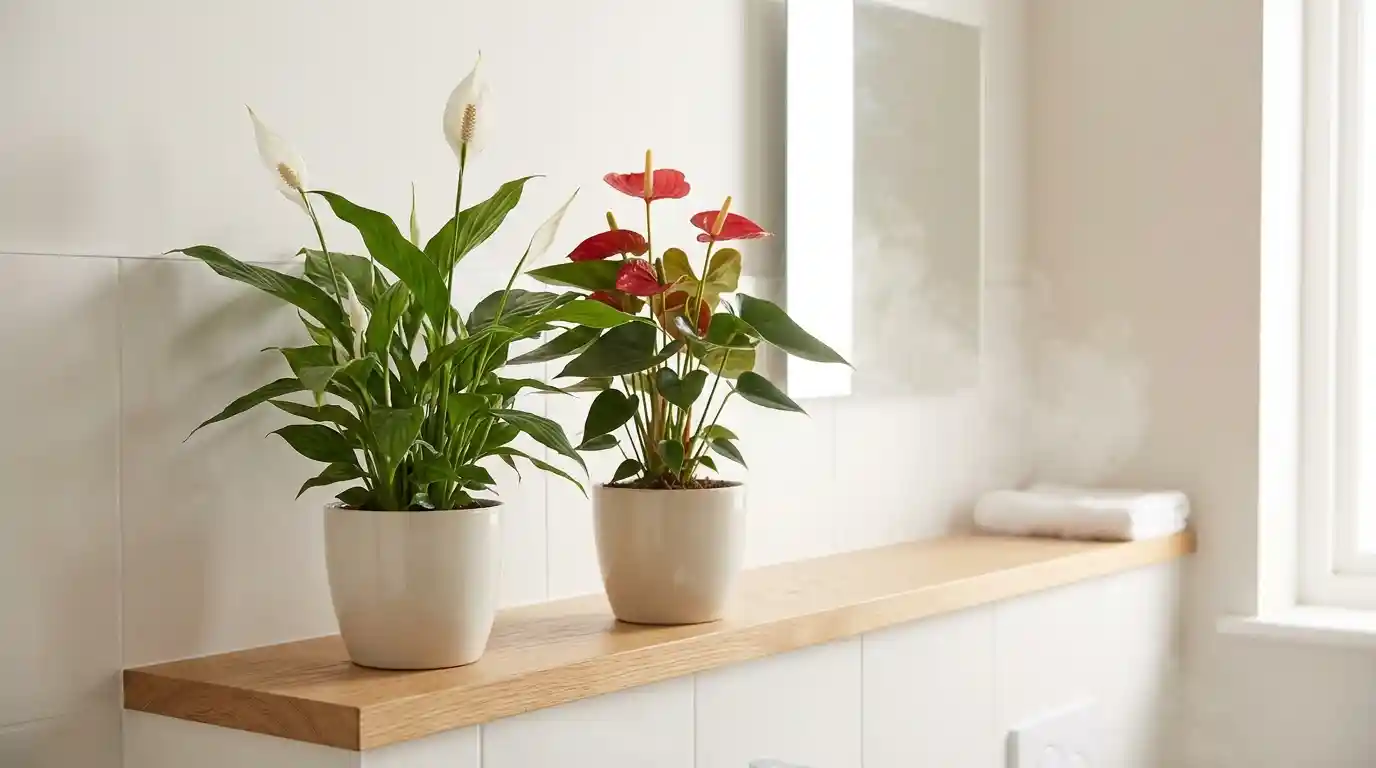
The Peace Lily, or Spathiphyllum, wilts on purpose to tell you it is thirsty. The leaves droop, you water it, it bounces back within hours. The white spathe and spadix flowers are calm and elegant, not flashy. It handles lower light better than almost anything else that blooms Store it at a warm temperature (65-85° F) in a bathroom or by a humidifier if the air in your home is dry. Clean glossy leaves occasionally with dampened cloth to remove dust and keep leaves shiny.
Anthurium was the plant that I was telling myself is too tropically looking until a neighbor gave me one. The shiny heart-shaped foliage and the red and pink blooms are indeed impressive. The flowers are actually leaves, and that’s a peculiar thought that I have more than I should. It thrives with warm temperatures (65-80 degrees), bright indirect light and good drainage. Do not feed to cats or dogs as it is toxic.
Begonias, three ways
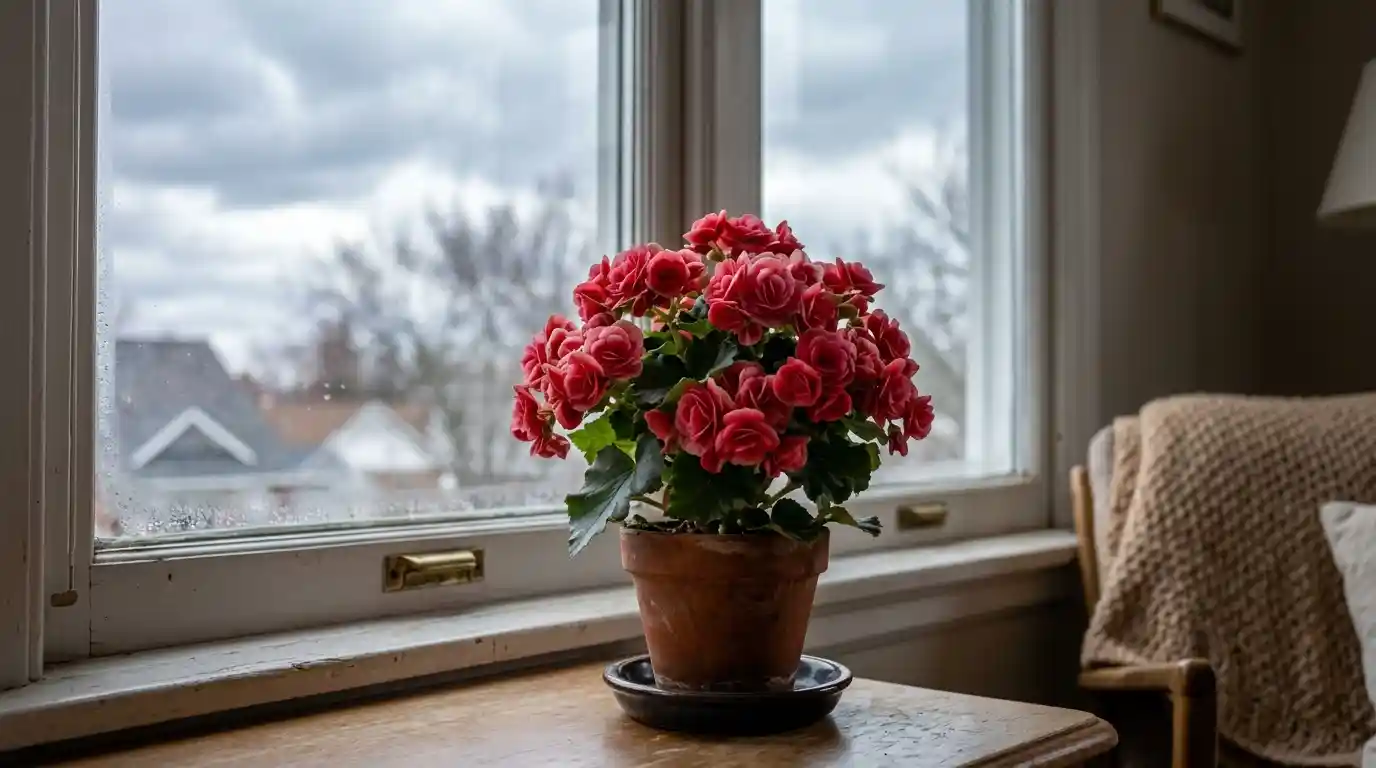
Rieger Begonias are a winter discovery that caught me off guard. Gray, cold days and, then, this little bushy plant with lots of pink and red flowers on its windowsill. They like cooler temperatures of 60-70 degrees. That’s actually the right thing for rooms which don’t get too hot during winter. Soil maintains consistent moisture and is not soggy. The most detrimental error committed with begonias is to keep the soil waterlogged.
Mostly, Rex Begonias are all about their colourful leaves and colourful markings. The flowers are small, pink or white, and occur on several occasions throughout the year. The rounded rosette varieties of Tuberous Begonia, such as the cream to scarlet colors, are suitable for indoor use.They also do fine on the porch during mild weather.
Orchids are not as difficult as people think
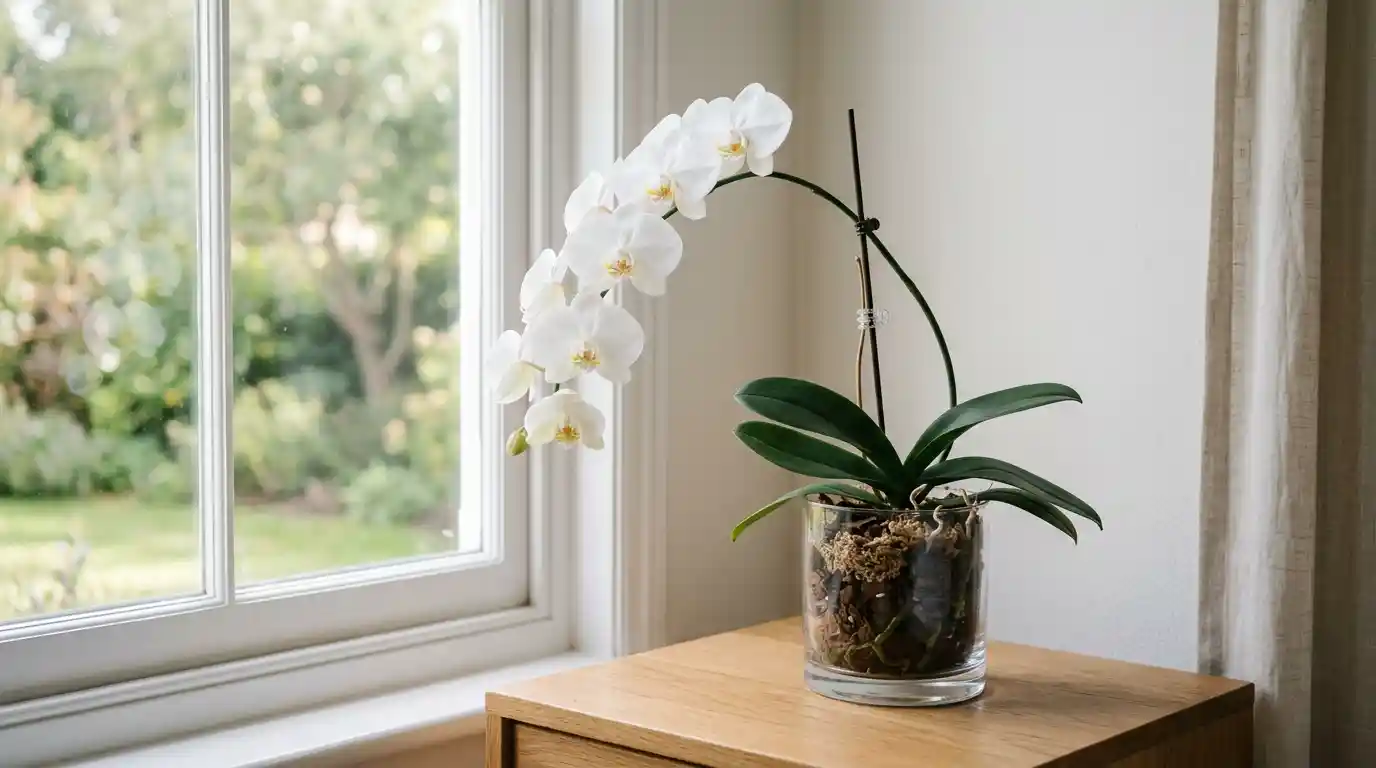
Phalaenopsis orchids want bright indirect light, water once a week that drains completely out of the pot, and then you leave them alone. An east or west facing window works perfectly. The blooms last for months and the plants live for years. I have one that is four years old and still flowering. Never let a Phalaenopsis sit in standing water. That single mistake kills more orchids than anything else. These orchids symbolize refinement, femininity, and admiration, which explains why they appear in every florist shop.
Bromeliads and Hoya
A fun fact about bromeliads is that they are related to pineapples. The ornamental bracts, which most consider to be a flower, retain their colour for an unusually long time. Pink Aechmea Bromeliad is pet friendly and can bloom for up to 6 months. Guzmania Bromeliad is an exciting color variety and requires watering once a week or every other week. Both are indeed low effort plants.
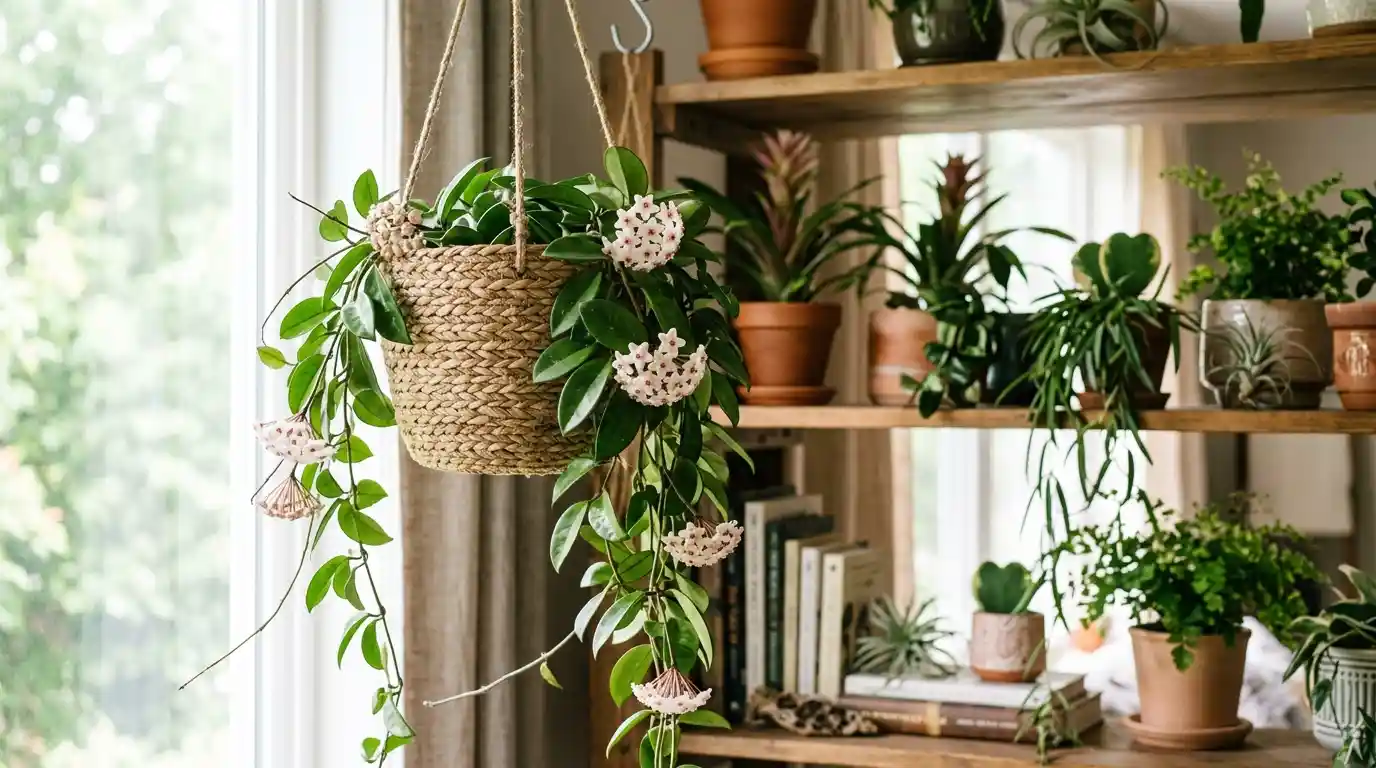
The Wax Plant, Hoya, is a thick leaf plant with sweet smelling star shaped flowers in clusters. The Hoya Albo Carnosa variety is variegated with white leaves with pink accents. It is attractive even when not in flower. It grows trailing vines, which are ideal for hanging baskets or as a plant on shelves. Only water during dry spells if the top several inches of soil are dry.
Cyclamen and Jasmine
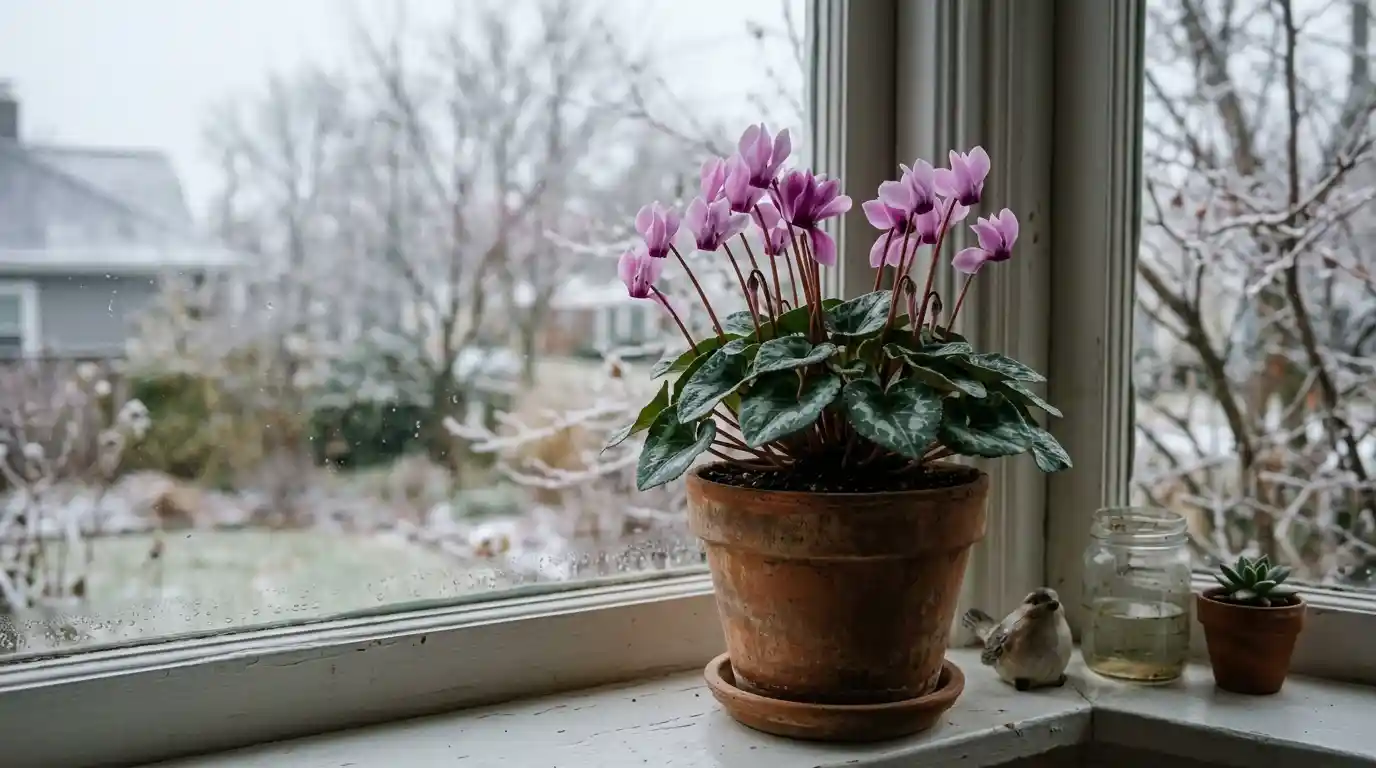
The tiny flower, resembling a butterfly, and the heart-shaped leaves are pink, red, white and purple. They come in the winter; when it’s so drab outside. It requires bright indirect light and a little moist soil, and should be grown at cooler temperatures of about 50 to 65 degrees. Irrigate from the bottom to keep leaves dry. The leaves after blooming turn yellow and the plant appears to be dying. It is not. Place in a cool, dark place, with light reduced, and after 2 months bring back to light. It returns for Season 2.
Jasmine is a fragrant sun loving perennial that people skip for indoor growing and should not. The crisp white flowers against waxy dark green leaves look genuinely lovely. Different species bloom at different times, so year round indoor fragrance is possible with the right selection.
A few more worth knowing
Shamrock plants (Purple Oxalis) are bulbous plants that flower constantly with star-shaped flowers. The color of the foliage changes from green to deep burgundy. They are dormant a couple of times a year and this fooled me the first few years. I’m just now placing them somewhere cool and dark, and it’s just a waiting period until new growth is seen before I bring them on-line again.
Lipstick Plant (Aeschynanthus radicans) is a pet-friendly plant that produces spectacular tubular red flowers from spring to summer. Ixor West Indian jasmine is well adapted to humid conditions such as a sunroom or bathroom. The Euphorbia milii, commonly known as Crown of Thorns, is an eye-catching succulent shrub. It has pink, white, yellow and orange flowers that require a few hours of direct sun each day. Desert Rose also needs 6 hours of direct sunlight and some watering.
Depending on the variety, Holiday Cactus produces flowers in corals, pinks and reds around Thanksgiving, Christmas and Easter. Abutilon (Flowering Maple) blooms with bright, red, yellow, pink and peach colored papery flower flushes close to a south or west facing window. Amaryllis grows not only during the holidays, but other seasons of the year. A relative of the amaryllis, clivia produces long lasting orange or yellow flowers and will tolerate most light conditions. Maintain dryness in the fall, add water in the middle of winter, blooms are in by February or March.
Chrysanthemums, also known as mums, are jewel-toned, blooming perennials which are ideal for fall indoor use. Found in any room, daffodil or Narcissus is a cheerful herald for the spring. Calla Lily, commonly known as Zantedeschia, has an oddly appealing look and thrives best in full or bright sun; Ranunculus, or Buttercup, has sweet romantic flowers and is more of a cooler hardiness zone (8 to 10) flower. The hyacinth has been cultivated for hundreds of years to produce a rich perfume and a very fragrant spring flower. The Campanula Bellflower is a beautiful white flower to accent your table. Giant Bird of Paradise (Strelitzia nicolai) provides majestic white and blue tropical flowers with real drama.
Gloxinia also is in need of some attention. Large, velvety leaves and pink, red and white blooms in late spring/summer. The flowers of Regal Geraniums are bright and their leaves are serrated. They enjoy slightly cooler indoor settings, which most people do not expect.
Feeding and humidity matter more than people admit
Use a potassium rich fertilizer during spring and summer. Potassium supports roots and pushes prolific flowering instead of vegetative leaf growth. Nitrogen rich or all purpose fertilizers are fine for foliage plants, but they will not get you more blooms. Dry coffee grounds added directly to soil act as a slow release natural fertilizer over time. Banana peel powder and finely ground dry eggshells do the same. These are not gardening myths. They work.
Plants placed near each other will help to increase the humidity around them. Both tropical plants Anthurium and Peace Lily prefer humidity over 50%, particularly during dry winter weather. Remove dead and yellow leaves. Remove spent flowers. That energy goes towards new flowers rather than old, dead material.
Miniature Roses require 6 hours of good daily light, consistent moisture and good air circulation. They are a message of love and gratitude and truly represent a good Mother’s Day gift – one that lasts for months rather than days. I prune mine hard every few months and it always comes back fuller.
Indoor Flowering Plants Conclusion:
There is one thing that I learned from raising indoor flowering plants throughout my years. Those plants do not seek perfection; they only need attention. Take care of their lighting, water when necessary, give fertilizer during the growing period, and most of them will flourish beyond your expectations. Some will amaze you, for example, a Cyclamen disappearing for several months and coming back to life without any problem.
Others, such as the Peace Lily and Kalanchoe, will just keep doing their part without causing you too much trouble. I have killed many plants I have kept many alive, and most of the time the reason was simple it was something that I was either missing or exaggerating about. If you are interested in raising indoor flowering plants but never did it before, choose one plant first. Learn about its needs and requirements. Next, acquire another plant. Rooms will be filled one by one, and eventually, you will notice how different the entire atmosphere inside your house has become.
Frequently Asked Questions (FAQ’s)
Kalanchoe, peace lilies, bromeliads, and Phalaenopsis orchids are good beginner options because they tolerate minor care mistakes. Kalanchoe is especially forgiving because its thick leaves store water, so it does not need frequent watering.
Kalanchoe is more drought-tolerant, making it suitable for people who occasionally forget to water. Phalaenopsis orchids also need little attention, but they require excellent drainage and can decline quickly if left in standing water.
Place them in the correct light, remove faded flowers, and use a potassium-rich fertiliser during active growth. Avoid overwatering, because constantly wet soil can damage the roots and reduce flowering.
Most indoor flowering plants perform best in bright, indirect light from an east- or west-facing window. However, some varieties, including Crown of Thorns, Desert Rose, miniature roses, and flowering maple, need several hours of stronger or direct sunlight.
A peace lily is one of the better flowering choices for a room with limited natural light, although brighter conditions usually produce more blooms. For a north-facing room, a grow light may be necessary if flowering is the main goal.

18 thoughts on “Indoor Flowering Plants: What Actually Works and What Does Not”