
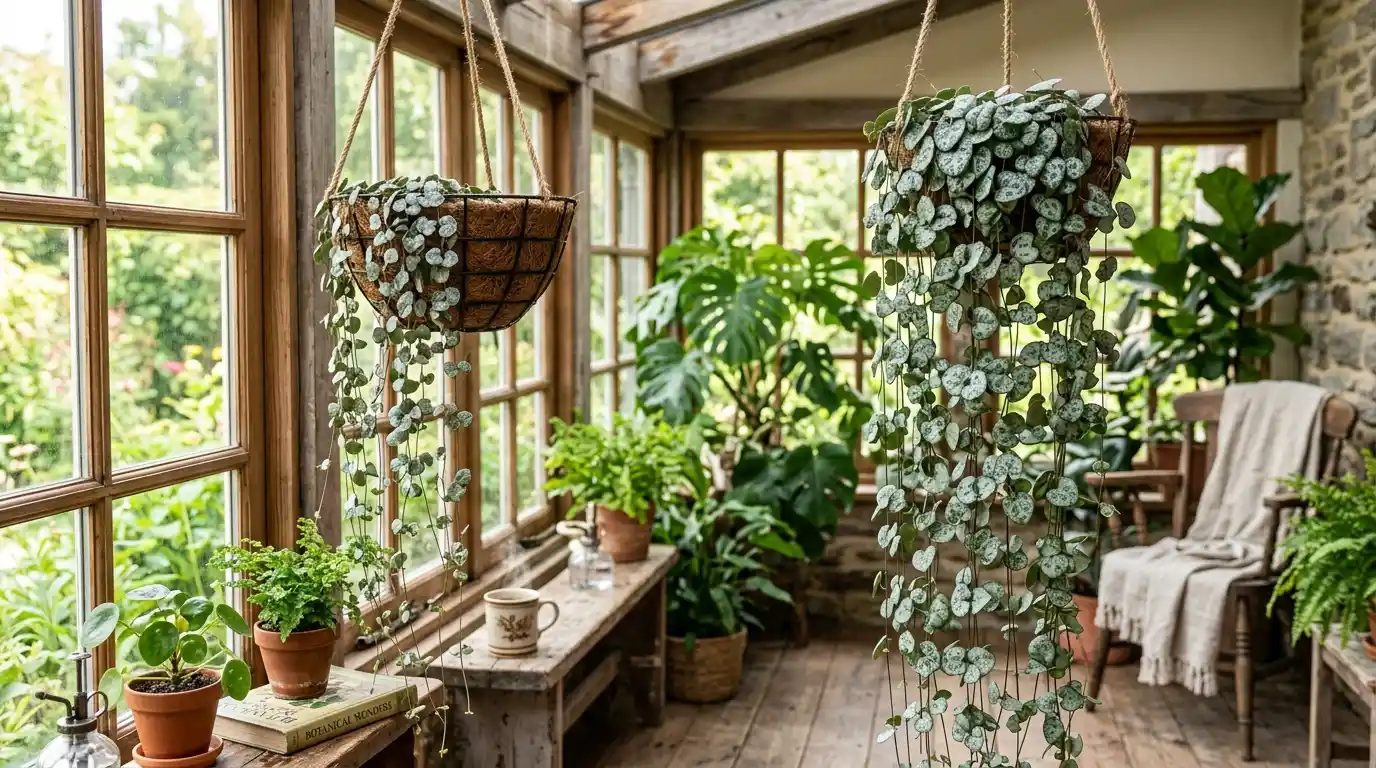

The first time that I witnessed a Ceropegia Rosary Vine hanging down from a high shelf in a sunroom, I assumed it must be a woven string embellished with small ceramic beads and miniature leaflets. However, upon closer examination, I realized that it was a live plant with variegated heart-shaped leaves arranged in nearly perfect intervals on stem like wires that were so thin that they seemed hardly able to bear their weight. This particular quality of elegant beauty combined with surprise is precisely the reason why this beautiful plant became so beloved by plant collectors, bohemians and even by those who prefer the style known as cottagecore.
This succulent plant belonging to the Asclepiadaceae, which now falls within Apocynaceae family, alongside such genera as frangipani and hoya is originally from South Africa, Swaziland, and Zimbabwe, where it is indigenous to dry rocks and forests. It comes as no surprise then that the key to successful cultivation lies in its native habitat preferences.
Understanding What Ceropegia Woodii Actually Is Before You Grow It
Ceropegia woodii is an evergreen tuberous perennial shrub characterized by climbing or creeping shoots whose shape bears an uncanny resemblance to a strand of beads; the name rosary vine is therefore derived from the beads-like structure on the stems that grow between the heart-shaped leaves and gives them an overall appearance similar to a rosary. Ceropegia woodii is also called by other names like string of hearts, sweetheart vine, chain of hearts, and Chinese lantern vine, with the latter name derived from the shape of its lantern like flowers during summertime.
Rosary Vine Succulent
In its natural habitat, the rosary vine succulent grows up to around 4 inches tall, but it can spread up to 12 feet wide. As a rosary vine indoor plant, the trailing vine usually grows 2 to 3 feet long, but it could grow up to 10 feet with enough space and proper lighting over time. The variegated heart-shaped leaves emerge alternately at about 3 inches apart from one another or at around 7.5 cm apart along the trailing stem of this succulent vine, with each leaf measuring about 1 inch or 2.5 cm in length. The deeply-colored variegated leaves feature a delicate silver design on the top side, whereas their color underneath turns into purple based on how much exposure they get to sunlight.
Tubular Flower Forms
The tubular flower forms that the plant produces have a unique and interesting shape, being about 1 inch or 2 cm in length, light magenta in color with dark purple tips, and almost no smell at all. They are described as looking like vases with a bulbous bottom and a narrower top section. Or, the flowers are also said to resemble tiny enclosed beads or little Chinese lanterns that are brownish-pink in color with long thin openings. The flowers will appear most reliably in the summer and fall seasons after which time the plant goes into dormancy until the following spring. It is from the bead-like tubercles that appear on the stems that the plant gets its name.
Light Requirements: The Single Biggest Factor in Rosary Vine Success or Failure
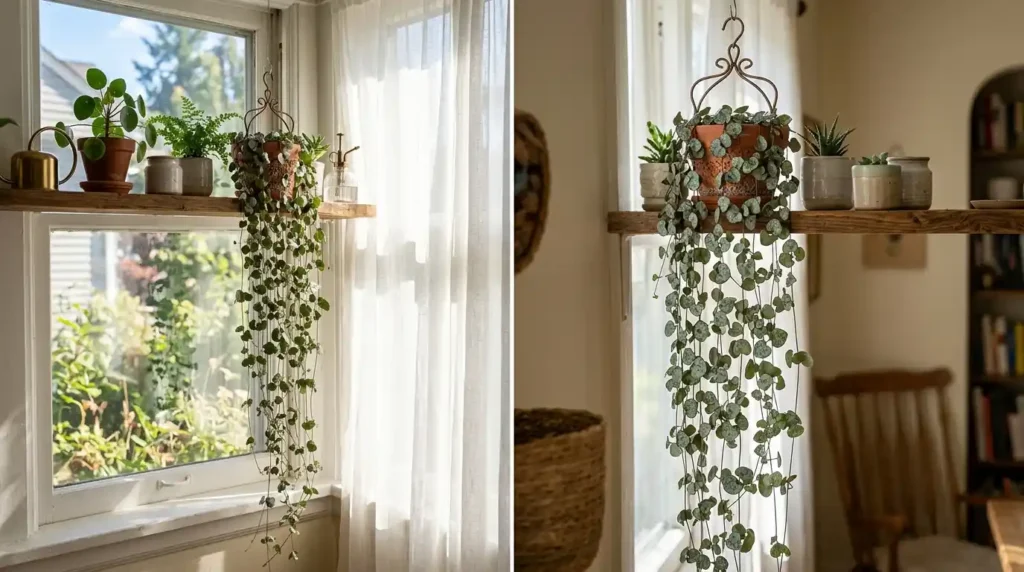
Ceropegia woodii lighting needs are where many beginning gardeners tend to make mistakes and where the difference between a flourishing, lush vine and an underwhelming leggy plant lies. Six to eight hours of bright indirect light each day should be the aim. The perfect morning lighting conditions can be provided by an eastern facing window, while positioning the plant 3 to 5 feet away from a southern or western facing window with diffused light creates the perfect lighting conditions that the plant experiences in nature.
South Facing Windows
South facing windows are ideal, but then again it is essential that the direct harsh sunlight in the afternoon be filtered by a sheer curtain. This type of filtered sunlight is the exact type that ceropegia woodii receives when planted among rocks and shrubs in Zimbabwe. Outdoor cultivation of rosary vine is possible in USDA zones 10 and above. This is due to the fact that winter temperatures here are warm enough for its continuous growth. For all those below this USDA zone, which is most of Europe, Canada, the UK, and most of the US, indoor gardening of the rosary vine plant is necessary.
Inadequate Lighting
Inadequate lighting will show itself in a particular way: large gaps between leaves on the stems, leggy growth, and stunted growth. If the gaps between leaves along the vines of your rosary vine are very large, it means you need to give it a brighter spot, rather than watering and fertilizing it. On the other hand, scorched leaves with pale brown tips signify too much direct sun.
Watering, Soil and the Mistakes That Kill This Plant Fastest
Watering
In terms of watering the rosary vine, there are just two rules water when the soil gets totally dried up and avoid keeping the soil wet. In case the climate in your house is warm enough and there is some circulation of air in your place, watering once or twice a week during summer and spring seasons will be enough. In winter, the plant will rest; thus, it is important to cut down watering once in two or three weeks or when the soil becomes entirely dry and the vines start looking dry and not plump.
Soil
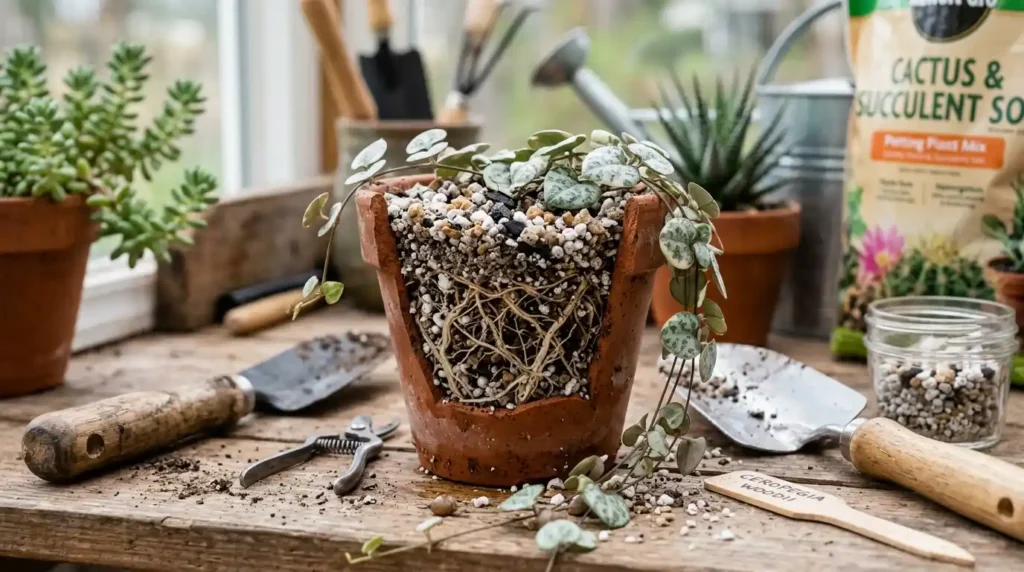
In most cases, ceropegia woodii dies because of root rot caused by excess moisture in the soil and lack of proper draining. Common signs of overwatering include soft, mushy stems near the soil line or around the plant’s tuber, yellow leaves that drop before becoming crispy, and a foul or sour smell coming from the soil. The drainage holes in pots are a must for this plant because of its surface tubers growing within 2 inches of the soil.
Soil Mixture
The soil mixture for Rosary vine should be gravelly, drain very rapidly, and be full of oxygen. This type of soil will provide the required drainage properties that have developed in the ceropegia woodii plant. A number of experienced gardeners use the succulent or cactus soil mixture right away, adding sometimes extra perlite to facilitate faster draining of the water. It is important to consider the size of the chosen pot: if it is too big, the soil will retain too much water in its outer layer which cannot be used by the plant; this condition poses similar risks as excessive watering.
Rosary vine fertilizer advice: feed the plant during active growth from April till October once a month using the diluted liquid fertilizer applied at half strength. Do not apply any fertilizers during November through February, as during this time the plant needs to rest.
Propagating Ceropegia Rosary Vine: The Three Methods That Actually Work
Propagating Ceropegia woodii is perhaps the most satisfying part of cultivating this plant due to how easy it is and how fast success can be achieved regardless of which material used. The best time for propagating is spring to early autumn, though late summer stem cuttings also work well.
Stem Tip Cutting Propagation
The most common approach used for stem tip cutting propagation is taking a cut stem piece from about 3 to 4 inches, removing the bottom leaves to create a node that can be inserted into moist soil. Bright indirect sunlight is preferable over direct sunlight, since direct sun will burn off newly formed roots and growing stems. Water sparingly until the cutting develops roots, which you can confirm when a gentle tug meets slight resistance.
Propagation Through Water
Propagation through water is the most enjoyable method for string of hearts, since root formation can actually be observed during this procedure. Stem cuttings are placed in a container with fresh water, where nodes remain below water level while leaves are above it. Water needs to be changed regularly, every few days or so, to avoid bacteria formation, and planted in soil after 1-2 cm of roots appear.
Tuber Propagation
Tuber propagation is undoubtedly the most unusual technique and involves the aerial tubers; the small, beadlike tubercles that develop along the stems between leaves. All one has to do is pluck a tubercle off a stem and place it directly onto the soil’s surface while ensuring it is moist enough for growth and has good drainage capability but isn’t buried beneath the soil surface. Eventually, it will root and grow into a new plant without any further effort. Using multiple tubercles at once will yield a denser plant within a few days than using a cutting alone. It is also easier since there is no need to sacrifice any stems from the parent plant.
Soil Propagation
The soil propagation technique involving putting back the stem cuttings into the original pot will yield the quickest results when filling out an undergrown ceropegia rosary vine cut the long trailing stems back and insert the tips into the same pot, and soon, both plants will merge together.
Display, Seasonal Care and the Positions That Show This Plant at Its Best
Hanging basket display of the rosary vine is the traditional and most successful method of showing off the trailing characteristics of the heart-studded vines by having the plant hanging so the heart-studded vines can trail down without any restrictions. Displaying on a pedestal in the entrance hallway or passage is a great choice for short vines as it gives room for them to trail without touching anything. High shelf display allows vines to trail down over the edge without any direction. Window display near the eastern window ensures bright marbling of pink, white, and green leaves.
Rosary Vine Bathroom Placement In The Garden
The rosary vine bathroom placement in the garden can be considered suitable, even though some indoor plant growing manuals state that humidity loving plants should be placed in the bathroom. This is because this plant enjoys normal household humidity rather than very humid air, which is typical for a bathroom atmosphere. However, kitchens and sunrooms usually provide much better illumination and retain the warmth that this plant requires. Conservatory placement is recommended The conditions of conservatories, such as warmth and good illumination, are closer to the growing environment of the natural habitat of the plant.
Rosary Vine Winter Care
Rosary vine winter care involves relocation to a cool place without frosts (maximum temperature being around 65 degrees Fahrenheit) during the entire winter season (from November until early spring) and decreasing the amount of watering. The coolness of the place in winter is very important, since it allows the plant to enjoy its dormancy period needed for flower production in summer. Lack of this period in winter due to overheating and permanent heating in winter leads to poor flowering in summer.
Problems With Pests
Problems with pests are rare on plants in good health. They are usually due to mealybugs, which hide in the intersection between the leaf and the stem where their white wax coating matches the leaf’s silver coloring. In case spider mites appear, it means that the plant has been stressed by hot weather. Sometimes, aphids may attack the new growth. When fungus gnats start appearing, it means the soil is too moist, so watering should be reduced. All pests can be dealt with using standard houseplant pesticides. Moreover, they do not settle easily on plants when they are cultivated correctly.
Pruning Rosary Vine
Pruning rosary vine is simple since there are no specific rules. One can cut back leggy branches anytime and without damaging the plant. It is easy for the plant to develop new growth, so one can use cuttings in propagation immediately. An overgrown plant will look much better if pruned. Moreover, cuttings can be put back into the same pot where the plant grows. This way of rejuvenation is useful both for older plants that have been in a Victorian era house for decades and for those brought home recently from Instagram.
Conclusion
The rosary vine gives back in proportion to how well it is treated: ample light, careful watering, good drainage, and a cool winter period which prepares it for summer blooming. While it doesn’t require any special pampering, if given basic care, this plant will repay its owner by offering lush and brightly colored leaves, as well as regular blooming and cascading growth that makes it the most interesting trailing plant among those used indoors. You can dangle it from hooks mounted on the ceiling, allow it to cascade down a desk or table, or even display it on a pedestal in the entrance to your home in each case, you will get a plant which is definitely worth more appreciation than the time you spent growing it.
Frequently Asked Questions (FAQ’s)
Ceropegia Rosary Vine is a trailing succulent plant recognised for its heart-shaped leaves and bead-like stems. It is native to parts of South Africa and grows naturally in dry rocky environments.
A Ceropegia Rosary Vine grows best with around six to eight hours of bright indirect light each day. Low light can cause stretched stems and large gaps between leaves, while harsh direct sunlight may damage the foliage.
Water the plant only when the soil has completely dried out, as excess moisture can quickly lead to root rot. During active growth, it may need watering more often, while winter dormancy requires much less water.
The easiest propagation methods include stem cuttings, water propagation, and using aerial tubers that grow along the vines. Stem cuttings, when placed under suitable conditions, can develop roots and form new plants relatively quickly.
Hanging baskets, high shelves, and pedestal displays are ideal because they allow the trailing vines to cascade naturally. Bright spots such as near an east-facing window help maintain the plant’s attractive leaf patterns and healthy growth.

1 thought on “Ceropegia Rosary Vine: The Complete Care and Growing Guide for a Plant That Earns Its Place in Every Room”