
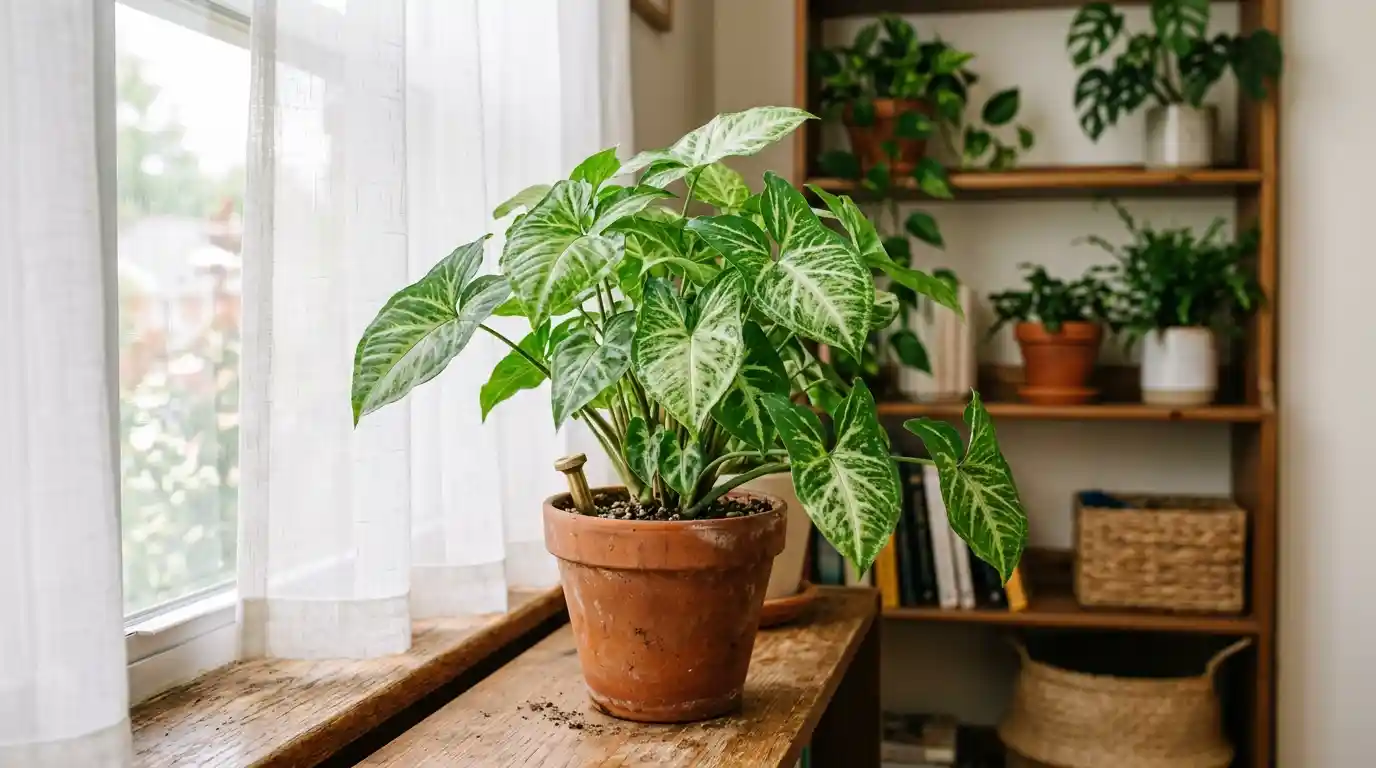

Syngonium better known as arrowhead vine or arrowhead plant falls within the family Araceae, which consists of philodendrons and pothos. A native of tropical rainforests of Central and South America, this vine grows in the wild through subtropical forests and thickets either as a ground cover or as an evergreen climber. As an indoor plant, however, Syngonium podophyllum is the variety that you will find most commonly grown in small pots, hanging baskets, and climbing planters.
The really fascinating thing about it is its foliage juvenile leaves grow as arrows while adult leaves transform themselves from arrows into lobed and dissected forms with five to eleven leaflets. Every time I see this transformation on my very own Syngonium vines, I am fascinated anew with this process.
The varieties are where things get fun. White Butterfly gives you creamy, soft green and white leaves. Neon Robusta leans into rosy pink tones that look almost painted on. Albo Variegatum creates vibrant accents of white variegation on dark green. Black Velvet, another name for Syngonium wendlandii, has dark green foliage with silvery veins going through the leaves; it’s that sort of plant you cannot help stopping to look at. Dazzle Color is a unique variety with colorful spots of pink, cream, and green, changing according to your lighting environment.
Bold Allusion, Cream Allusion, Exotic Allusion, Pink Splash, Gold Allusion, Snow White, Strawberry Cream, Mini Pixi, Pixie, Trileaf Wonder, Arrow, Milk Confetti, Mottled there’s no shortage of options, and each one has its own leaf color, growth habit, and light preference worth understanding before you buy.
Light, Location, and What Goes Wrong
Most Syngonium varieties do best in bright indirect light near an east-facing or west-facing window. Direct sun and intense sunrays burn and bleach the delicate leaves quickly, especially on variegated colorways. Green-leaved varieties handle lower light better since they carry more chlorophyll for photosynthesis, but colored, patterned, or variegated types are light-sensitive —put them somewhere dim and the variegation fades, the colors go dull, and the growth becomes leggier than you’d want.
North facing windows are fine for full greens although they grow slower. In case your plant tends to lean to one side because of light searching, move the plant to a more bright place or turn it to maintain uniform leaves and make sure that it remains standing straight. Fluorescent lamps are useful when there is not enough sunlight, and I have personally used an LED clip lamp on my white butterfly plant.
Soil, Potting, and Getting the Roots Right
Syngonium demands loose potting medium which should provide adequate drainage of water; thus, it requires soil medium with the inclusion of peat moss, perlite, and coco peat, or otherwise a potting soil medium with crushed expanded clay and pine bark in a ratio of 30 percent. The soil medium required should provide slightly acidic pH value between 5.5 and 6.5 and also be highly permeable to avoid root waterlogging. To facilitate proper drainage, it is necessary to have a layer of crushed clay, stones, or expanded clay at the base of the pot.
The container is an essential aspect that many people underestimate; the plant does not require a big pot since large pots hold excess water that the roots will not absorb and hence cause root rot. Every two or three years in spring, you need to repot your plant in a larger pot. Terra-cotta or clay vessels manage moisture better than plastic, which I prefer for any Syngonium that I know I’ll water generously.
Watering — the Part Most People Get Wrong
It would be best to wait until the top inch of the soil has dried up before irrigating your Syngonium either manually by checking through the soil’s surface or through the use of a moisture meter for the same purpose. Watering causes root rot because of its effect on the plants, leading to soft and rotten stems at the base of the plant, especially the roots, while the soil becomes foul smelling. The best way to water your Syngonium is once a week, especially during the spring and summer seasons.
During winter, the growth of Syngonio. Water with room temperature and free of lime to avoid shocking the root system. The water should be allowed to pass freely throughout the root ball and drained from the saucer to prevent soggy soil and waterlogging. When the plant’s soil becomes bone dry and starts wilting, soak it with plenty of water; eventually, the soil will regain moisture and restore the plant’s vigor.
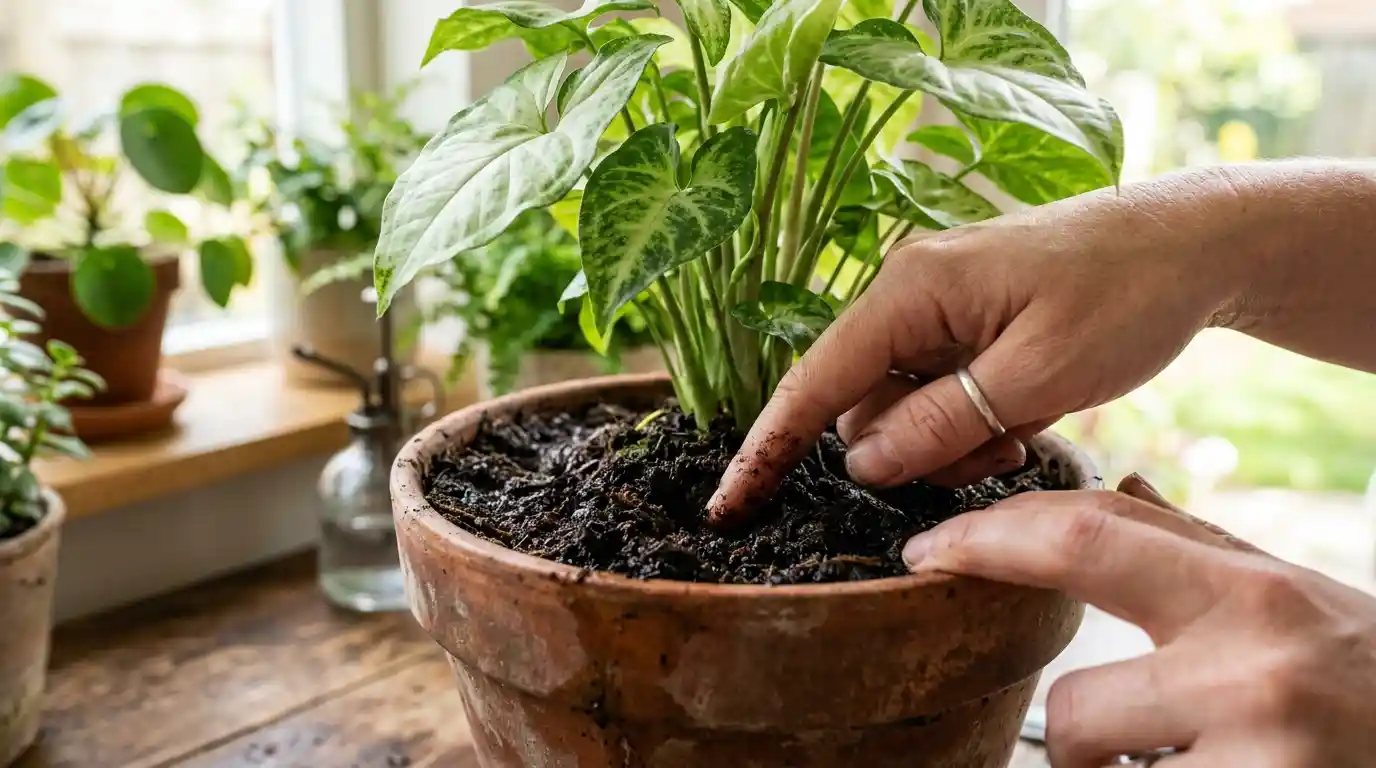
Feeding, Temperature, and Humidity
For monthly fertilizing with a liquid balanced fertilizer, using half the recommended concentration, will be sufficient to last throughout the growing period from March until September. For places with less light and slower growth, one time in two months should be sufficient, as the absorption process is not as rapid. Avoid fertilizing during winter months. Fertilizers that contain microorganisms, are liquid and specifically for ornamental green plants, and do not have any animal-based components are more effective than common fertilizers used at regular concentrations.
Regarding temperature needs, warm conditions ranging between 18 and 26°C should be ideal for Syngonium, with 13°C being the lowest temperature that may cause dormancy. It would be suitable to place this plant in open air during the summer season, especially in balconies and terraces under the roof, if they are taken back indoors when the temperature drops below 15°C. The relative humidity of the atmosphere should be maintained within the range of 50-70%, below which if humidity becomes less than 40%, then leaves turn brown.
Pruning, Support, and Shaping
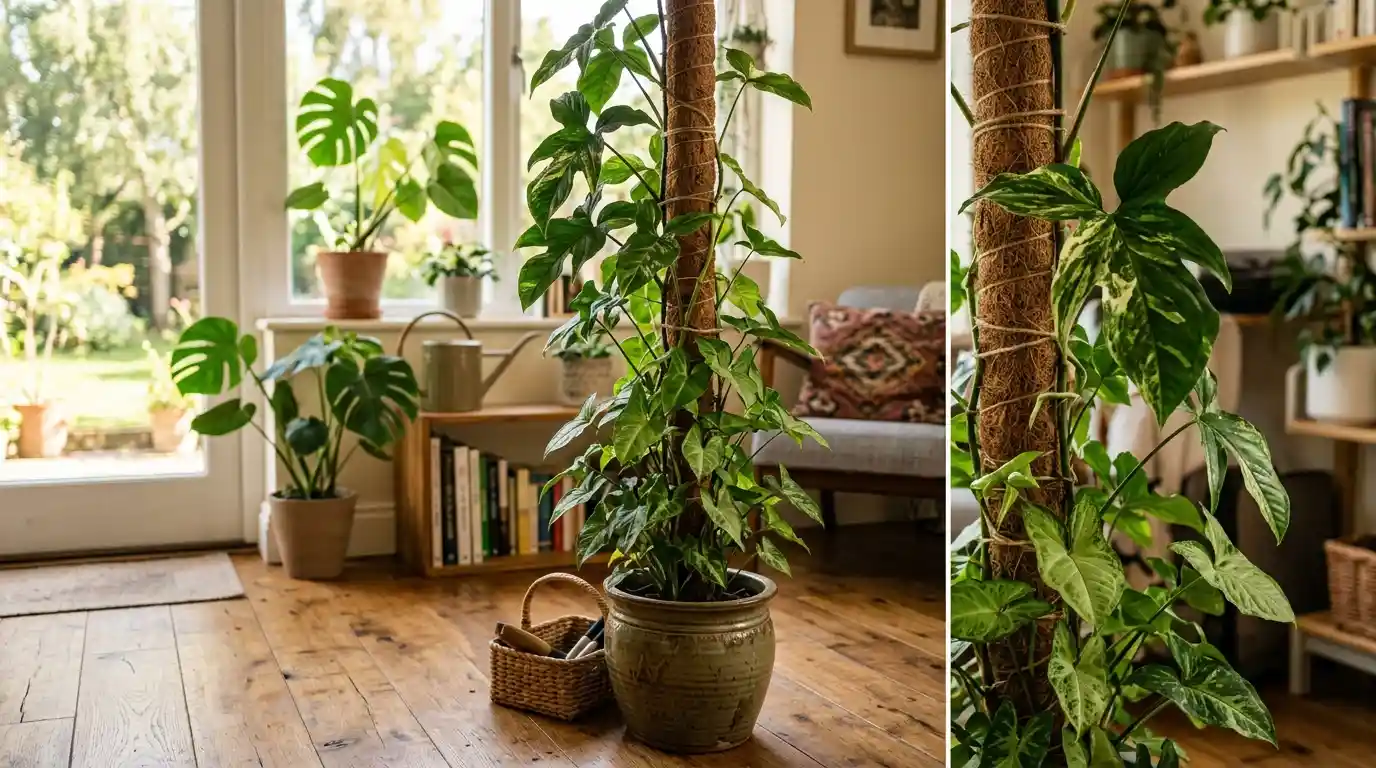
Because syngoniums are climber plants by nature, and vine plants tend to grow quickly, if left unpruned, your syngonium will not be bushy but rather leggy. Simply prune at the leaf nodes using a sharp blade once or twice yearly, and you will soon have branches that will be thick and bushy. Wearing protective gloves will save you from irritation on your skin due to the plant’s toxic sap.
Rooted shoots as well as aerial roots can be planted right away into a pot containing soil and water. In cases where they are grown as climbing plants, a moss pole, trellis, or stakes can be employed for encouraging mature leaves. Heavy pruning during early spring is advisable since they tend to recover very fast, and their stems can be used for growing other plants.
Propagation: Easier Than It Looks
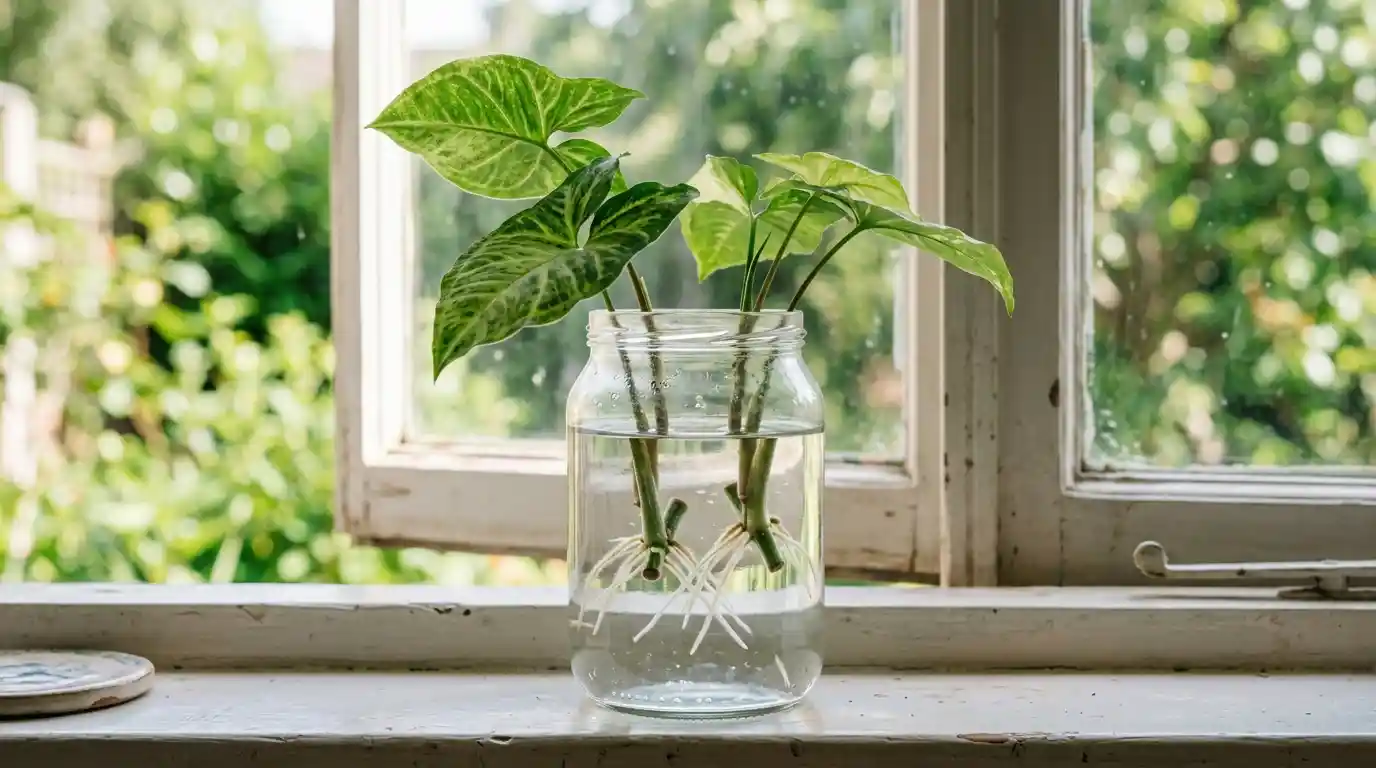
Cuttings from stem are the easiest way to propagate plants – simply select a strong stem of 10-15 cm in length having one leaf node, cut it using sterilized scissors and place the cutting in a glass of fresh water. The plant needs regular change of water, topping up once in a month and after a few weeks, roots will appear. The next stage is to move the growing plant in soil with good drainage and poor nutritional composition to protect the roots from burning.
Another technique used is soil propagation – dig a small pit in the soil mix, put a plant there and grow it under the conditions of partial shade, temperature of 22-25 °C. Root division is the process of dividing a part of the plant roots together with its stem into separate pots. Air layering is a technique that requires time and patience – make an incision in a healthy stem, enclose it with a wet sphagnum moss, put on plastic film and after 4-8 weeks cut the rooted part and transfer it into another container.
Pests, Problems, and Toxicity
The syngonium is fairly disease-resistant indoors, but suffers from infestation by spider mites, mealy bugs, aphids, and scale insects due to poor growth conditions. Isolate the plants and use neem oil or insecticidal soap to eliminate the pest infestations. Fungi cause powdery mildew in the form of white patches, while brown leaf spots caused by fungi spread. Overwatering and bad drainage causes yellow leaves; check first for proper drainage. Pale yellow leaves indicate overexposure to sunlight.
The entire Syngonium plant is poisonous for animals, horses, pets, and kids due to its juice being highly corrosive in nature due to the presence of crystals of calcium oxalate in them. These plants irritate and burn the mouth, resulting in swelling, saliva production, vomiting, and diarrhea. In case they come in contact with eyes, they cause intense pain and tears.
Conclusion
A syngonium doesn’t have a big show to offer. There are no spectacular flowers, just a steady and lush growth that will fill your space without making too many demands. I’ve had a few varieties of syngoniums in my life, and I learned the most about this plant from those I nearly killed. You give it proper water, decent indirect light, and then watch how quickly and effortlessly it becomes a part of the space around it. There is nothing perfect in this world, and a syngonium certainly isn’t. But for all the effort you put into growing it, there’s a lot to receive in return.
Frequently Asked Questions (FAQ’s)
Syngonium, also called the arrowhead plant or arrowhead vine, is a tropical climbing plant with decorative foliage. Young leaves are arrow-shaped, while mature leaves may develop several distinct lobes.
Green Syngonium varieties tolerate lower light because their leaves contain more chlorophyll. Variegated and colourful types need brighter indirect light to keep their markings, but strong direct sun may bleach or burn them.
Water when the top inch of soil feels dry, rather than following a strict weekly schedule. Let excess water drain completely, as constantly wet soil can cause yellow leaves, soft stems, and root rot.
Stem cuttings are usually the easiest option for beginners. Cut below a healthy node, place the cutting in fresh water, and move it to well-draining soil once a strong root system has formed.
Repot it in spring every two or three years, moving it into a container only slightly larger than the current one. Pruning in early spring is also a good choice when the vines become leggy, or you want the plant to grow fuller.

2 thoughts on “Syngonium Care Guide: Everything You Need to Know”