
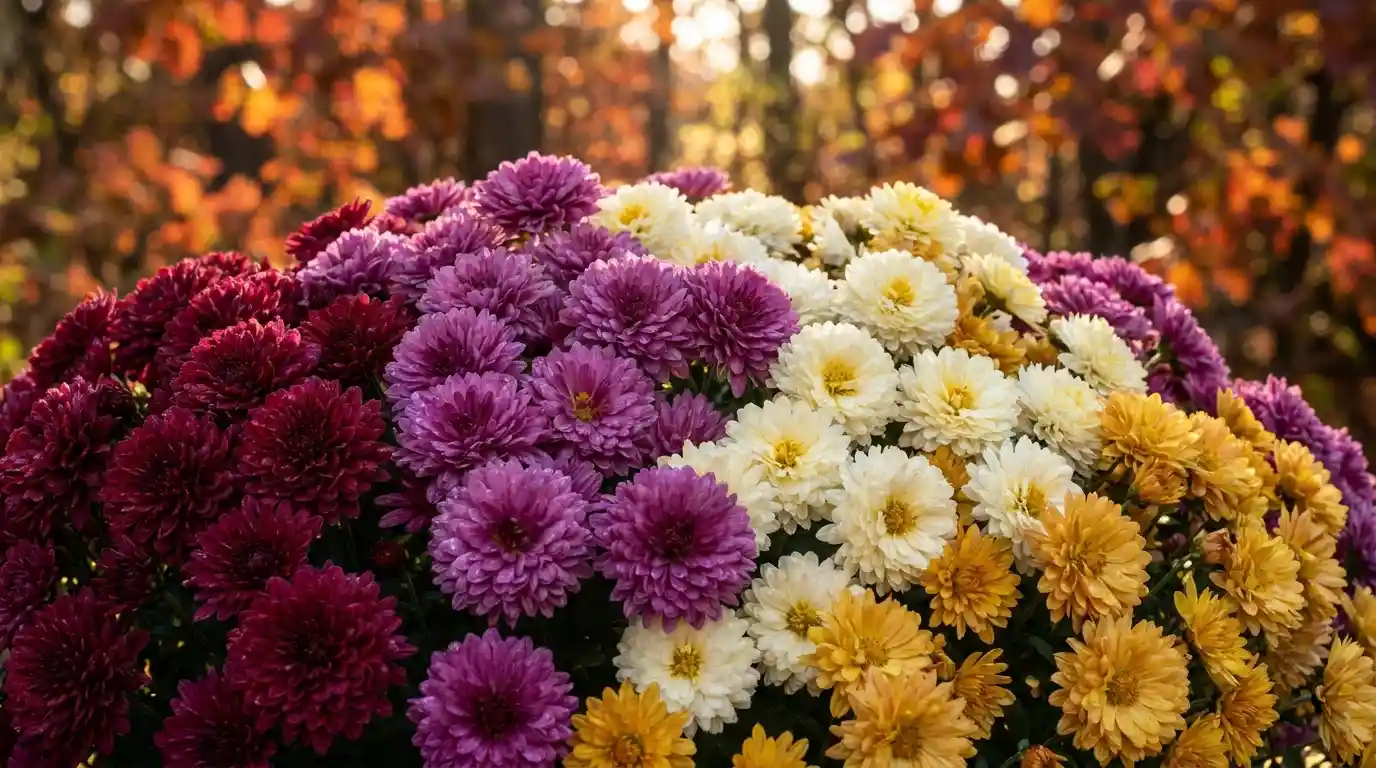

The chrysanthemum flower is among the highly symbolic flowers, alternatively known as ‘mum’ or ‘chrysanths’. I have not forgotten how I got to love the chrysanthemum for the first time when I saw them blossoming in my neighbors’ garden in a variety of jewel colors, such as red, purple, and white. My attitude towards the flower has since then greatly changed. The chrysanthemum is a genus of flowering plants belonging to the family of Asteraceae native to Asia and northeast Europe especially to China.
Botanical Identity: What Exactly Is a Chrysanthemum?
Chrysanthemum falls under the order of Asterales, family Asteraceae, subfamily Asteroideae and tribe Anthemideae. From the classification point of view, according to the classification made by Linnaeus in the year 1753, the Chrysanthemum genus was placed under fourteen separate varieties. They are categorized under Plant kingdom, Tracheophytes, Angiosperms, Eudicots and Asterids. The name Chrysanthemum is derived from the Greek names for the flowers where Chrysos means gold, and anthemon means the flower.
Leaves are generally pinnatisect, lobed or serrated. Compound inflorescence consists of a number of flower heads that are covered up by a series of phyllaries. Row of ray florets comprises of simple white, yellow or red and disc florets are always yellow. Pollen grain is about 34 microns in diameter. Genus Chrysanthemum has now been divided further into several genera: Argyranthemum, Glebionis, Leucanthemopsis, Leucanthemum, Rhodanthemum and Tanacetum. Hybrid Chrysanthemum morif
Description and Taste: What Do Chrysanthemums Look and Smell Like?
The diameter sizes for the chrysanthemums range between 5-8 centimeters in diameter. The flowers may include those that are composite in nature with different petal designs; daisy-type flowers; pompon flowers; or quill flowers with uniquely shaped petals. The blossoms are white, light yellow, deep burgundy, purples, and other colors, such as orange, pink, red, lavender, and green.
Chrysanthemums have a earthier, herbal and slightly spicy grounding aroma than is simply floral. In contrast to roses or lilies, mums do not emit a strong or overwhelming fragrance – this is actually a good thing as its scent is suggestive rather than overpowering and more of a subtle background aroma. Chrysanthemum blossoms taste bitter and flowery with sweet and peppery undertones, and have menthol properties that may open up the nose.
13 Types of Chrysanthemums You Should Know
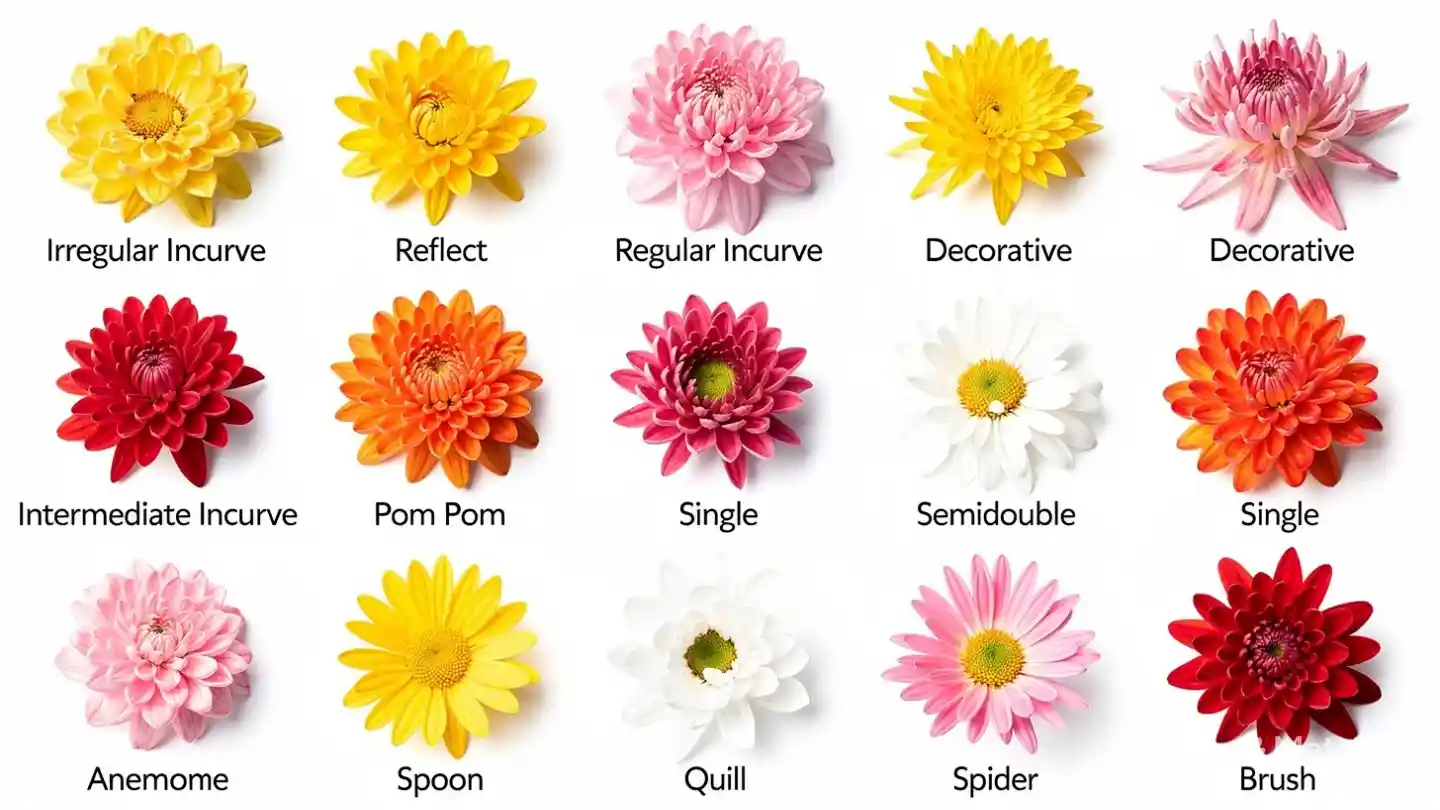
From my own personal experience in growing mums in various seasons, it is safe to say that learning about their various types will definitely change how you use them. According to the National Chrysanthemum Society of the USA, there are 13 classes of cultivars of flowers. These include Irregular Incurve with giant blooms, Reflect featuring large to medium blooms, Regular Incurve producing ball-shaped flowers, and Decorative types with flattened forms.
Intermediate Incurve blooms are more open than other incurves, while Pom Pom types form perfect balls. Single and Semidouble types have concave or convex forms, and Anemone types feature a single layer with a cushion-like raised centre. Spoon types display daisy-like blooms with tipped ends, Quill types feature tubular florets, and Spider types have varying elongated florets. Brush or Thistle types have upright florets, and Unclassified or Exotic types are irregular in form.
Seasons and Availability of Chrysanthemums
Flowers are produced all year round, but have a peak during summer and fall seasons. Chrysanthemum is classified under the category of short day plants, whereby their natural bloom cycle starts due to the short days in late summer and early fall. In light-controlled greenhouse settings, flowering can be forced at any time of year. Southerners enjoy blooming mums twice yearly because equal days and nights of temperate weather trigger blooms in both spring and fall. Northerners must wait for their single spectacular show each autumn. Cool temperatures slow petal aging, extending the display beautifully. November is traditionally recognized as the chrysanthemum’s birth month.
How to Plant Chrysanthemums the Right Way
Sunny location, good drainage soil and air circulation are vital for success. Mums are heavy feeders thus loosen up the soil by mixing it with aged manure/compost before planting. Space plants 18-36 inches apart according to their mature height to ensure that there is enough air circulation to prevent mildews and fungi attack. Mums planted in-ground at the same height as that of pots do not suffer any harm from water accumulation at the base of the plants but if planted too low they would suffer stem rots.
For optimal establishment of mums, begin them in the house 6-8 weeks prior to the last expected frost date. Do not plant close to security lights or street lights because artificial lights deceive the day length and reduce flowering potential Plants grown in containers should be planted in at least 12 inch diameter pots with adequate drainage holes and a good quality potting mix, not garden soil. Plants can be planted during early spring for perennial species or 6+ weeks prior to a killing frost during fall.
Growing and Care: Keeping Your Mums Thriving
Proper irrigation of the chrysanthemum is highly important. They are shallow-rooted plants requiring much watering, especially during warm weather periods. Deep watering without splashing leaves should be carried out. It is necessary to mulch the plant to increase the moisture level in the soil by stopping evaporation. It would prevent weed growth near the root zone. The plant should be fertilized once in a month through the use of a balanced fertilizer (10-10-10). Bloom fertilizer (5-10-5), half strength should be added every two to three weeks starting from the bud set through the end of spring season.
It is necessary to mulch the plant to increase the moisture level in the soil by stopping evaporation. It would prevent weed growth near the root zone. The plant should be fertilized once in a month through the use of a balanced fertilizer (10-10-10). Bloom fertilizer (5-10-5), half strength should be added every two to three weeks starting from the bud set through the end of spring season.
Fertilize no longer after bud color due to excess nitrogen delaying the blooming period. Prune branches by pinching back about 1″ from the tips of branches every 2-3 weeks during the growing season to promote more branching and sturdiness. Pinching of early bloomers should be done no later than mid-June, and pinching of October bloomers should be done through mid-July. Pinching should be stopped in early July on the West Coast and early August in the South. For large flowers, remove all lateral buds from the stems, except for the largest and strongest bud on each stem.
Overwintering Mums: Keeping Them Year After Year
These plants are cold hardy up to USDA Zone 5 and may be left in the ground and put outdoors to overwinter. For Zones 5-6, allow a killing frost before mulching with either straw or leaves up to 4-6 inches deep. Cut in spring when new growth emerges. In zones 7-9, trim in bloom to 6″ and lightly mulch.
Over winter plants in unheated basement, garage or shed in cold climates. After first frost, pot up plants with as many root as possible. Maintain moist roots and inspect for pot checks weekly during winter. Avoid pruning dead branches in the fall as the dead branches insulate the roots below. Divide mums in spring when new growth emerges every 2-3 years. With a knife, remove the bottom dead area, and repot the outside areas that have a few healthy shoots and good roots.
Chrysanthemum Meaning by Colour and Cultural Symbolism
The chrysanthemum is a flower with a great many layers of cultural significance. White chrysanthemums are a symbol of purity, remembrance and respect, and are used to make the answer to the traditional question, ‘What is the flower of remembrance’? They are the flower of memorial services and funerals in European countries such as Ireland, France, Belgium, Italy, Spain, Poland, Hungary and Croatia.
Chrysanthemums, in East Asian countries like Japan, Korea and China symbolize sincerity, hardship, sorrow and grief. In the era of language of flowers, the yellow chrysanthemum stood for “love me not,” whereas the red chrysanthemum stood for “I love you.” Purple chrysanthemum stands for nobility, whereas the pink chrysanthemum stands for warmth and affection. Trapezoid orange chrysanthemums stand for happiness and luck.Green chrysanthemum is not as frequently used as others in floristry and signifies good fortune and fresh beginning.
In Chinese culture, chrysanthemum is one of the four gentlemen together with plum blossom, orchid and bamboo, chrysanthemum also represented nobility in Chinese during the period of poet Tao Qian. This flower is the ninth month flower and chrysanthemum wine would be drunk by Han people on the ninth day of the ninth lunar month in order to increase their lifespan. The Double Ninth Festival is still very special to this flower culture. Chrysanthemum is used in the Pharmacopoeia of the People’s Republic of China as a medicinal plant, with two varieties: Yejuhua used for treating carbuncle, furuncle, conjunctivitis, headache and vertigo; and Juhua used for treating cold, headache, vertigo and conjunctivitis.
Chrysanthemums are linked to the Zoroastrian spiritual being Ashi Vanghuhi, a female Yazad in charge of blessing and good things in Iran. In Australia, people traditionally wear white chrysanthemums on Mother’s Day in May to pay respects to their mothers. The Order of the Chrysanthemum is a Japanese award presented by the Emperor of Japan following advice from the Japanese government. The imperial court organized the first exhibition of chrysanthemums in 910 AD; therefore, Chrysanthemum Day was founded on the ninth day of the ninth month of the year.
Kaifeng China Chrysanthemum Culture Festival was founded in 1983 and renamed in 1994. The festival is celebrated annually between 18th October and 18th November. Decorations with the chrysanthemum are used freely on celadon ware of both the Goryeo and Buncheong. In 1999, Queen Elizabeth was presented with a work by Kim Se-yong, now in the Royal Collection.
Nutritional Value and Medicinal Uses
In addition to that, high amounts of vitamin C have been found in the flower, and the vitamin is responsible for protecting the body from damage caused by free radicals. However, vitamins A and B are found in the flowers, and the vitamins are known to enhance vision and growth. Magnesium mineral is found in chrysanthemums and helps control blood pressure and glucose level, while calcium is important for bone density, and potassium regulates fluid balance in the body. Traditionally in TCM, chrysanthemum teas were used to help cure inflammation, hypertension, and respiratory disorders. Moreover, flowers contain antioxidants which help maintain good health.
Pyrethrum, obtained from Chrysanthemum cinerariifolium, is important from economical point of view due to its use as a natural source of an insecticide. Oleoresin suspension of pyrethrins obtained from achenes attacks the nervous systems of insects. It inhibits female mosquitoes from biting and has repellency effect in sub-lethal doses. Pyrethroids such as permethrin are synthetic compounds that serve as insecticides and act similar to pyrethrum. While other synthetic products decompose in sunlight in about a day, pyrethrins decompose quite easily. Moreover, they are extremely toxic to fish but relatively harmless to mammals and birds
Edible and Culinary Uses of Chrysanthemums
However, there are certain chrysanthemums that are not purely ornamental. Most of them are actually edible and very common in many parts of Asian cuisine and medicine. The most widely used edible chrysanthemum is the Chrysanthemum morifolium, which is mainly used to make chrysanthemum tea, according to Chinese herbal medicine practice. Another use of chrysanthemum flower is the Korean rice wine called gukhwaju. Chrysanthemum leaves are also edible and often consumed by being boiled or steamed. They are then used as greens, especially in Chinese cooking. They are commonly used as ingredients in hot pot or stir fry recipes, while little chrysanthemums are used as garnishing of sashimi in Japanese cooking.
Chrysanthemum flower can also be used floating on top of mixian in broth or snakemeat soup, making the food more fragrant. The garland chrysanthemum, whose scientific name is Chrysanthemum coronarium, is one of the rare types of chrysanthemum, since its leafy greens and succulent stems called Shungiku in various Asian cultures are also edible.
In desserts, the application of chrysanthemum is seen in cake decoration, besides other desserts such as scone, sorbet, crème brûlée, pudding, tart, among others. Additionally, the flowers of chrysanthemums pair well with other fruits like chocolate, coconut, strawberry, lemon, passion fruit, mangoes, and cherries.
Other foods that pair well with chrysanthemum flowers include herbs like lavender, parsley, and mint. Among the cheeses, there are goat cheese and blue cheese. Other foods that chrysanthemums pair well with include spring vegetables. Flowers must be used within the shortest time possible, storing for not more than 2 to 4 days when kept in a closed container in the refrigerator. It is crucial that all chrysanthemums used as food should come from farmers’ markets and reputable food markets as no flower treated with any chemicals must ever be eaten.
How to Arrange and Display Chrysanthemums
Chrysanthemums are some of the most flower-arranger friendly flowers to deal with. Pompom mums should be used as focal flowers in a complete bouquet arrangement It is possible to combine either the pom-pom flowers with the spider flowers or even daisy flowers to bring both shape and texture into the bouquet. Seasonal accents can be used such as sunflowers, berries, fall leaves, and eucalyptus as well. Hat box arrangements are recommended for chrysanthemums as they last longer when arranged using foam than when in water vases. Chrysanthemums make great companions when planted next to other plants during fall.
Thriller, filler, and spiller this is how the container design grass is to be chosen with thriller being ornamental grass, filler being mum and spiller being any trailing ivy or lysimachia. In the case of cut flowers, you should cut the stem at an angle and get rid of all leaves below the water line. The flower water should be changed every two or three days, but it is also good to re-cut the stems after mid-life of the arrangement to improve absorption. All cut arrangements should be placed in a cool place without exposure to direct sunrays. If properly cared for, cut mums stay in vases up to 2 weeks.
Conclusion
The chrysanthemum flower is among the most treasured and symbolic flowers in the world that people have loved for centuries. Naturally occurring in East Asia and northeastern Europe, this amazing flower grows in various colors such as white, yellow, red, purple, orange, pink, and green, thereby making it one of the most varied flowers suitable for any purpose or occasion. Whatever name you may refer to the flower by either mums or chrysanth this perennial herbaceous flowering plant belonging to the family Asteraceae never ceases to amaze us because of its pleasant odor, long-lastingness, and durability.
The chrysanthemum flower not only looks amazing but also bears numerous meanings depending on the particular color. While it symbolizes pure happiness in China and Japan, the flower symbolizes purity, longevity, nobility, and remembrance in other parts of the world. It is hard to imagine someone who would dislike a fragrant, long-living, and strong chrysanthemum flower, which can be grown in gardens, added to bouquets, or even used in the kitchen. Furthermore, the chrysanthemum flower is known for its high medicinal qualities since it has such important nutrients as vitamin A, B, and C, magnesium, calcium, and potassium.
Frequently Asked Questions (FAQ’s)
A chrysanthemum flower is a flowering plant from the Asteraceae family, commonly known as a mum. It originated mainly in Asia and northeastern Europe and is valued for its wide range of colours, forms, and cultural significance.
Chrysanthemum colours carry different meanings across cultures. White chrysanthemums are often linked with remembrance and respect, while red, purple, pink, orange, and green varieties represent emotions such as love, nobility, affection, happiness, and new beginnings.
To grow healthy chrysanthemums, plant them in a sunny location with well-drained soil and good airflow. Regular watering, mulching, proper fertilisation, and occasional pruning help maintain strong growth and encourage better flowering.
Some chrysanthemum varieties are edible and commonly used in Asian cuisine. Chrysanthemum flowers are used in tea and desserts, while certain leaves and stems can be cooked as vegetables in dishes such as stir-fries and hot pots.
Chrysanthemums usually reach their peak blooming period during summer and fall, especially in late summer and early autumn when shorter days trigger flowering. Greenhouse cultivation can also control blooming times and produce flowers year-round.

7 thoughts on “Chrysanthemum Flower: Everything You Need to Know About Nature’s Most Symbolic Bloom”