
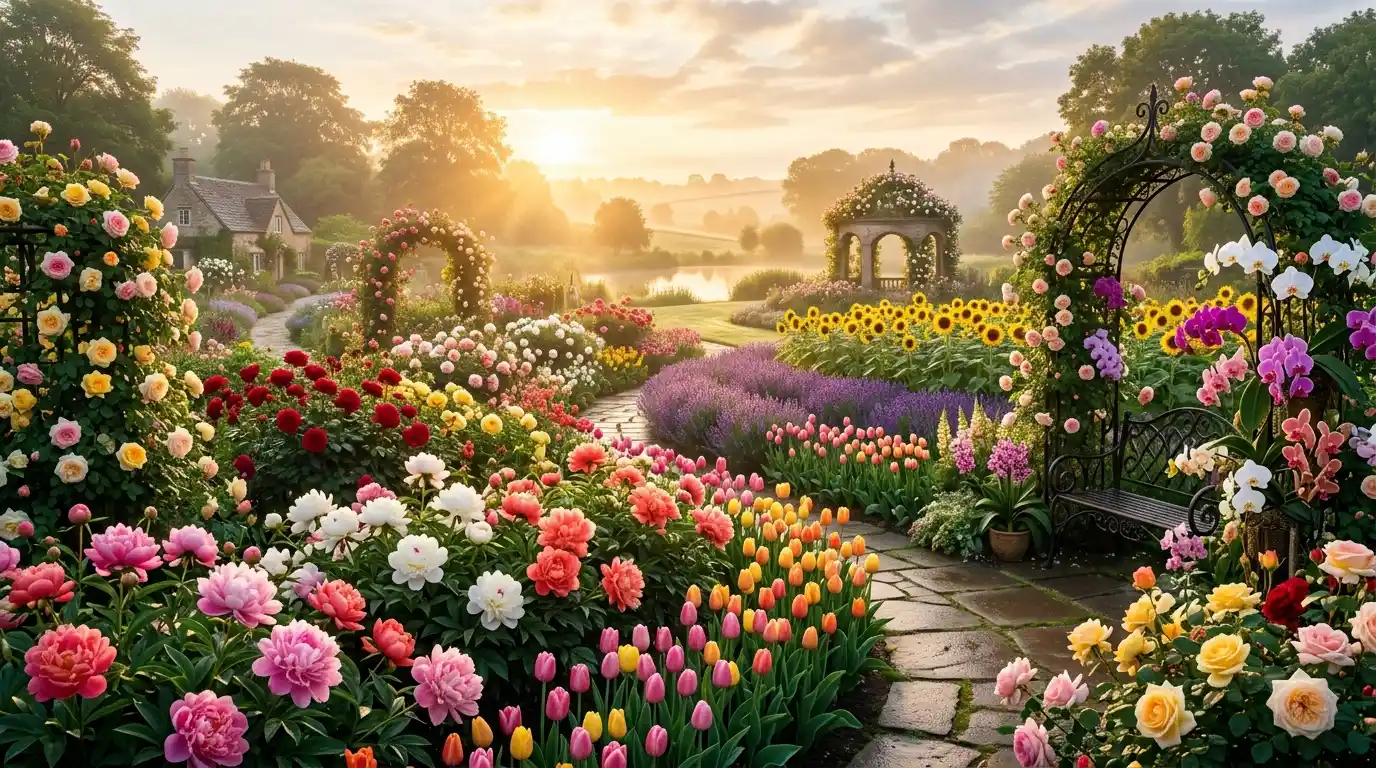

There is something modestly humbling about finding yourself pausing in admiration of a flower. Not the flowers that you see displayed in a store window for their pictures, but the kind that find their way into your path, such as the one you find growing from a crack in the pavement, a peony so packed with blossoms that it can scarcely stand up on its own, and the ghost orchid found in the swamps of Florida that seems like it couldn’t exist. After years of observing flowers that were both beautiful and exotic in gardens, florists’ shops, and the wilds, the only thing that I continue to find interesting is how often the most beautiful flower in the world was never expected. However, some flowers have managed to carve out a top spot on just about every list made throughout the centuries.
The prettiest flowers in the world do not merely stand out in their appearance. Instead, they are rich with history from their botanical origins to cultural significance, politics, and literature, making them even more special as you dig into their pasts. Whether you are selecting the flowers that will decorate your garden, adorn a bride on her big day, brighten up an anniversary gift, or simply satisfy your curiosity as you gaze upon one that catches your eye, there is information here for all occasions.
The World’s Most Beautiful Flowers: Roses, Peonies, Orchids and the Classics That Earned Their Reputation
There is not a more recognized beautiful flower in the whole world compared to the rose flower. All glory goes to this flower because of its beauty. The red rose is a symbol of love; this means saying “I love you” in the clearest way possible. That is why there is no Valentine’s Day and anniversaries without giving red roses. Rose colors have meanings beyond red roses. The white rose is a sign of purity, freshness, and innocence. Pink rose represents grace and happiness. Yellow roses, which used to symbolize jealousy, nowadays are presented as friendship flowers. Orange roses are symbols of enthusiasm and passion. Coral roses mean friendship, admiration, and sympathy. Lastly, lavender rose flowers which belong to the category of the most beautiful flower names represent the meaning of love at first sight.
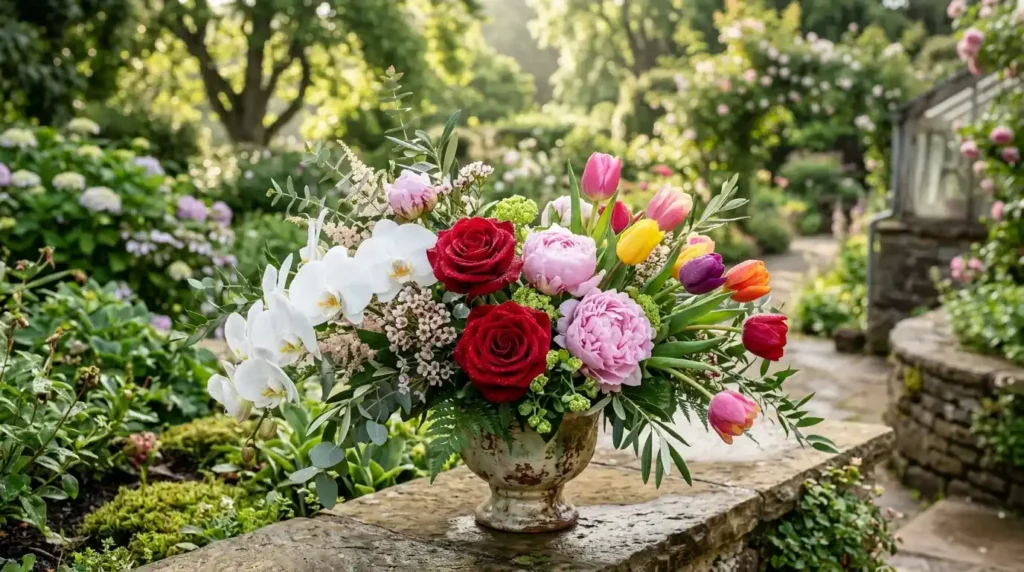
Peonies
Peonies are some of the most emotional flowers among all the flowers. In the imperial Chinese culture, the peony flower is a sign of honor and prosperity. For the Japanese, peonies are a sign of bushido culture that represents strength and courage. Peonies in Greek mythology came from the shy nymphs who used to hide themselves under the shade of peonies. The symbolism of peonies changed in the Victorian Era as during this period peonies stood for bashfulness and shyness, which is completely opposite to what peonies represent today. Today, peonies are a symbol of love and prosperity. The attractive flowers of the peony in pink, white, and red colors make peonies popular as a wedding and gift flower.
Orchid
The orchid was undoubtedly the one flower that made the Victorians go crazy. ‘Orchidelirium’ is a term used to describe the period when affluent Victorians spared no expense to obtain some weird orchids. This way, the orchid was granted the status of a flower representing luxury, strength, and uniqueness. Darwin was known to examine the unique feature of the nectar tube of the star orchid which measured to be about 30 cm in length and speculated about the type of insect that could feed from it. Currently, presenting someone with an orchid, be it a bouquet or potted orchid, represents your admiration for his/her uniqueness. Ghost orchids rank among the rarest flowers in the world.
Tulip
Among all flowers, the tulip flower has one of the most fascinating stories. The tulip flower was originally found in south-central Asia, and later transported to Europe in the 1500s. In the same period, the tulip flower became part of a fascinating era in the history of Holland known as tulip mania since the individual tulips were very expensive before the market collapsed. There are currently about 4,000 species of tulips, and the symbolism of the tulip flower is clear: the tulip represents unconditional love and loyalty forever. A red tulip signifies intense feelings while a yellow tulip denotes happiness and wishes.
Dahlias, Hydrangeas, Sunflowers and the Flowers With the Most Visual Impact
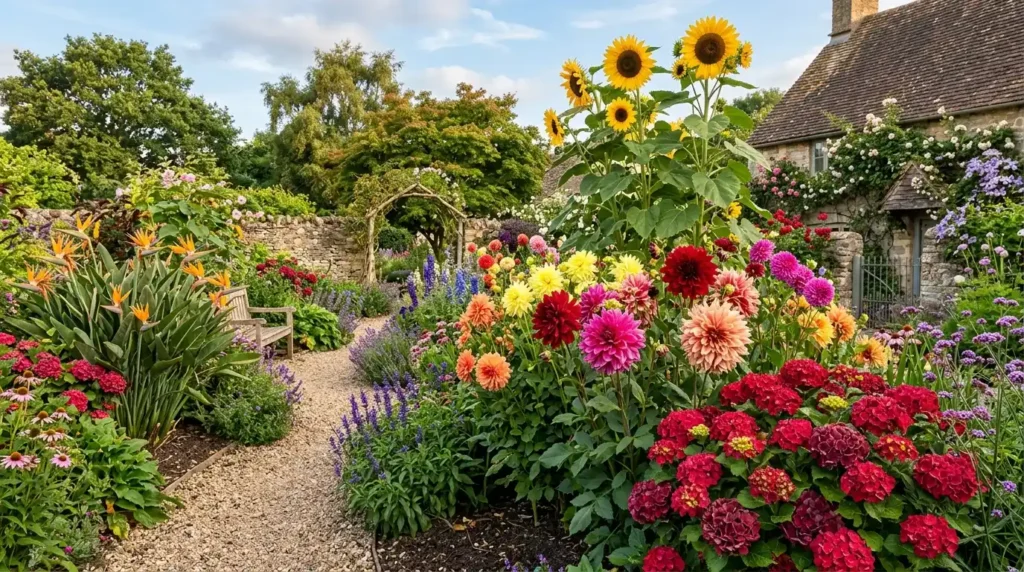
The dahlia is regarded as the official floral emblem of Mexico. The flower was originally grown by the Aztecs, who appreciated the root of this flowering plant for its starchy nature. The flower came to be known to Europeans during the 18th century. The name dahlia is attributed to Anders Dahl, the renowned Swedish botanist. At present, there are 42 different species of dahlias and around 57,000 cultivar forms of dahlia that include forms such as simple daisies, cactus dahlias, pompon dahlia balls, and the anemone dahlia form that includes the 2026 release Dahlia Venti PinkBurst and FireBurst. Dinnerplate dahlia Tyrell is considered to be the most desirable dahlia of 2026. The flowers have a diameter of 6 to 10 inches and display delicate peach and pink hues that transition into an ombré flower effect in their honey centers. Today, dahlias symbolize inner strength and transformation, although during the Victorian era, they were associated with instability and uncertainty.
Sunflower
Of all the beautiful flowers, the sunflower is definitely one of the simplest flowers when it comes to emotions because it always looks toward the sun and represents things such as devotion, good luck, happiness, and positivity. A sunflower brings some sunshine to any garden, bouquet, or centerpiece, and its yellow petals make it one of the easiest to identify flowers. A beautiful flower like the bird of paradise of South Africa, which is part of the Strelitzia species, represents happiness and paradise.
Hydrangea
Two hydrangea varieties are expected to lead flower trends in 2026. One of them is Hydrangea Centennial Ruby, introduced by Monrovia to celebrate its 100th anniversary. This distinctive cultivar produces vivid ruby red mophead blooms throughout summer, which deepen in color as they mature, making it a highly desirable limited-edition plant among collectors. Second, Hydrangea paniculata Fire Light comes with cone like flowers which mature from creamy white to shades of pink then pomegranate red. This type grows up to 8 feet high, but for a smaller size there is also Fire Light Tidbit, which grows just 2 to 3 feet high and is available at Nature Hills.
Lavender, Lotus, Lily and the Flowers With the Deepest Spiritual and Historical Significance
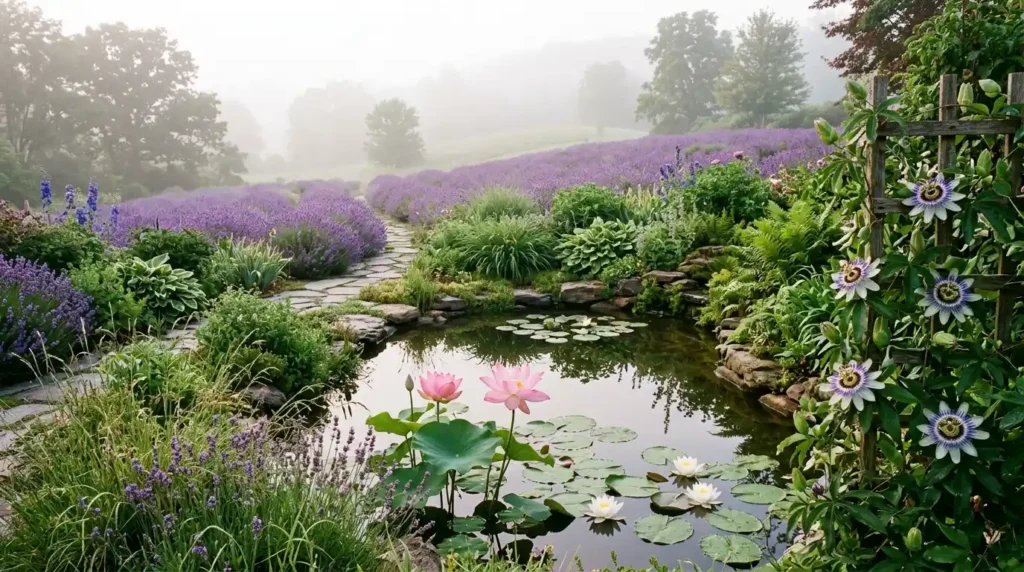
English lavender (Lavandula angustifolia) originated from the Mediterranean region, but it may attain a height of between 1.5 to 3 feet. It is known for having the easiest recognizable fragrance compared to any other plant species. Symbolic meanings for the lavender plant have changed tremendously as depicted by the symbolism found in the 1884 book on flowers by Kate Greenaway, where the lavender plant was represented by distrust while the current symbolism for the plant represents devotion, purity, and serenity. The lavender rose is one such type of flower which carries its own symbolic meaning of love at first sight, making it one of the few colored flowers with their very own symbolic meanings.
Lotus
For Indians, the lotus signifies purity and enlightenment; in Egypt, it signifies creation and rebirth. In Buddhism, the flower represents transcendence through grace while one is in difficult circumstances. The particularity of its emerging in muddy water only to blossom as a beautiful flower makes the lotus common in therapy gardens and planting schemes. Among Western flowers that have significance, the lily also stands as a symbolic flower because of its trumpeting appearance and fragrant smell, which signifies innocence, sacredness, and rejuvenation, thereby making it the flower used widely during weddings and funerals. A symbolic flower of the Victorian era and which means “magnificent beauty,” the calla lily today is only used as a bride flower or sympathy flower.
Exotic Flower
The most exotic flower would be the passion flower Passiflora. This is because the plant has very exotic flowers that truly appear to have been plucked right out of science fiction movies, having layers of flowers of amazing beauty in shades of white, pink, purple, and blue colors. Such flowers represent passion, spirituality, and devotion and therefore would be great additions to cottage gardens. Other exotic flowers belonging to the bleeding hearts family also make for great flowers, as they have small heart shaped flowers that hang in strings.
Flower Symbolism Explained: Floriography, Shakespeare, and the Political History of Flowers
The floriography, or language of flowers, of the Victorian period was created gradually throughout the century as a means of coded communication using flowers as gifts. However, there is an aspect of Blooming Expert guide that needs to be clarified here: there was no uniformity within Victorian flower dictionaries. For example, while the book by Greenaway in 1884 used lavender as a symbol of distrust, the current use of the same flower denotes devotion. The dahlia was considered a symbol of instability in 1884 while it now stands for inner strength and determination. Yellow roses meant jealousy during the Victorian era but are considered friendship flowers today.
The language of flowers seeped into politics in such a way that most modern books about flowers do not even address. During Napoleon’s time in exile, members who supported him referred to him as Corporal Violet, while drinking a toast to “Violette” was an expression of loyalty to the Bonapartist cause. The death of Benjamin Disraeli in 1881 saw Queen Victoria sending primroses from Windsor with a note saying they were her late husband’s favorite flowers, which led to the formation of the Primrose League, a political organization aligned to the Conservatives, named in his memory. The use of flowers as symbols was two centuries old when Victorians started floriography, as evidenced by Shakespeare’s work.
2026 Flower Trends: What’s Capturing Gardeners and Florists Right Now
The on trend flowers for the year 2026 have an underlying aesthetic conflict in that both approaches are doing well at once. First, there is a continuation of the pastel planting trend where soft romantic and cottagecore flower aesthetics are the trend for ranunculus, sweet pea, freesia, and blush peonies that focus on emotional rather than dramatic arrangements. Secondly, there is the emergence of the brutalist floristry trend with the transition from the cutting room floor into actual gardens. This approach involves the growth of dark planting beautiful flowers in hues like deep burgundy, almost black, and plum dominating the borders. Jamesbrittenia Safari Dusk was awarded the designation of Annual of the Year by Proven Winners with its 6-12 inch height and spread of 12-24 inches bearing royal purple blooms with golden eyes.
PANTONE’s Color Of The Year 2026
PANTONE’s Color of the Year 2026 Cloud Dancer an illuminating near-white shade guides the choice of flower colors in garden and floral designs. White begonias harmonize with Cloud Dancer shades; Impatiens Beacon series flowers, Shadowland hosta plants with white margins at 22 inches in height and 24-32 inches in spread, and the newly introduced Zinnia Elegant series flowers provide perfect options for white or near white varieties. The faded-petals beauty of mature Dahlia Tyrell with its ombré effect reflects a trend that is much broader in the 2026 PANTONE palette direction of transitional and imperfectly aged flowers.
For pollinators, Rudbeckia Suntacular for 2026 will be an attraction for bees and butterflies throughout the period of migrations, being deer resistant and hardy up to Zone 5a. Salvia Mystical features extremely rare blue flowers which are hard to encounter in any garden; drought tolerant, sun loving, and pollinator magnet. Ageratum Monarch Magic is exactly as described in its name, and can attract monarch butterflies clearly from afar. If you have some shaded areas where there is no place for full sun flowers, Impatiens can be grown in shades of soft pink, purple, bright orange, white, and even bicolored flowers.
Conclusion
But, flowers are far from just aesthetically pleasing. In fact, they are among one of the oldest and most successful forms of communication in humans. Be it the simple red rose that needs no explanation, or even the mysterious ghost orchid, which needs an adventure team to discover its existence, and from pastel colored ranunculus at a spring wedding to almost black calla lily in the brutish design of floristry these flowers are loaded with meaning beyond their beauty. So, understand the flower symbolism, cultural references, literature, and the language of flowers, and take your bouquet to another level.
Frequently Asked Questions (FAQ’s)
The most beautiful flowers often include roses, peonies, orchids, tulips, dahlias, and lotuses because of their beauty, history, and cultural significance. Beauty also depends on personal preference, as some rare flowers, like ghost orchids, attract attention for their unusual nature.
Flower colours often carry symbolic meanings that vary across cultures and traditions. For example, red roses represent love, white roses suggest purity, and yellow roses are commonly associated with friendship today.
Peonies, roses, orchids, and lilies are popular choices for weddings and gifts because they are connected with meanings such as love, admiration, prosperity, and purity. Their appearance also helps make them suitable for emotional occasions.
The best flower choice depends on the garden environment, desired style, and the meaning you want the plants to represent. Factors such as climate, colour preference, pollinator value, and maintenance needs can help guide the selection process.
Flower trends for 2026 include soft pastel arrangements, cottage-style planting, and dramatic dark-coloured blooms in shades such as burgundy and plum. White and near-white flowers inspired by Pantone’s Cloud Dancer shade are also gaining popularity in garden and floral designs.

3 thoughts on “Beautiful Flowers: The Complete Guide to the World’s Most Stunning Blooms, Their Meanings and 2026 Trends”