
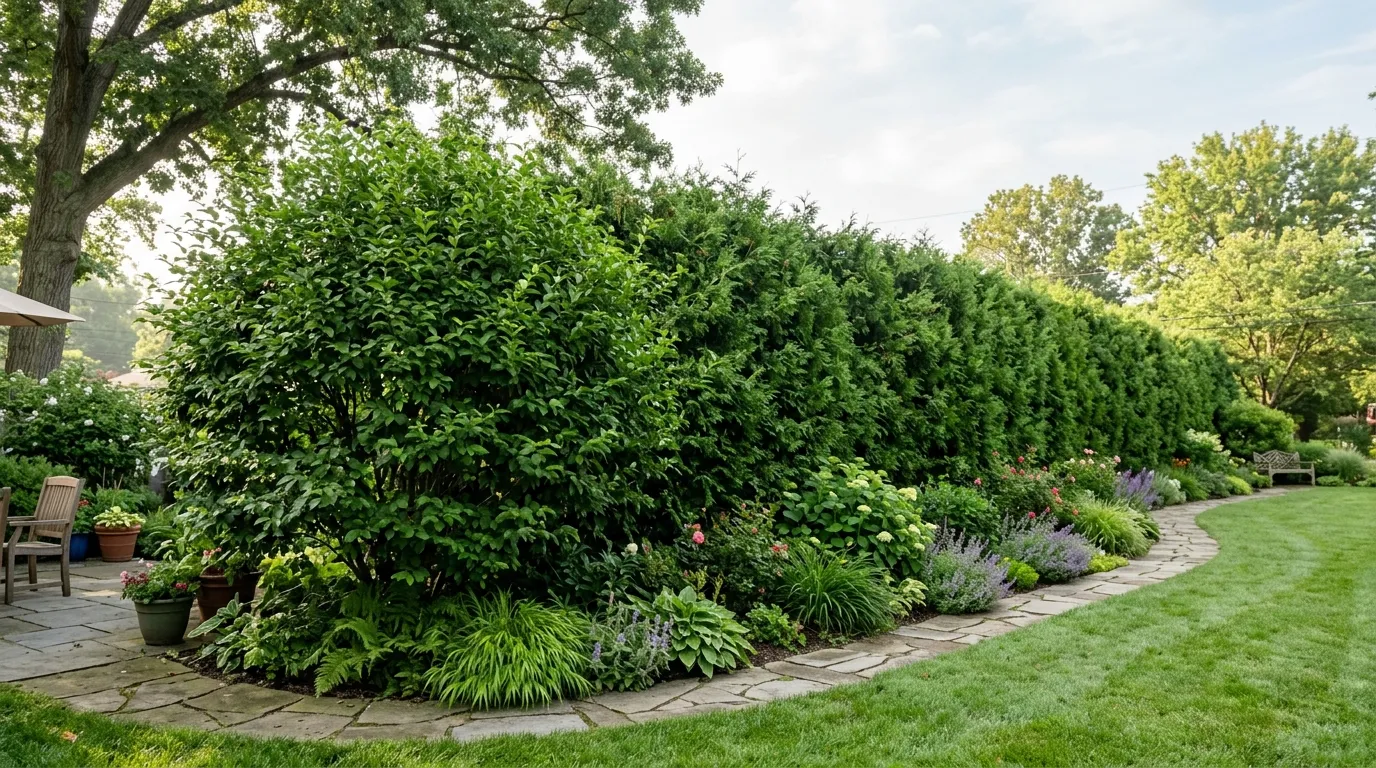

My neighbor built a wooden fence three years ago. Last spring, two panels rotted and a post leaned so badly his dog kept escaping into my yard. He asked if I had suggestions. I told him to pull it down and plant a hedge instead. He looked at me like I was crazy but most fast growing privacy shrubs put on real height within a single season, and by year three you have something no fence can replicate.
Why a Living Fence Beats a Manufactured One
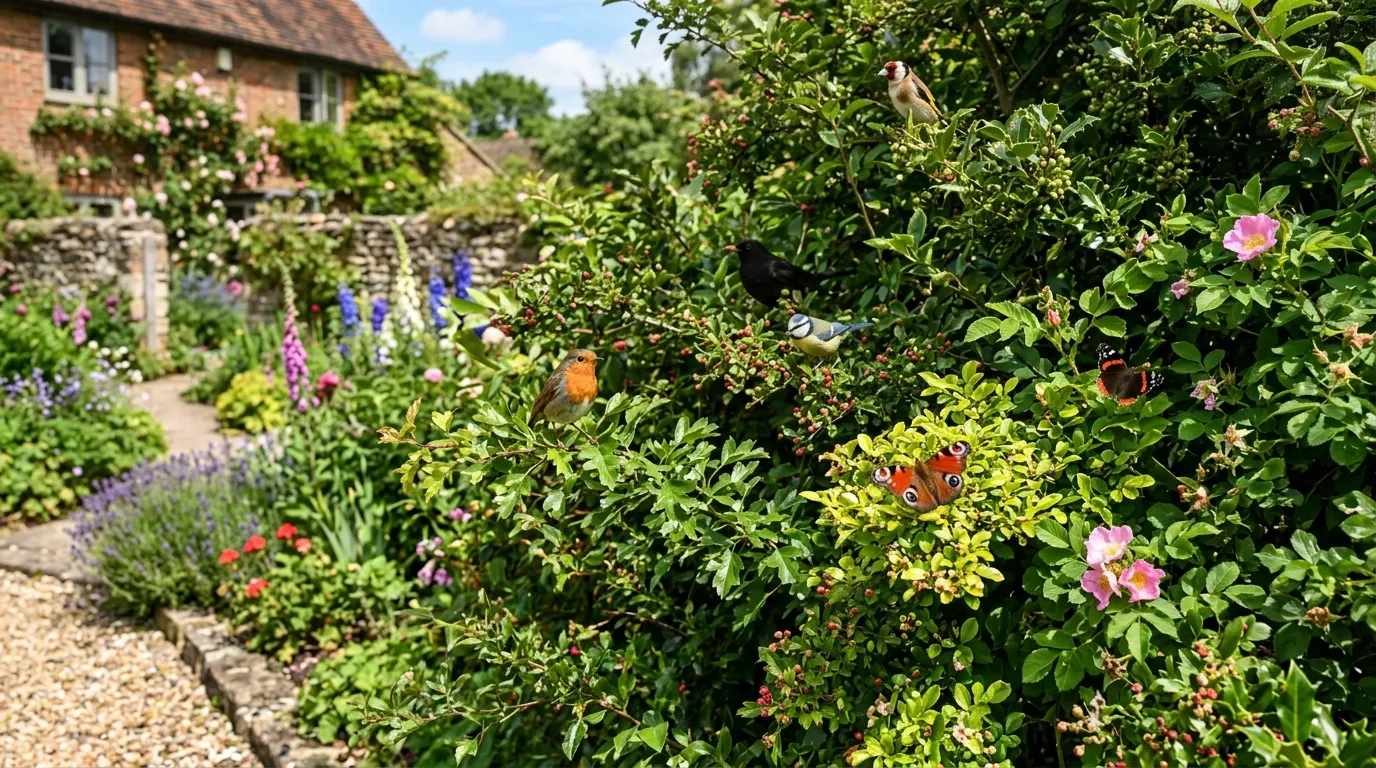
A six-foot hedge does more than conceal an unsightly view from adjacent properties. It absorbs sound, reduces street noise along busy roads and sidewalks, filters air pollution, and creates a natural barrier. Songbirds find nesting habitat in it. Butterflies, bees, and beneficial insect pollinators use it as a food source through summer and early fall. A fence gives you none of that.
Shrubs last longer than a wooden fence and cost less to maintain. Some produce beautiful berries and blooms as a bonus a budget-friendly outcome no fencing option matches. The trade-off is this: pick the wrong plant for the site, skip supplemental water during the first 1 to 2 growing seasons, and nothing performs the way it should. Annual or semi-annual pruning also matters more than people expect. Let it go for a couple of years and your dense screen turns shapeless.
Arborvitae — The One I Keep Coming Back To
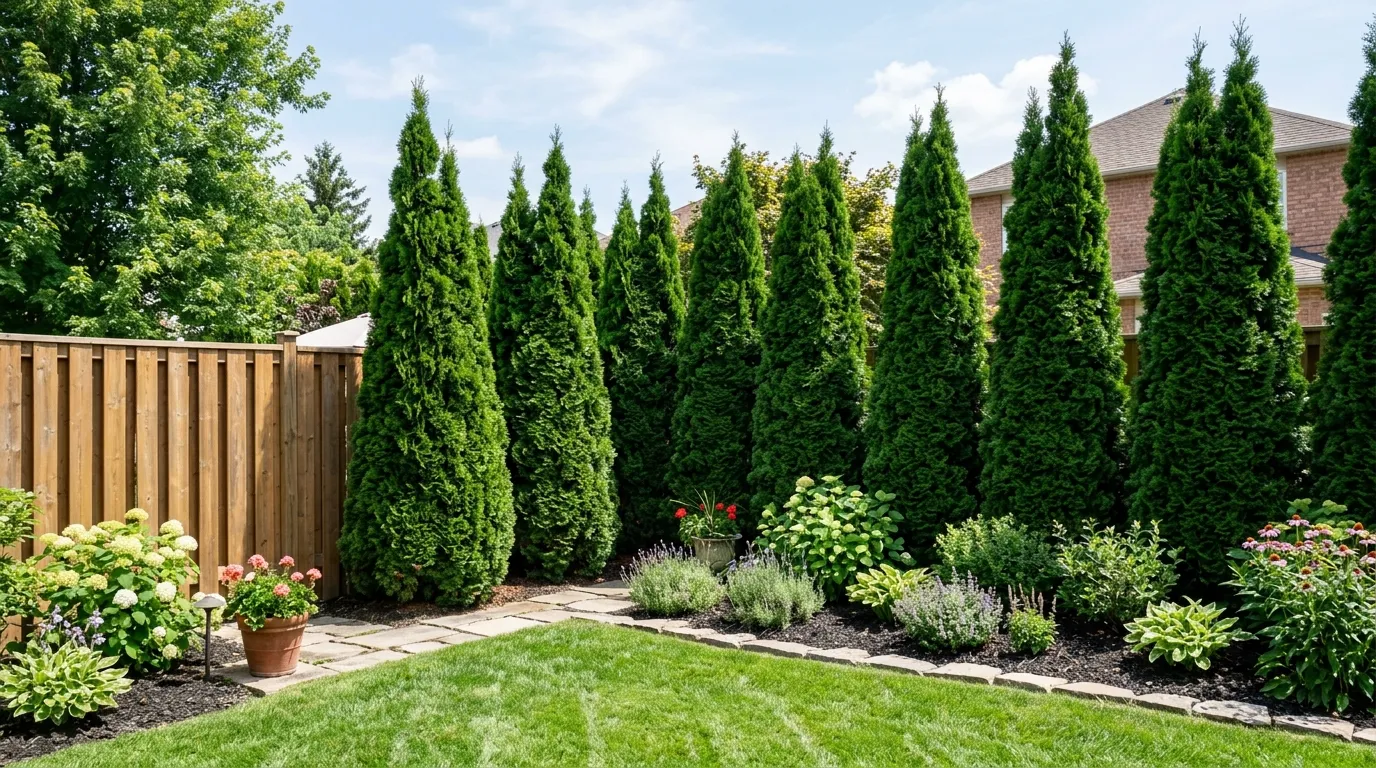
Green Giant Arborvitae, Thuja Green Giant, is what I planted first and still recommend most. This hybrid Thuja puts on 3 to 5 feet per year in ideal conditions — I have seen 4 feet of new growth in a single good summer. The American Arborvitae, Thuja occidentalis, is the best choice for Northern US gardens when there is an emphasis on cold hardiness across Zones 2 to 8 rather than speed of growth.
2-8 Zone holding deer, pest & disease resistance with the overall performance levels of the shrubs will hold their dark, thin, green foliage throughout the winter as well as have an upright pyramid-shaped growth habit maintaining a neatly pruned appearance
It grows 1 to 2 feet annually and needs one pruning per year. I have seen rows of it in colder climates hold their upright shape for decades with almost no intervention.
Laurels Are Underrated and I Will Die on This Hill
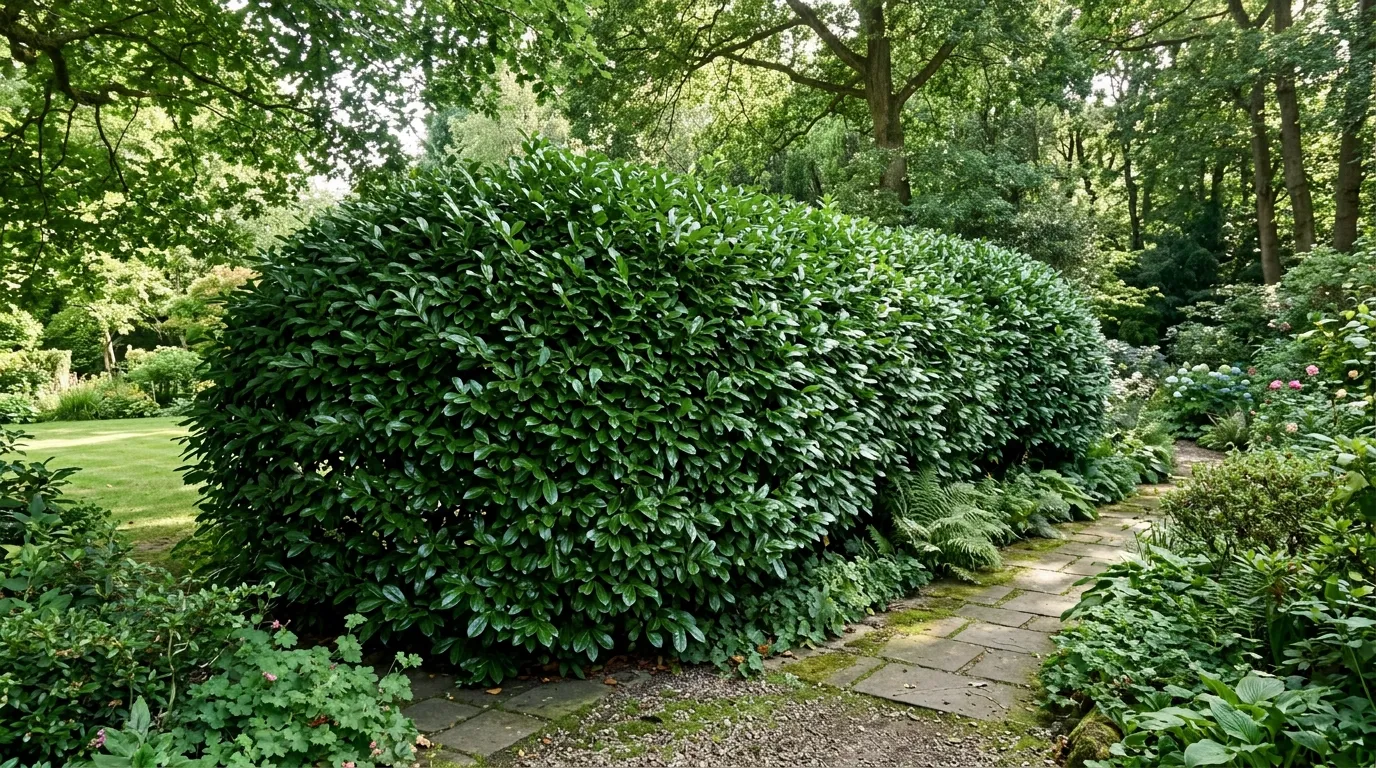
Prunus laurocerasus, commonly referred to as English laurel or Cherry Laurel, will grow 3 feet annually in areas classified as warm climates. An evergreen shrub that grows well in smoggy, salt-laden, or droughty environments after establishment, this plant will deter deer from feeding on it while located between Zones 6 through 9.
The plant will flourish in full sun to part shade and will create a solid, rounded hedge over large areas. Schipkaensis, known as Skip Laurel, is one type of shrub that works well for hiding fence lines. It is my personal favorite. The wide vase growth habit combined with full sun to full shade tolerance is what sets it apart. Most fast-growing shrubs want sun. Schip does not care. Two feet annually in deep shade, durable, drought-tolerant once established. Zone 5 and warmer.
The Portuguese Laurel (Prunus lusitanica) is fast-growing at 1.5 feet each year, but the amount of density it can provide over time is incredible! It creates a wind barrier, noise barrier, and privacy all in one large column and tolerates poor soil, salt from coastal breezes, drought, and smog. The Laurel family of plants has many different varieties and types, but there is one in particular that stands out as a great addition to any landscape-the Virescens Western Red Cedar (Thuja plicata Virescens).
This variety is primarily found in the Pacific Northwest, its natural growth habit is tall and slender with bright green thread-like leaves which stay green year round. It performs well in USDA Hardiness Zones 5 through 8 despite being able to be grown in either shady or sunny locations and is resistant to deer browsing. To maintain an attractive vertical privacy hedge of 2 ft per year, prune back once annually.
The Deciduous Ones People Overlook
Forsythia does not get enough credit as a privacy plant. Those bright yellow walls of new growth appear before almost anything else each spring, and the rapid spread at around 2 feet annually is consistent. Plant it closely in full sun and it becomes near-impenetrable. It is deciduous so winter screening has gaps, but the speed makes it worth it for many yards.
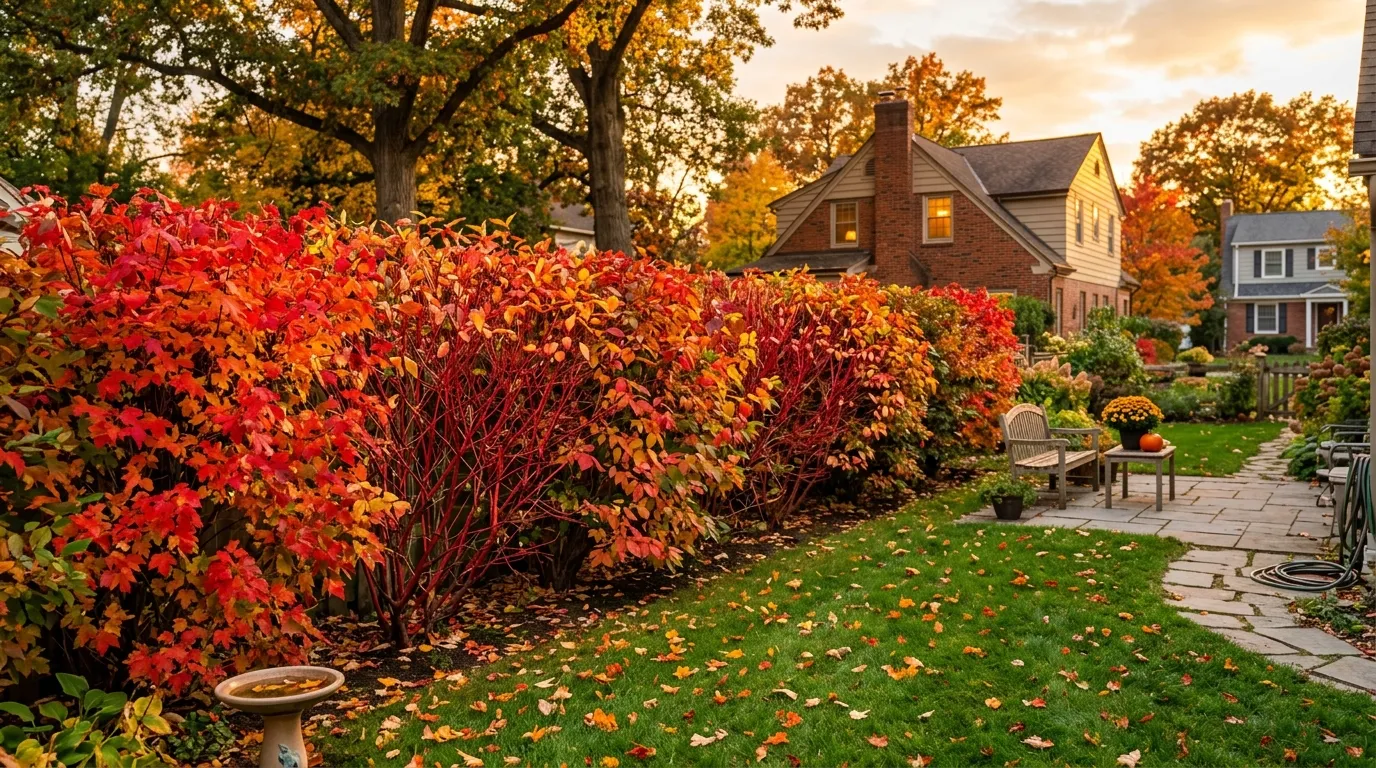
A flame overarching type of Amur Maple bush is also available for use as a hedge. It provides beautiful, vivid fall foliage in shades of red, orange and yellow, and has a rapid growth rate in a zone ranging from 3 to 8. This bush produces their foliage within a two year period, down to -40° F, therefore making this an ideal plant for creating a privacy screen. Common Lilacks produce sweet-scented spring blooms and can grow 2 feet in height each season.
If you prune after flowering, you will lose all the blooms for next year if you do it early. The fire-red bark of the Red Twig Dogwood (Cornus sericea) surprised me after planting because it has four seasons of interest, even after the oval green leaves, white flowers, and summer berries have disappeared. It has an aggressive suckering habit and will spread to all cities located in Planning Zones 2-8. The Rose of Sharon (Hibiscus syriacus) will grow upwards of 2 feet per year and produce trumpet shaped flowers with blue, pink, red or white petals from mid-summer through late fall.
To create a dense hedge of Rose of Sharon in your garden you can plant it in a double row separated 2-3 feet apart, creating a hedge that will bloom from late summer to fall across Planning Zones 5-9. Another great plant for your garden is Ninebark (Physocarpus opulifolius) which is a native North American shrub that reaches its maximum height in some cases within a single growing season. The dark burgundy-colored leaves of the Diablo cultivar of Ninebark will catch the attention of passersby. Peeling bark and decorative seed heads hold visual interest through winter.
The Fast Evergreens That Deserve More Attention
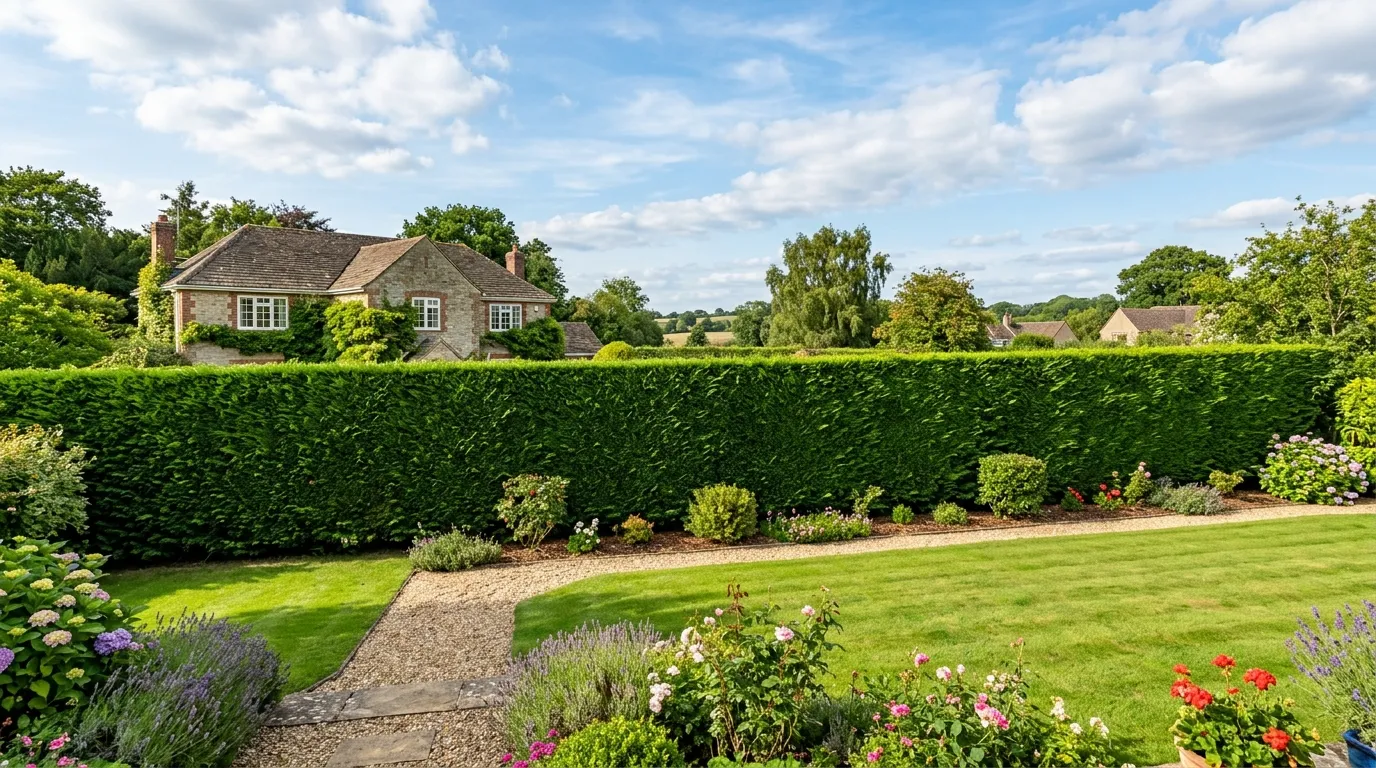
Leyland Cypress trees are a mix of two different cypress types – the Alaskan and the Monterey – and grow by around three feet each year if they’re pruned once or twice yearly. If you live in an area designated as a plant hardiness zone between six and ten, these trees would provide a good windbreak or privacy hedge for your property if properly maintained over time.
There are countless types of junipers, (genus: Juniperus), and they come in numerous forms from upright to horizontal. The two varieties recommended as vertical screens for small spaces include the eastern juniper and the blue arrow-shaped juniper. In addition to the different types of foliage (which can be blue, green, silver, or gold), these plants provide a soft appearance regardless of the time of year if grown in hardiness zone two through ten.
The Canadian hemlock can provide a distance of approximately two feet on an annual basis, while also providing an excellent buffer against prying eyes. It is rated as a hardiness zone of three through seven and tends to thrive in partial sunlight or partial shade and can typically resist damage by deer more than any other evergreen shrub.
Flowering Shrubs That Screen Without Fuss
Privets (Ligustrum spp) can put on two to three feet of growth per year, depending on the variety, while their foliage color varies from green to gold to variegated. The Waxleaf Privet is capable of rapidly growing to ten feet tall and six feet wide and is therefore an excellent candidate for use as an informal hedge, privacy screen, or windbreak in zones 7-11. In addition to this, it will produce an abundance of perfumed white flowers in the springtime, though many people tend to miss out on them.
Mock Oranges (Philadelphus coronarius) have an annual growth rate similar to that of privet plants at around two feet. They belong to the same family as hydrangeas. Because of its sweet-scented white blooms that flower in late spring through early summer, I planted the mock orange shrub next to my rear fence line many years ago and will never remove it from my property. Mock oranges may be grown in USDA Hardiness Zones 4-8.
Beautyberry (Callicarpa americana) can grow two feet per year, and produces beautiful purple berries in the fall, so it’s a great option for providing privacy in your landscape. To help this prolific producer by rejuvenating it, prune to within one foot of the ground in early spring. Although it appears aggressive, it consistently produces a thick, full crop of berries when it grows back. USDA Hardiness Zones: 6 to 10.
Butterfly Bush (Buddleia) is fast growing at a rate of one to two feet per year and comes with several different flower colour options in pink, white, purple, or lilac. When placed in full sun this plant will attract butterflies and other insects (that are pollinators) all summer long and into early fall. Butterfly bush makes for a great addition to small urban gardens or as a mixed border plant.
Edible Hedges Worth a Serious Look
Three-season interest can be seen with highbush blueberries throughout spring, summer and fall; there will be flowers in spring, berries in summer and fall foliage. You should plant the blueberries (highbush; 3-feet apart; will grow into a dense and approximately a 6-foot tall hedge) from zones 3 to 7. Gooseberries and currants (Ribes varieties) can be planted 2-4 feet apart, and they will develop into a thick hedge with prickles over time. The jostaberry is one of the thornless types of jostaberries and produces bigger berries than either gooseberry or currant, and is good for picking at home and turning into jam.
What Actually Makes Shrubs Grow Fast
Supplemental water during the first 1 to 2 growing seasons is the single biggest factor. Using a drip irrigation system alongside a hedge that runs for an hour for several days between hand-watering is really effective in producing good results from using deep watering instead of light watering on an every-other-day schedule. Then, before new growth begins in springtime (optimum growth rate throughout growing season), apply a slow-release high-nitrogen fertilizer to stimulate growth over time.
In order to promote increased density of branches at the top of your hedge while preventing tender new growth from freezing prior to onset of winter, prune your hedge during its regular spring growth cycle each year. The way you design your hedge determines how well it will grow because the area it covers is going to determine how much sunlight each of the lowest branches will receive, and if those branches do not receive enough sunlight, they will die, and the hedge will have holes/gaps throughout the hedge.
Hence, the recommendations of planting full-sun plants in deep shade and drought-tolerant plants in extremely wet soils are not reasonable. If you follow this correctly, you should have great success with your hedge growing successfully and producing vigorous new growth.
Fast Growing Privacy Shrubs Conclusion:
When selecting fast growing shrubs for privacy, the key factor is finding the best fit for the specific site, including: your climate zone; exposure to sunlight; type of soil; and amount of maintenance you’re willing to perform. The choices discussed here include reliable evergreen privacy shrubs such as Thuja Green Giant and Skip Laurel, as well as deciduous species like Forsythia and Ninebark that have seasonal gaps in their foliage. There are also flowering privacy hedges, such as blueberries and Mock Orange that enable you to enjoy beauty as well as privacy in your yard.
What ties all of them together is this: fast growing privacy shrubs only perform when they get adequate water in their first two seasons, appropriate fertilization in spring, and at least one good pruning a year. Get those basics right, and most of these plants will outperform any wooden fence within three to five years without rotting, leaning, or escaping your neighbor’s dog.
Frequently Asked Questions (FAQ’s)
Fast-growing privacy shrubs are plants that quickly develop into dense hedges for screening gardens, roads, or neighbouring properties. Unlike manufactured fencing, they can also reduce noise, filter airborne pollution, and provide food or shelter for wildlife.
Evergreen shrubs such as Arborvitae, Skip Laurel, and Leyland Cypress provide year-round screening. Deciduous options like Forsythia and Ninebark often offer colourful flowers or foliage, but they may leave visible gaps after losing their leaves in winter.
Water the plants deeply and consistently during their first one to two growing seasons, especially in dry weather. A suitable slow-release fertiliser in spring and correct pruning can encourage stronger, denser growth.
The best choice depends on your USDA hardiness zone, sunlight exposure, soil moisture, available space, and preferred maintenance level. Green Giant Arborvitae suits many sunny locations, while Skip Laurel is often better suited to locations where the hedge must grow in partial or deep shade.
Many suitable shrubs grow around two to five feet per year under favourable conditions. With proper planting, watering, and pruning, a hedge can usually provide useful screening within three to five years.

8 thoughts on “Best Fast Growing Privacy Shrubs: A Practical Guide to Living Fences”