

Prince Concepts, led by director Philip Kafka, has brought one of the most talked-about architectural projects to Detroit a caterpillar housing concept built inside a single Q-Model hut by SteelMaster. The large structure stretches an impressive 46 feet wide and 192 feet long, making it a bold statement in modular housing and building design. Inside this one hut structure sit eight units total six residential units classified as special residential units and two live/work units that bring a mixed-use energy to the entire housing project. Having followed unique housing projects across the country, I find this steel structure approach to industrial housing genuinely refreshing in how it challenges standard housing design norms.
Senior Project Manager Greg Broderick of SteelMaster worked closely with Philip Kafka on every detail of this construction effort. The Quonset hut features 36 side windows and 18 side doors on each of its sides, flooding the housing units with natural light and giving each space its own sense of openness. The windows and doors are not just functional they are central to the building design identity of Caterpillar. As a project manager level decision, placing this many openings along the sides of a Q-Model hut transforms what could have been a cold, closed steel structure into a warm, livable set of residential units and live/work units that feel anything but industrial.
The Interior Vision Behind Caterpillar’s Futuristic Living Spaces
Kafka had a clear design vision from the start. When he first shared his vision for Caterpillar, the words he used were anything but ordinary. The units would feature 23 feet tall ceilings, flooding each living space with ethereal natural light that shifts through the day. The calming curves of the curved architecture were intentional designed to shape a residential experience that feels different from anything in conventional modern living. Having studied innovative housing concepts for years, I can say that this level of attention to ceiling height and ambiance in caterpillar housing is genuinely rare.
What truly sets this housing concept apart is the Jetsons-inspired genesis chamber built into each unit. Kafka described it as the space residents use to transform moving from just barely awake to fully ready for action. It is a bold piece of interior design thinking, where chambers serve a purpose beyond function and become part of the daily transformation ritual. The curved design, the light, the style, and the overall interior experience of these living units come together to create something that feels less like a building and more like a futuristic architectural design statement one where ambiance and unique design are built directly into the caterpillar housing style itself.
The Creative Minds Behind the Caterpillar’s Distinctive Design
Prince Concepts brought in architect Ishtiaq Rafiuddin to lead the architectural design of this caterpillar housing project. Their working relationship did not start here. Kafka and Rafiuddin had previously teamed up on Takoi, a Detroit restaurant known for its Thai-influenced menu. That restaurant design project was a meaningful milestone it marked Rafiuddin’s first project as an independent architect running his own design studio, and Kafka’s first project as an aspiring developer, as noted on the Prince Concepts website. From what I have seen in architectural collaboration circles, these early shared design background experiences often shape the strongest long-term creative collaboration partnerships.
That history of trust carried directly into the housing design decisions made for Caterpillar in Detroit. Rafiuddin’s growth from a restaurant design context into a full architectural project of this scale reflects how much a solid collaboration can stretch a design vision. His studio brought the kind of independent thinking this caterpillar housing concept needed someone influenced by varied creative work, not locked into one design formula. The Prince Concepts website captures it well: both the architect and the developer were building something larger than a project they were building a working relationship and a shared design background that continues to influence every architectural design decision they make together.
Leasing Details and Unit Sizes at Caterpillar
According to the Caterpillar website, leasing opened on January 1 2021, and the project completion was officially confirmed in March 2021. For a housing project of this scale and uniqueness, that launch date to completion date window was remarkably tight. The caterpillar housing development currently offers seven available units that genuinely range in size, giving prospective residential units seekers real size options to consider. Having reviewed many floor plans for rental units in Detroit, the unit availability here stands out for how thoughtfully the dwelling sizes are structured.
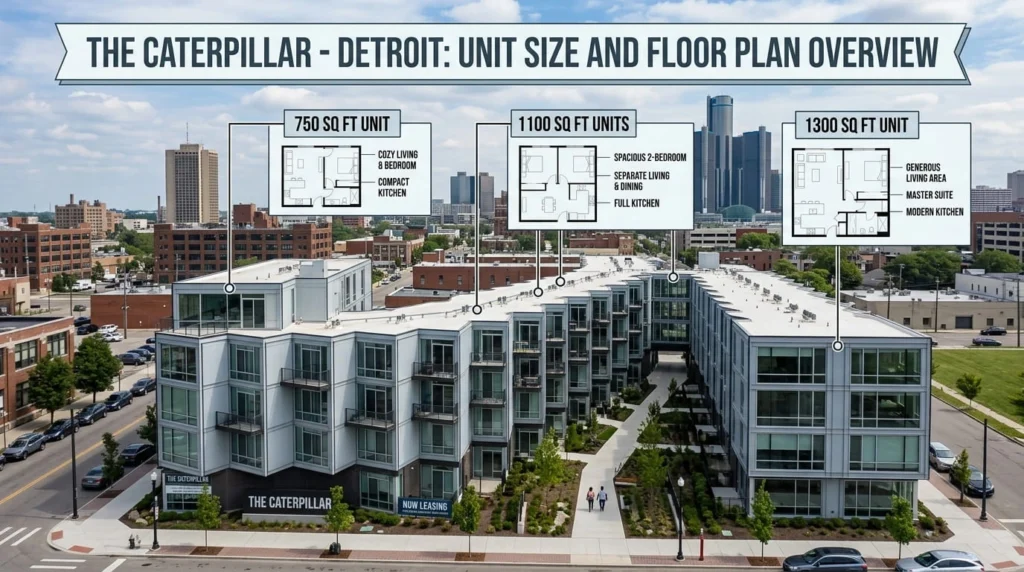
The housing options cover three distinct unit sizes 750 sq ft, 1100 sq ft, and 1300 sq ft dwellings making the square footage choices practical for different lifestyle needs. Whether you need a compact living space or something more generous, the available units accommodate a real range in size of households. The housing units are not cookie-cutter each set of floor plans reflects the caterpillar housing design philosophy of blending unit availability with character. From what I have seen across similar rental units markets, offering three clear size options within one housing project is a smart move that keeps unit sizes accessible without sacrificing the overall living space quality these dwellings are built around.
How Caterpillar Connects to Detroit’s Quonset Hut Legacy
Caterpillar sits just down the street from Prince Concepts’ first project in Detroit, Michigan a Quonset hut project called True North, located in the Core City neighborhood. That earlier housing project was a landmark moment. It was the first major development the Core City urban area had seen in 60 years. Prince Concepts brought in architect Edwin Chan in 2016 to lead the architectural design and architectural collaboration that made True North possible. Having followed urban development projects across Detroit, I know how rare it is for a single team to genuinely shift the energy of an entire residential area but that is exactly what happened here.
What made True North stand out was the deliberate approach to designing Quonset hut structures at different angles, in different shapes, and across different sizes. The variation in hut shapes and shapes and sizes was not accidental. It was a calculated architectural design move to carve out open outdoor spaces that would enhance the community feel of the location. The outdoor spaces created through these design angles gave the neighborhood breathing room and a genuine sense of community. That foundation of community development and area development thinking laid the groundwork for everything Prince Concepts would go on to build including the bold caterpillar housing concept that now stands just down the same street.
Conclusion:
Caterpillar is not just a housing project it is a statement about what urban development can look like when creativity, architectural collaboration, and community purpose come together. Prince Concepts and Philip Kafka have taken a simple steel structure and turned it into one of Detroit‘s most talked-about caterpillar housing concepts complete with futuristic interiors, calming curves, ethereal natural light, and thoughtfully designed living units that serve real people with real needs. From the Core City roots of True North to the bold architectural design of Caterpillar, this team has proven that innovative housing design does not require conventional thinking just vision, the right architect, and the courage to design something entirely new.
Frequently Asked Questions (FAQ’s)
Caterpillar is a single-structure housing development from Prince Concepts, built inside one long Quonset-style hut made by SteelMaster. It holds eight total units — six residential and two live/work spaces inside a structure that runs 46 feet wide and 192 feet long. Having covered several modular housing projects, this one stands out for fitting a mixed-use community into just one steel shell.
True North used several separate Quonset huts set at different angles to open up shared outdoor space in Core City. Caterpillar instead consolidates everything into a single hut, with all eight units built along one continuous structure rather than spread across multiple buildings. The two projects share a design lineage but take opposite approaches to layout.
SteelMaster built each side of the hut with dozens of windows and doors, a detail Senior Project Manager Greg Broderick worked through directly with developer Philip Kafka. Combined with the 23-foot ceilings inside each unit, this keeps light moving through the space rather than settling in one spot. It’s a detail that separates Caterpillar from a typical closed-off industrial structure.
Units come in three sizes, around 750, 1,100, and 1,300 square feet — so renters can pick based on space needs rather than a one-size-fits-all layout. Leasing opened January 1, 2021, with construction wrapping that March, a notably fast turnaround for a project of this scale.
Architect Ishtiaq Rafiuddin led the design, continuing a partnership with Kafka that started years earlier on Takoi, a Thai restaurant in Detroit. That project was Rafiuddin’s first as an independent architect, and the trust built there carried directly into how Caterpillar’s design decisions were made.

6 thoughts on “How Detroit’s Caterpillar Housing Project Is Redefining Modern Urban Living”