
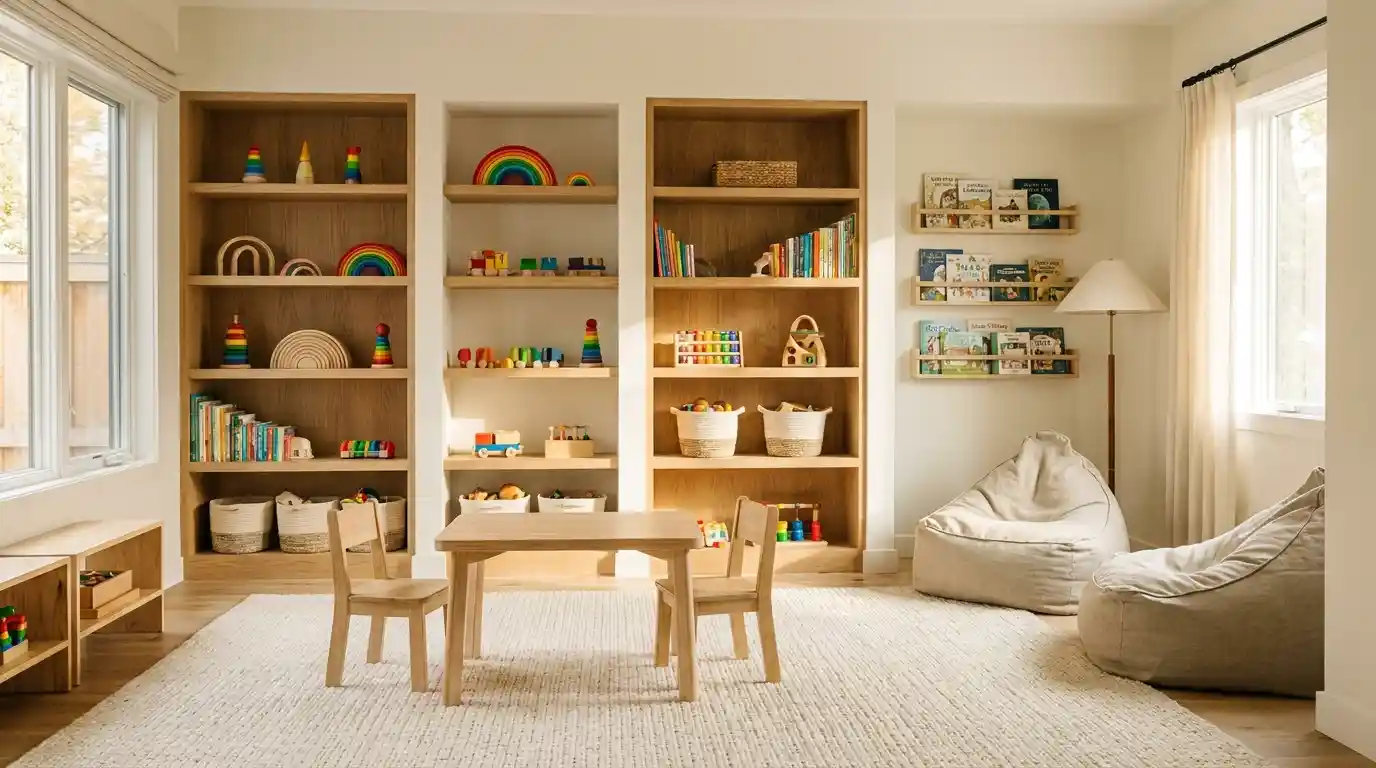

The playroom may very well prove to be one of the most satisfying rooms you could ever design within your family home. I shall never forget standing in our basement with a tape measure attempting to decide on a place to begin from. Designing numerous child-friendly rooms for families for many years taught me exactly what works. A good playroom should not be necessarily fancy or costly. All that it has to be is an honest reflection of what your kid actually needs right now.
Start With Location and a Clear Design Vision
Choose a place which is easily accessible from the kitchen and a place from where you can monitor your kids without being overly present. Children, especially toddlers between the ages of 2 to 5, prefer to remain near the center of activities of the family. A walk-in closet, a basement corner, or an extra bedroom would do wonderfully. I turned my narrow bonus room into a perfect playroom for three boys. What worked best for me was having the same kind of design flow throughout our house right from the beginning. Consider color coordination from the very beginning a calm, neutral background with vibrant colors creates perfect whimsy. Space, jungle, or unicorn themes appear magical but become impractical once the child grows beyond the age of six.
Choose Furniture That Grows With Your Child
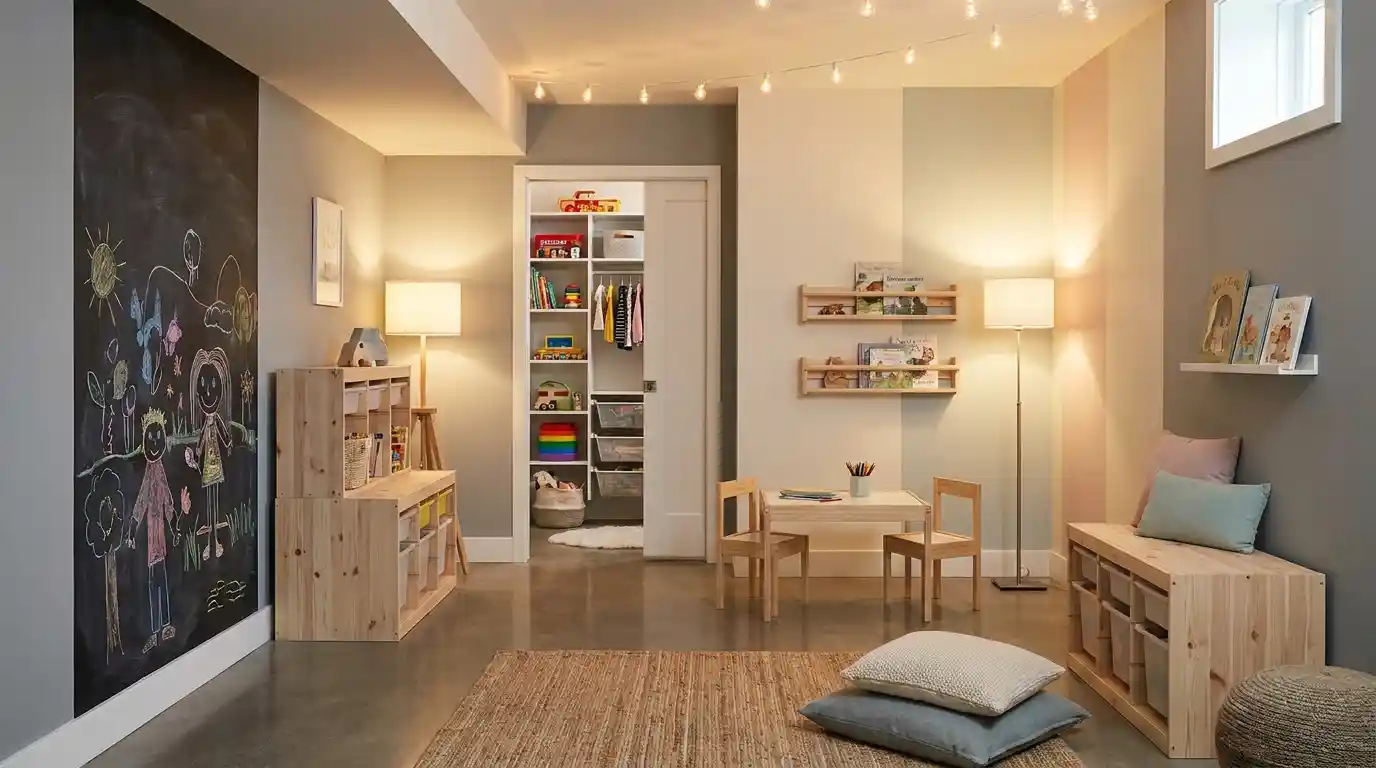
The right furniture transforms an ordinary room into a truly kid-friendly, functional playground. Start with a sturdy play table the activity table from Crate and Kids is built beautifully to last. A LINNMON tabletop paired with TROFAST storage units creates an incredible open workspace and creative desk. The TROFAST drawers keep bricks, blocks, cars, trucks, and Lego sets sorted and perfectly accessible. Set the desk height around 22 inches that suits the average first-grader comfortably. Add a chair that supports good posture during art projects and daily homework.
Nuggets are honestly outstanding they function as sofas, ottomans, and fort walls together. My boys used them from toddler years through age six without any slowdown. Bean bag chairs in the reading corner offer a comfortable seat for introverted children. On the other hand, bean bag loungers and floor mats facilitate physical activity and open-ended play for outgoing and happy children.
The Montessori shelving unit allows a child aged three years to pick up toys independently by placing them at their eye level. Bookshelves, bin shelves, and book racks are all used for storage purposes but in different ways. The armchair and accent stools provide some character to the playroom without dominating it. The bunk beds or lofts work great for bedrooms combined with playrooms because they save up on floor space. The canopy bed gives a magical touch to the playroom, which children enjoy. Bookcase beds are a smart dual-purpose solution that save valuable floor space effectively.
Build Smart Storage From Day One
Here is something I learned the hard way: decluttering a disorganized playroom is completely overwhelming. Storage should be your first decision, never the last thought. The IKEA TROFAST system is a strong starting point for any age and budget. The drawers handle Legos, science kits, rock collections, model planes, and Erector sets easily. Sort items by category Lego pieces can go into sorted, neutral-toned drawers organized by primary colors. Transportation toys, large bulky items, and soft play equipment each need their own designated zones.
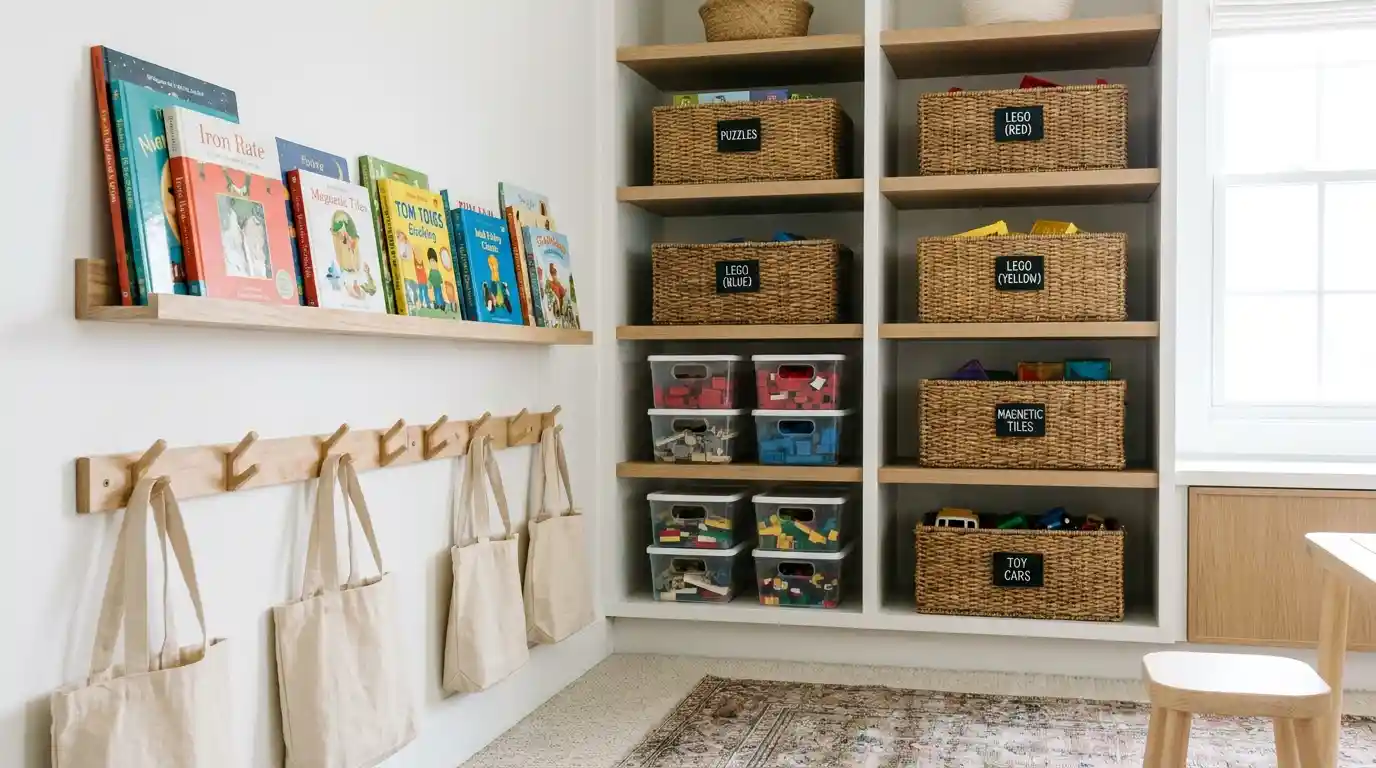
This keeps cleanup predictable and consistent for children across all ages. Magnetic tiles need flat, accessible storagea shallow cart or bin shelf works perfectly here. For chunky puzzles, jigsaws, and sound puzzles, place them in baskets hung on walls so that losing puzzle pieces won’t be a worry anymore. A great idea would be to use a small bag for each jigsaw puzzle including one with 1000 pieces. Keep a tote or a monogrammed bag at the entrance to collect wandering things.
Wall storage is genuinely underused in most playrooms I have ever seen. Wood wall hooks, a picture ledge from IKEA, and a wall storage rack all free up floor space. Hang bags for art supplies, books, and small collections of cars or trains on vertical wall space. This keeps the floor clear for active play while giving every item a visible, accessible home. Bar stools near a tall activity counter give older kids a comfortable spot to build or draw.
Create Zones for Every Type of Play
The best playrooms divide naturally into zones, each serving a distinct type of play. An art center with a dedicated craft cart and organized art supplies is outstanding for creativity We have one set up since our boys were in preschool and they use that cart every morning. Put the art area close to a chalkboard wall or chalkboard wallpaper, as that will ensure that your drawings take place on the right surface. This is also an effective element of your homeschooling setup for those of you who homeschool daily. Accent tables can be placed around to store paints, kinetic sand, and playdough.
Your construction area should contain Lego, bricks, blocks, and Erector sets. The train table is ideal for children aged between 2 and 5 years old. Screen-free, open-ended play at this zone builds imagination and discovery skills that last years. Place a Montessori shelf here so toddlers and preschoolers can access pieces fully independently.
A reading nook is one of the most calming corners you can create inside any playroom. Use bean bag chairs, a felt garland, and colorful books arranged on wall shelves for a cozy effect. Books used as decor are an affordable detail that also inspires daily story time naturally. I always play a soft background playlist here — the right music sets the mood for quiet discovery.
A board games and puzzles zone keeps jigsaws, sound puzzles, and games gathered in one place. Benches with storage underneath are perfect additions to this zone for kids of all ages. Label everything clearly so the routine of cleanup stays predictable and consistent from age 3 onward.
Design the Art Wall and Workspace
One of my favorite playroom features is a dedicated art storage wall above the play table. A picture ledge displays books and finished artwork simultaneously, turning creative output into beautiful decor. Add wall hooks for tote bags, a rack for rolled paper, and open shelves for supplies. This setup keeps the tabletop clean and the workspace truly functional for projects and school homework. As children grow from preschool through the first-grader years, this wall grows alongside them naturally. Simply swap art supplies for science kits or Erector sets as their interests and needs shift over time.
Think Beyond the Basement: Indoor Play Centers and Commercial Spaces
Not every family has a dedicated room at home, and that is perfectly fine. Commercial indoor playground options from manufacturers offer setups ranging from mini centers covering 50-100 square meters. Larger entertainment center builds can go well beyond 100 square meters for serious commercial investment. Such facilities include trampoline parks, ninja warrior courses, and rope play structures meant for the active kids. Climbing walls, swing sets, spring riders, merry-go-rounds, and inflatables are the facilities that ensure constant movement among children. Interactive games and soft play facilities complement the entertainment facilities.
The facilities cater for ages from 6-24 months all the way to 2-12 years. The product range available in the catalog is made up of 96, 110, 116, 120, 126, and 135 units for different kinds of facilities. For those who intend to install facilities meant for birthday parties, the process, including installation and warranty, is very promising. In your own home setting, even your small backyard can accommodate a swing set, climbing wall or playground facility.
Sensory, Safety, and the Finishing Touches
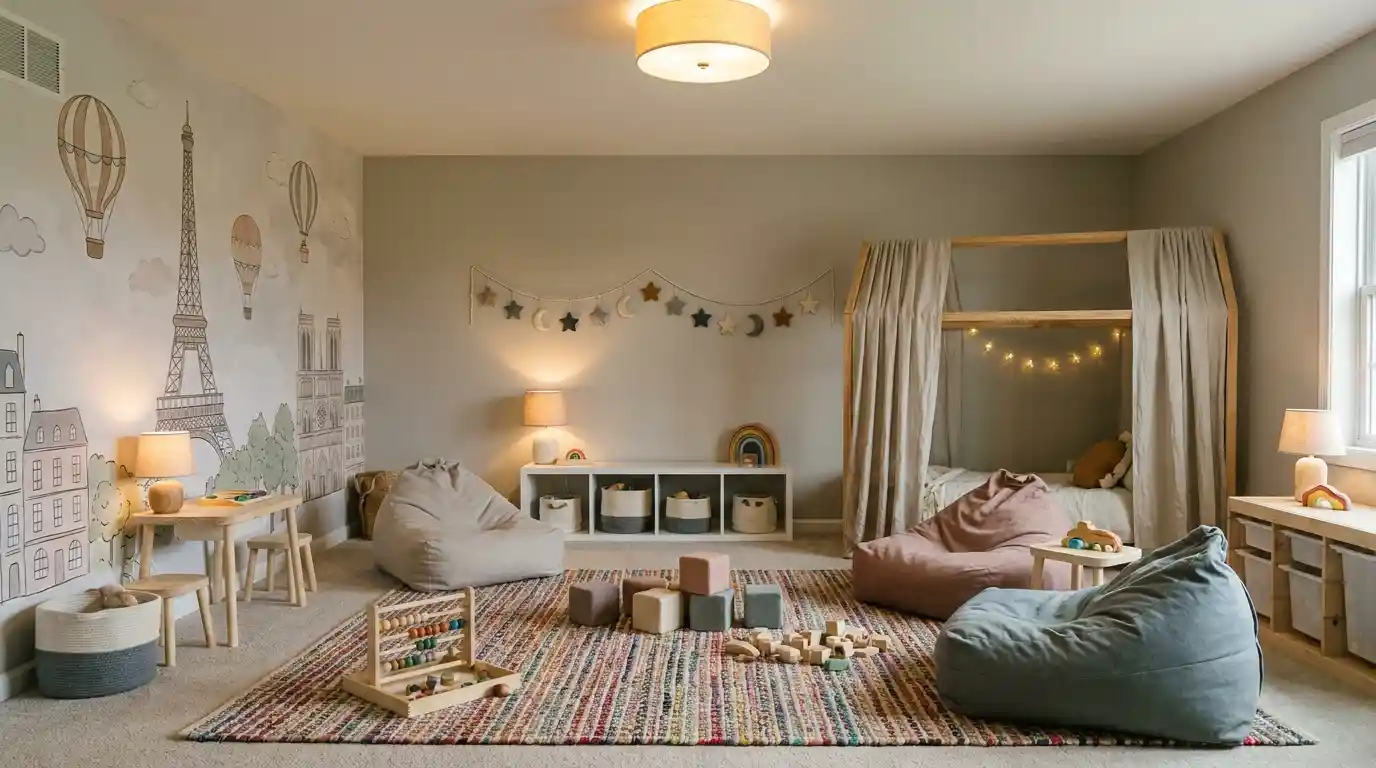
A wonderful playroom needs to be sensory friendly, particularly when the children need a calm environment to flourish. Make sure the room isn’t too bright and paint walls in neutral colors. The addition of color can be made using rugs and other accents. Area rugs help to divide up space and provide warmth in basement or hard flooring areas. Sensory-friendly seats such as floor cushions, beanbag chairs, and soft rugs provide every child with a comfortable place to land. Layering the lighting includes overhead lighting along with soft accent lamps to suit all moods. Decorative finishes may include Parisian-themed mural painting or colorful felt garland.
The playroom is more than just a room it is a constant invitation to imagine, create, and discover. Lastly, make sure you convey to your child how much you appreciate their play and creativity. Let them give input which color bin holds their cars, where the fort walls go. When children feel noticed inside the design of their own space, they use it longer. They maintain it better, and they play in ways that inspire you to simply sit and watch.
Conclusion
The truth of the matter is that there will never come a day when the playroom will be completed. It will always have to change with time, just like your growing kid. In no case should your choice of a playroom be motivated by costliness or the amount of time spent making it. The best playroom should be one that your kid always runs to with a lot of excitement each morning. It does not matter whether it is a walk-in closet, part of a basement, or a special room; it will depend on your imagination and ability to make it interesting for your kid. Make it as simple as possible and ensure that the items purchased can withstand wear and tear. A good playroom not only houses toys but also helps shape your child’s imagination and creativity.
Frequently Asked Questions (FAQ’s)
A good playroom should match your child’s age, interests, and daily activities rather than focusing only on decoration. Start by choosing a practical location, flexible furniture, and storage solutions that make play easier and cleanup manageable.
The best approach is to create dedicated storage zones for different types of toys, such as blocks, puzzles, art supplies, and vehicles. Systems such as drawers, shelves, and labelled bins help children learn where items belong after playtime.
Furniture that adapts as children grow is usually the most practical choice. Play tables, Montessori shelves, modular seating like Nugget-style cushions, and storage benches can support activities from toddler years through early school age.
Divide the room into simple activity zones, such as an art corner, a reading nook, a building area, and a puzzle or game section. This helps children move between creative, quiet, and active play without making the space feel crowded.
A safe playroom should include comfortable flooring, proper lighting, accessible storage, and furniture designed for children’s use. Sensory-friendly elements like soft rugs, cushions, and calm colours can also make the room more comfortable for people with different needs.

4 thoughts on “How to Build the Perfect Playroom Your Kids Will Actually Use”