

DIY Rug Cleaner Solution have nothing to do with the recipe. It has everything to do with applying the wrong recipe to the wrong fiber. I learned this the hard way after watching a perfectly good wool rug go dull and brittle after someone not me, for the record used a standard 1:1 white vinegar and water mix on it three times in one month. The fibers did not fall apart immediately. That is almost worse. The damage showed up slowly, the pile started matting, and by the time it was obvious what had happened, reversing it was not really an option.
So before we get into any recipe, that is the thing that needs settling first.
Your Rug Fiber Is the Only Thing That Should Be Deciding Your Recipe
Synthetic rugs polyester, nylon, polypropylene are genuinely forgiving. Stain-resistant coatings, tight machine-made weave, tolerant of water-based solutions, mild acidity, even a little scrubbing if you are not being reckless about it. A braided polyester area rug in a hallway can take a fairly aggressive homemade rug cleaning solution and come out fine.
Wool is completely different chemistry and a completely different conversation. Wool fibers hold natural lanolin strip that out and the pile goes dry, coarse, eventually brittle. High pH cleaners do this. Undiluted vinegar, repeated over time, does this. Even over-wetting does this if the rug sits damp long enough to shift the fiber structure at the root. Wool needs dilution, minimal moisture, and blotting that pulls up rather than pushing down.
Jute and rubber-backed rugs keep them away from machine washing entirely. They shed. They shrink. The rubber backing can degrade and separate. Silk is not a DIY project under any circumstances; that goes straight to a professional. Cotton and synthetic cotton blends are more forgiving than wool, usually machine washable on a gentle cycle, though the care tag on that specific rug is the final word, not any general rule including this one.
Get fiber type sorted first. Everything downstream of that decision becomes straightforward.
The Actual DIY Rug Cleaner Solution Recipes — What Goes in the Spray Bottle and Why
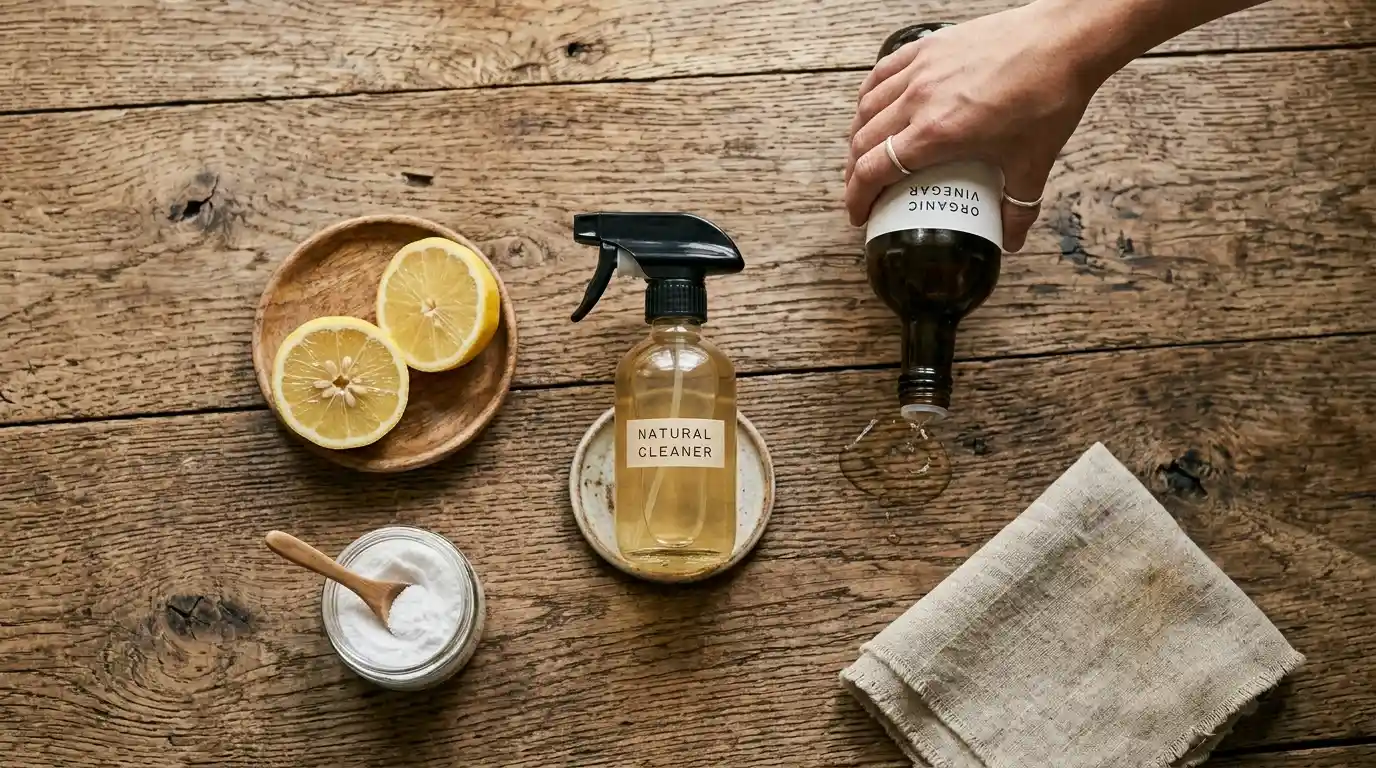
For synthetic rugs and everyday spot cleaning, this is the formula I come back to constantly: 2 cups warm water, 1 tablespoon distilled white vinegar, 1 tablespoon mild dish soap or washing-up liquid if you are in the UK, all of it in a spray bottle. The white vinegar brings mild acidity that cuts through grime and neutralizes surface odors without leaving residue on non-porous synthetic fibers. The dish soap handles the degreasing side it is why this works on food spills and oily stains where vinegar alone just moves the mess around.
Spray the stained area lightly. Let it sit for 5 to 10 minutes. Then blot always blot, with a clean microfiber cloth or a stack of paper towels, pressing down and lifting straight up. Scrubbing is how you push a stain deeper into carpet fibers and fray the pile surface at the same time. Do not do it. For wool rugs and natural fiber rugs, the recipe changes significantly. Equal parts distilled white vinegar and lukewarm water, nothing added, applied damp not wet.
The spray bottle keeps you honest about moisture level. Blot dry right away and get airflow on the room. If you need something with a bit more degreasing reach there is oil in the stain, or a food residue that is not shifting a small amount of castile soap works. But if your recipe also includes vinegar, use Sal Suds instead of straight castile. This is one of those things that is genuinely not obvious: castile soap and vinegar mixed together cancel each other’s cleaning effectiveness out. The acid neutralizes the soap. People use both, notice the result is underwhelming, and blame the ingredients instead of the combination.
A wool-safe detergent is the cleaner option for wool rugs where you want consistent soap action without that interaction problem.
For the fizzing carpet stain method baking soda down first, directly onto the stain, then spray with equal parts white vinegar and warm water over the top of it. The fizzing reaction is not just visual drama. It mechanically loosens embedded dirt from deep inside carpet fibers and brings debris up toward the surface. Ten to fifteen minutes, then blot, then vacuum once the area is completely dry. For stubborn stains, repeat the whole process rather than pressing harder on a single round.
Pet Urine, Red Wine, Coffee, Blood — Each One Needs a Different Approach
Pet stains are where most diy rug cleaner solution attempts run into a wall. The issue is chemical, not mechanical. Fresh urine is mostly urea, which is close to odorless on its own. Bacteria break it down into ammonia and mercaptans that sharp eye-watering smell. Left longer, uric acid crystals form and physically bond to rug fibers. Warm water and dish soap handle what is sitting on the surface. They do not touch those crystals.
For fresh dog or cat urine on a synthetic rug: blot up as much liquid as possible with paper towels first, pressing down with real weight on them. Then mix one part hydrogen peroxide to one part warm water, add two or three drops of dish soap, and apply it directly to the uric acid stain. Let it sit for 10 to 15 minutes before blotting. Do not use this on wool, colored rugs, or oriental rugs without a colorfastness test on a hidden area first — hydrogen peroxide has bleaching properties and it will lift dye from sensitive fibers without warning.
A UV black light flashlight is one of those tools that feels excessive until you use one. Old urine stains glow yellowish under it, and the actual affected area is almost always larger than the surface stain suggests. Urine seeps through the rug into the padding beneath; the visible stain is just where it went in. Treat the full area the light shows you.
For older, set-in pet stains, enzymatic cleaners are genuinely the better tool. Enzyme cleaners contain live bacteria that break down the organic compounds in urine at a molecular level they eliminate the odor source rather than layering something over it. The vinegar and baking soda fizzing method is genuinely useful but it cannot replicate that chemistry. One important note for wool and antique oriental rug owners: check that any enzymatic cleaner you use is wool-safe, because natural dyes in hand-knotted rugs are prone to dye instability and color bleeding when exposed to certain enzyme formulations.
Red wine and coffee stains respond well to the hydrogen peroxide and dish soap combination apply, let sit, blot, cold water rinse, blot dry again. For blood stains, cold water only. Hot water sets blood protein into carpet fibers in a way that is essentially permanent, which is one of those things that feels counterintuitive until it happens to you once.
One more thing on pet accidents: never use ammonia-based cleaners on urine stains. Ammonia is chemically similar enough to urine that it reads as a signal to the pet that the spot is still in use. It is the single fastest way to guarantee repeat accidents in the same location.
The Dry Rug Cleaner Recipe Nobody Talks About Enough
There are situations where you do not want any moisture near the rug at all. The room has poor ventilation. The rug is thick and takes days to dry thoroughly. You are dealing with a high-traffic area that needs deodorizing three times a week and you cannot keep soaking and drying it. This is where a dry carpet powder recipe earns its place.
Combine 2 cups baking soda, half a cup cornstarch, half a cup cornmeal, 1 tablespoon borax, 1 teaspoon cinnamon, and two or three dried bay leaves in a food processor. Blend until the bay leaves have broken down to a fine powder and everything is uniform. Store in a mason jar or any airtight container.
To use it: sprinkle across the rug surface, work it in with a soft hand brush so it reaches into the fibers, and leave it for as long as you can manage overnight if possible. Then vacuum thoroughly. The baking soda handles odor absorption. Cornstarch pulls in moisture. Borax works against mold growth. The cinnamon and bay leaves give a natural scent without the allergen concerns that come with essential oils for households with pets or respiratory sensitivities. Keep children and pets off the rug while the powder is sitting borax should not be ingested.
Using Homemade Carpet Shampoo in a Bissell or Rug Doctor Machine
The concentrated machine formula that costs roughly $1 per gallon to mix versus the $19 to $20 commercial Rug Doctor formula uses OxiClean, liquid Tide laundry detergent, an all-purpose cleaner like LA’s Totally Awesome, and a small amount of Downy fabric softener dissolved into a gallon of hot water. Add roughly a quarter cup of that concentrate to the machine’s water reservoir per fill, not the whole gallon.
Rubbing alcohol in the water tank helps with faster drying time. A capful of Lysol Laundry Sanitizer gives the solution an antibacterial quality without the foam problem you get from adding laundry detergent at full strength. Full-strength detergent in a carpet cleaning machine is how you end up with foam clogging the extraction system, so do not do it regardless of what you have read elsewhere.
Read the machine warranty documentation before using any third-party solution. Some manufacturers void the warranty outright for it. In practice I have run homemade shampoo through multiple Bissell machines and a rented Rug Doctor over the years without mechanical issues, but that is not a guarantee, and it is your machine.
After machine cleaning, run the extraction pass slowly and repeat it. Get as much moisture out as you can before the rug sits. A rug that holds water against its backing is inviting mold, and damp conditions indoors can trigger other problems too — including drain flies and moisture problems in the home that are harder to deal with than a wet rug.
Things That Will Cost You More Than Hiring a Professional in the First Place
Using undiluted vinegar on a wool rug. Hot water on blood. Scrubbing anything instead of blotting it. Steam cleaning a pet stain before treating it heat drives organic stains deeper into fibers and can make the odor impossible to fully remove after. Over-wetting a jute rug. Mixing castile soap and vinegar and being confused when it underperforms.
And the patch test. I keep coming back to it because people skip it every single time right up until the moment they have a faded circle in the middle of an expensive rug. Five seconds on a hidden area. Wait and look. That check is the difference between a $5 cleaning job and a $400 replacement conversation with yourself.
Rotate the rug every six months to prevent uneven wear in high-traffic areas. These small habits sit inside a larger picture of home improvements that protect your floors long-term. Put doormats at entry points to cut down on dirt buildup reaching the fibers in the first place. Use a rug pad underneath that allows airflow rather than one that traps moisture against the backing. Address spills immediately the longer uric acid and organic stain compounds sit against rug fibers, the more work you are creating for yourself later. Every hour of delay on a fresh stain is roughly equivalent to a full extra cleaning round once it has dried.
Conclusion
A good diy rug cleaner solution does not require a trip to the store or a $20 bottle of concentrate. White vinegar, baking soda, dish soap, hydrogen peroxide these are the ingredients doing the actual work in most commercial formulas anyway, just marked up and repackaged. The difference between a pantry recipe that works and one that quietly damages your rug comes down to knowing your fiber type, respecting dilution ratios, and never skipping the patch test. Get those three things right and homemade rug cleaning stops feeling like a gamble and starts feeling like the obvious choice.
Frequently Asked Questions (FAQ’s)
The best DIY rug cleaner solution depends on the rug’s fibre type, but a common option for synthetic rugs is a mixture of warm water, distilled white vinegar, and mild dish soap. Always test the solution on a hidden area first to make sure it does not affect the colour or texture.
No, different rug materials require different cleaning approaches. Synthetic rugs are generally more tolerant of homemade solutions, while wool, jute, silk, and other delicate fibres need gentler methods to avoid damage.
Pet urine stains often require more than surface cleaning, as odour-causing compounds can remain deep within the fibres. For synthetic rugs, hydrogen peroxide, warm water, and a small amount of dish soap can help treat fresh stains, while older stains may require an enzymatic cleaner.
Vinegar and baking soda can help loosen dirt and odours when used correctly, especially on suitable rug materials. However, they are not a universal solution, and delicate rugs, such as wool or antique rugs, may require more specialised care to prevent damage to fibres or dyes.
A homemade carpet shampoo can reduce cleaning costs, but it should only be used after checking the machine manufacturer’s guidelines and warranty terms. Using the wrong formula or too much detergent can create foam problems, leave residue, or affect the machine’s performance.

2 thoughts on “The Only DIY Rug Cleaner Solution Guide You Actually Need”