
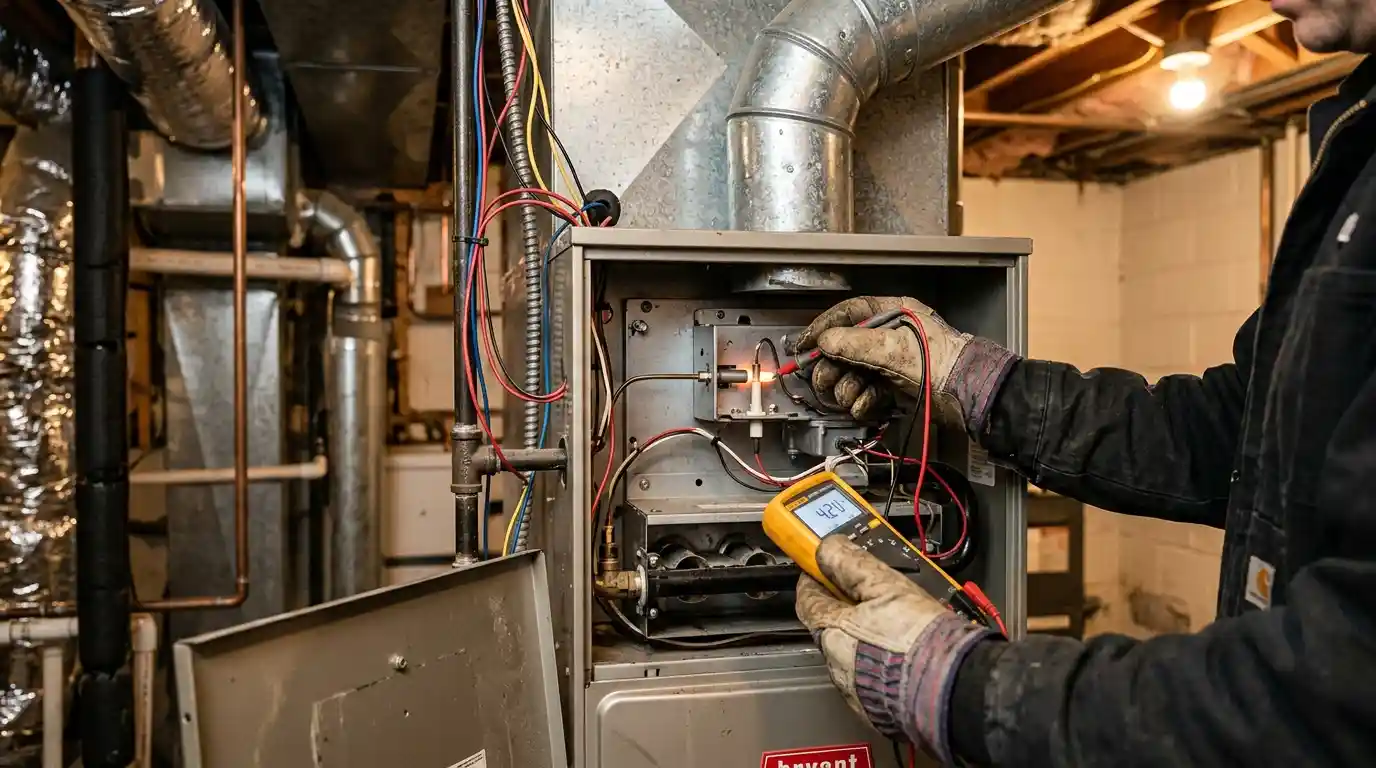

Got a call last January, two in the morning, furnace dead, temperature dropping fast. Turned out to be a forty-dollar flame sensor, filthy, needed a quick wipe with steel wool. Client had already braced for a full furnace replacement. That’s the thing about home heating system repair. Most people jump straight to worst-case pricing the second heat stops, when the actual fix usually costs a fraction of that. Ignitors, flame sensors, thermostats, most common failures run under three hundred dollars. Heat exchangers are the real exception, and I’ll get to why below. Going through what actually breaks, what it costs, and when a repair genuinely isn’t worth it anymore.
What Usually Fails First in a Heating System
Ignitors go first more than anything else I run into. Hot-surface ignitors especially, they’re basically a heating element themselves, and heating elements wear out with use. Cracks slowly, stops glowing hot enough to light the burner. Replacement runs somewhere between a hundred and two hundred fifty dollars most of the time, occasionally climbing toward four hundred depending on the furnace model and how accessible the part actually is.
Flame sensors fail almost as often, honestly maybe just as much in my experience. Coated in carbon buildup after enough burn cycles. Once that coating’s thick enough, the sensor can’t detect a flame anymore. Furnace lights, shuts right back off, over and over, that short-cycling pattern people describe on the phone before I even get there. Cleaning fixes it half the time, quick fifteen-minute job. Replacement, when cleaning doesn’t cut it, runs eighty to two hundred fifty dollars, nothing dramatic.
Most sudden no-heat calls trace back to one of these two parts, not something bigger. Both wear out from normal use over a few heating seasons. Both get diagnosed fast once a technician knows what to check first. I usually check the flame sensor before anything else now, saves time. Neither failure means the furnace itself is dying, just that a small part finally gave out after doing its job for years.
Thermostat Problems Are Easy to Misdiagnose
A dead thermostat looks exactly like a dead furnace from where you’re standing. That mix-up costs people money constantly, more than it should. No heat, no response to adjusting the temperature, screen blank or unresponsive. Before assuming the furnace itself failed, check the thermostat batteries first. Genuinely. Cheapest possible fix, and it gets overlooked constantly, even by people who should know better.
Smart thermostats add another layer of things that go wrong. Wiring compatibility issues. App connectivity problems. A firmware glitch that stops it from talking to the furnace at all, which I’ve seen more than once lately as these units get more common. Standard thermostat repair or replacement runs a hundred to three hundred dollars. Smart thermostat issues land in a similar range, sometimes pushing past that if a full upgrade makes more sense than fixing the old unit.
Worth calling a technician for the thermostat before assuming the whole furnace failed, yes, every time. Costs far less to diagnose than people assume walking in. A five-minute check often rules the furnace out entirely, or confirms it, before any furnace-specific parts get touched. Saves a wasted service call aimed at the wrong component.
The Heat Exchanger Is the Repair That Actually Matters
This is the one repair on the whole list I take seriously, every single time, no exceptions. A cracked heat exchanger isn’t just expensive. It’s a real safety issue. A crack lets carbon monoxide leak straight into the airflow the furnace pushes through the house, and that’s not something to gamble on. Heat exchanger repair typically runs five hundred to twenty-five hundred dollars, depending on severity and how hard the part is to access. Full replacement climbs higher, often fifteen hundred to four thousand, sometimes more if the furnace is old enough that matching parts are getting hard to find.
Heat exchangers generally last fifteen to twenty years under normal use. Matters a lot when deciding whether repair or replacement makes financial sense. A cracked exchanger in a furnace already twelve or fourteen years old usually means replacement, not repair, since sinking real money into an aging unit rarely pays off long term, I’ve told plenty of clients this exact thing.
A cracked heat exchanger usually shows up through a carbon monoxide detector triggering, a strange odor near the furnace, or visible cracking a technician catches during inspection. Not a DIY diagnosis, ever, under any circumstances. The safety risk means a licensed technician needs to check it with the right equipment, not a homeowner guessing off symptoms alone.
When Repair Costs More Than It’s Worth
Most home heating system repair falls comfortably under five hundred dollars. Genuinely the range I’d expect for a typical breakdown, ignitor, flame sensor, thermostat, a stuck zone valve. Blower motor repair runs higher, often four hundred to nine hundred dollars, sometimes pushing toward fifteen hundred for full replacement on certain models.
Once repair costs start approaching half the price of a new furnace installed, replacement usually makes more sense, especially past the ten to fifteen year mark. A two-thousand-dollar heat exchanger replacement on an eighteen-year-old furnace is a completely different math problem than the same repair on a five-year-old unit still well within its expected lifespan.
Conclusion
Home heating system repair covers a huge range, a forty-dollar flame sensor cleaning on one end, a heat exchanger replacement pushing past three thousand dollars on the other. Most common failures land on the cheap end, and jumping straight to replacement usually wastes money on a furnace with plenty of life left in it. Get a proper diagnosis first. Ask exactly which part failed. Weigh that repair cost against furnace age before committing to anything bigger than the actual problem calls for.
FAQs
How much does home heating system repair typically cost?
Most common repairs, ignitor replacement, flame sensor cleaning, thermostat issues, fall between eighty and four hundred dollars depending on the part. Heat exchanger repair or replacement runs significantly higher, often five hundred to four thousand dollars, due to the complexity and safety inspection involved.
Should I repair or replace my furnace if it keeps breaking down?
If repair costs approach half the price of a new furnace, especially on a unit already past ten to fifteen years old, replacement usually makes more financial sense. Frequent breakdowns on an aging system often signal it’s nearing the end of its useful life regardless of the specific repair needed.
Can I do basic heating system repairs myself?
Some minor tasks, like replacing a thermostat battery or checking an air filter, are safe for most homeowners to handle. Anything involving gas components, the heat exchanger, or electrical wiring should go to a licensed technician, since misdiagnosing these issues carries real safety risk.
How fast can I get emergency heating repair during a winter breakdown?
Many heating repair companies offer same-day or 24-hour emergency service specifically for no-heat situations during cold weather. Response time varies by company and location, so it’s worth confirming emergency availability and any after-hours service fees before calling in a true emergency.

2 thoughts on “Home Heating System Repair: 7 Costs That Change Based on What’s Actually Broken”