
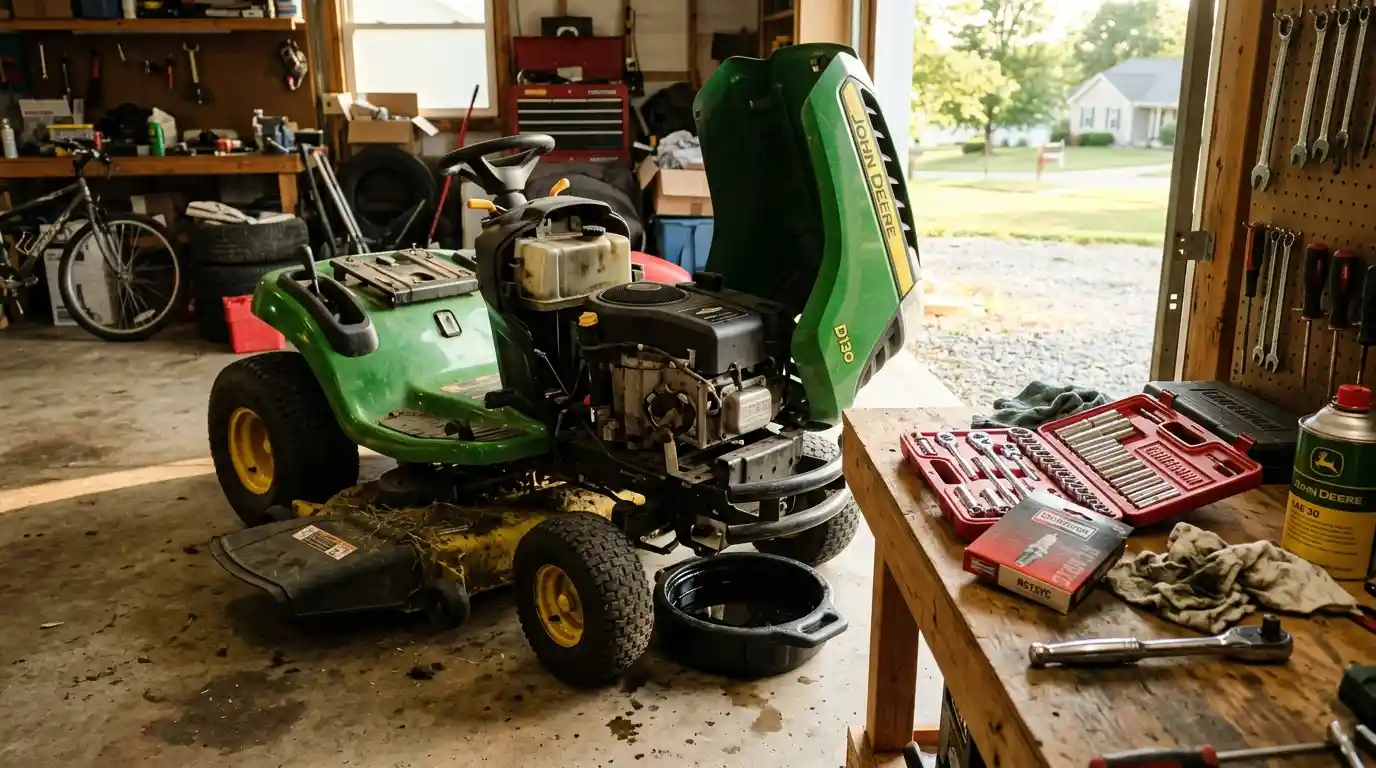

My neighbor’s riding mower died mid-lawn last summer, just stopped, no warning, grass half cut in a stripe across his yard. He assumed the engine was shot and started pricing a new mower before even calling anyone. Turned out to be a $15 spark plug and forty minutes of his own time once someone actually looked at it. That gap between what he assumed and what it actually cost stuck with me. This piece walks through what mower repair actually involves, what’s genuinely worth attempting yourself, and when calling a mobile mechanic beats replacing the whole machine.
What Actually Causes Most Mower Repair Calls
Fuel problems account for a huge share of the mower repair jobs mechanics see, more than engine failure or anything mechanically serious. Ethanol-blended gas, the E10 stuff sold at most gas stations, starts gumming up a carburetor within weeks if a mower sits unused, especially over winter. My neighbor’s mower had actually sat for about two months before that failed cut, plenty of time for old fuel to start causing exactly the kind of surging and stalling he’d been blaming on the engine itself.
His actual fix ended up simpler than the fuel angle though, a fouled spark plug from running rough for a while beforehand. The mechanic he eventually called checked that first, before touching the carburetor at all, and found corrosion on the electrode gap that a fresh plug fixed immediately. He said the whole diagnostic took maybe ten minutes once someone who actually knew what they were looking for got involved.
What’s the Most Common Reason a Mower Won’t Start?
Old or ethanol-degraded fuel is the single most common culprit, especially after a mower’s sat unused for more than a month or two. A fouled spark plug comes in a close second, often caused by running on bad fuel for a while before the engine finally quits outright. My neighbor’s situation hit both issues at once, which is honestly pretty typical, one problem usually leads straight into the next if nobody catches it early.
DIY Fixes Worth Attempting Before Calling Anyone
Spark plug replacement is about as accessible as mower repair gets, a basic socket wrench and a new plug running somewhere in the ten to twenty dollar range depending on the mower. My neighbor watched his mechanic do it once and said he felt genuinely silly afterward for not trying it himself first, the whole job took less time than driving to a shop would have.
Blade sharpening turned out to be his second lesson that same afternoon, doable with a file or a bench grinder if you’re careful, though balancing the blade afterward matters more than people expect going in. His mower had actually been tearing grass instead of cutting it cleanly for a couple weeks before the engine finally quit, a ragged, torn-looking stripe he’d been blaming on the machine slowing down somehow. The mechanic took one look at the lawn and immediately said the blade was the giveaway, dull edges shred grass tips rather than slicing through, something my neighbor genuinely hadn’t connected until it got pointed out standing right there on his own lawn.
Can I Fix My Own Lawn Mower or Do I Need a Professional?
My neighbor’s answer, in hindsight, was pretty simple, he should’ve tried the small stuff first before spiraling into pricing a whole new machine. A new spark plug, a sharper blade, a fresh air filter, these are things most people can handle with tools already sitting in a garage somewhere. His whole ordeal cost him almost nothing once he actually knew what the problem was, which is really the argument for attempting the basics before assuming disaster. Once you’re inside the carburetor itself, or dealing with the transmission, that’s genuinely a different situation, worth handing off rather than guessing your way through.
What Mower Repair Actually Costs
Costs depend a lot on what kind of mower you’re dealing with and how deep the problem actually runs. A walk-behind tune-up landed my neighbor somewhere under a hundred dollars once everything got tallied up, spark plug included, and he said he’d genuinely braced for something closer to four figures given how the mower had died. Riding mowers tend to run higher for a comparable job, the bigger engine and extra components adding real cost, though even that number stays a fraction of what a replacement machine would run.
Mobile repair adds its own wrinkle too, most services tack on a separate visit fee before labor and parts even enter the conversation. My neighbor didn’t think to ask about this upfront, and the fee surprised him a little on the final bill, nothing outrageous, just something he wished he’d known walking in rather than finding out after the fact.
Is It Worth Paying for Mower Repair or Should I Just Buy a New One?
Repair almost always wins financially unless you’re dealing with a cracked block or a genuinely seized motor. My neighbor’s near-miss decision to start shopping for a whole new riding mower before anyone had even diagnosed his old one is honestly the exact overreaction this piece is trying to head off for someone else reading this right now. A tune-up costing well under a hundred dollars, which is what his ended up running, makes buying new look almost silly in hindsight.
Seasonal Maintenance That Prevents Bigger Repairs
A lot of mower repair calls trace back to skipped seasonal maintenance rather than any single dramatic failure. My neighbor never once added fuel stabilizer before storing his mower for winter, a five-minute step he now does religiously every fall since realizing it would’ve prevented his entire ordeal from ever starting in the first place.
Oil changes fell into the same neglected category for him. He genuinely couldn’t remember the last time he’d changed his, years probably, and that alone likely fed into the rough running that eventually fouled his spark plug to begin with. He’s since started marking a reminder on his calendar roughly once a season, a habit that costs him almost nothing compared to what skipping it nearly did.
How Often Should a Lawn Mower Get Serviced?
Most manufacturers recommend a full tune-up once per season, oil changed somewhere around every fifty hours of actual use. My neighbor skipped this for years running, by his own admission, and the compounding effect eventually looked and felt like a much scarier failure than it actually was underneath. A once-a-year habit, the thing he’s finally adopted now, tends to catch small problems long before they turn into the kind of dramatic breakdown that has someone pricing a whole new machine in a panic.
Conclusion
Mower repair usually costs a lot less than the panic suggests. My neighbor’s dead engine turned out to be old fuel, a dull blade, and one fouled spark plug, fixed in under an hour for less than a hundred dollars once someone actually looked at it properly. He’d already started pricing a replacement mower before any of that came to light. Check the simple things first, and keep up with fuel stabilizer and oil changes every season, and there’s a real chance the bigger, scarier repair never shows up to begin with.
Frequently Asked Questions
How much does mower repair typically cost?
A standard walk-behind tune-up usually runs sixty to a hundred dollars, while riding mower service tends to cost more, often somewhere between one hundred and two hundred dollars. Mobile repair services often add a separate service call fee on top of parts and labor, so asking for a full quote upfront avoids surprises.
Why does my mower run rough after sitting all winter?
Ethanol-blended fuel degrades within weeks of sitting unused, gumming up the carburetor and causing rough running, surging, or a complete failure to start. Adding fuel stabilizer before winter storage, or simply draining the tank, prevents most of this specific problem from happening in the first place.
Can I sharpen my own mower blade at home?
Yes, with a file or bench grinder and some care, blade sharpening is a manageable DIY task for most homeowners. Balancing the blade afterward matters just as much as the sharpening itself, since an unbalanced blade causes vibration that wears out other components faster than normal wear would.
When should I call a professional instead of attempting mower repair myself?
Anything involving carburetor rebuilds, transmission issues, or actual engine teardown is generally worth leaving to a professional rather than risking a costly mistake. Simpler tasks, spark plugs, air filters, oil changes, blade sharpening, are usually safe to attempt yourself with basic tools and a little patience.
