

My neighbor’s water heater failed at 2am last winter and flooded most of his basement before he even woke up. He called the first company that showed up in a Google search, panicked, and ended up paying way more than he needed to for what turned out to be a fairly contained job once someone calmer actually looked at it the next morning. That’s the trap a lot of people fall into with water damage repair. The emergency feels bigger than it actually is in the moment, and fear makes for genuinely bad negotiating at 2am. This piece breaks down what repair actually costs depending on how bad things really are. What’s realistic to handle yourself, and how to avoid overpaying during a moment when you’re not exactly thinking clearly.
What Water Damage Repair Actually Costs
Costs swing enormously depending on severity which sounds obvious. But genuinely trips people up when they’re standing in an inch of water at 2am not thinking straight. National averages tracked through sites like HomeGuide put the overall range somewhere between $450 and $16,000, with an average closer to $3,867 for a typical job, though that spread’s honestly almost useless as a planning number on its own until you know which end you’re actually on.
My neighbor’s basement ended up costing him around $2,200. Once the second, calmer quote came in, moderate territory involving some drywall replacement. But thankfully nothing structural since he’d caught it early. Minor cosmetic stuff, a stain, some light discoloration, tends to stay in the low hundreds. Severe cases climb into the thousands fast though, sometimes well past $5,000, and that gap between his basement and a genuinely bad case is mostly a matter of how far the water traveled before anyone actually noticed it.
How Much Does Water Damage Repair Typically Cost?
Honestly depends entirely on severity, there’s no single number worth memorizing here the way my neighbor initially hoped there’d be. His own basement landed in that moderate middle ground, drywall replacement but no structural work. Somewhere around $2,200 once he’d gotten a second opinion. Minor stains often stay under $500, while anything touching framing or insulation can run well past $5,000. Sometimes into five figures for the genuinely severe cases.
The Water Itself Matters More Than People Think
Not all water damage is created equal. And this matters way more than most people realize before they’re actually standing in it wondering what to do next. Restoration professionals split water into three rough categories, and my neighbor got lucky. His was clean water straight from the tank, the easiest kind to deal with by a wide margin.
Grey water’s a step up in risk, the stuff coming out of a washing machine or a minor plumbing leak. Carrying some contamination even if it looks basically fine sitting there. Black water is where things get genuinely serious, sewage or floodwater. And honestly if my neighbor’s flood had been that instead of a clean tank rupture. The whole story would’ve gone very differently, full material removal, professional decontamination, none of the simple dry-and-patch approach that worked for him.
What’s the Difference Between Grey Water and Black Water Damage?
Grey water comes from things like washing machines or minor leaks, some contamination risk but not immediately dangerous if you’re moving fast on it. Black water means sewage or floodwater, and that’s genuinely hazardous stuff, my neighbor dodged this entirely by pure luck since his was a clean supply line. People mixing these up is a common and honestly pretty costly mistake, treating something like black water as just an inconvenient mess instead of what it actually is.
The Clock Matters More Than the Water Itself
Timing turned out to be the part my neighbor got right almost by accident, and it’s the piece people underestimate constantly in the moment. Materials sitting wet for more than roughly 24 to 48 hours start creating real mold risk, according to guidelines referenced across most restoration industry standards, worth checking against something like the IICRC’s published material directly if the exact number matters to you.
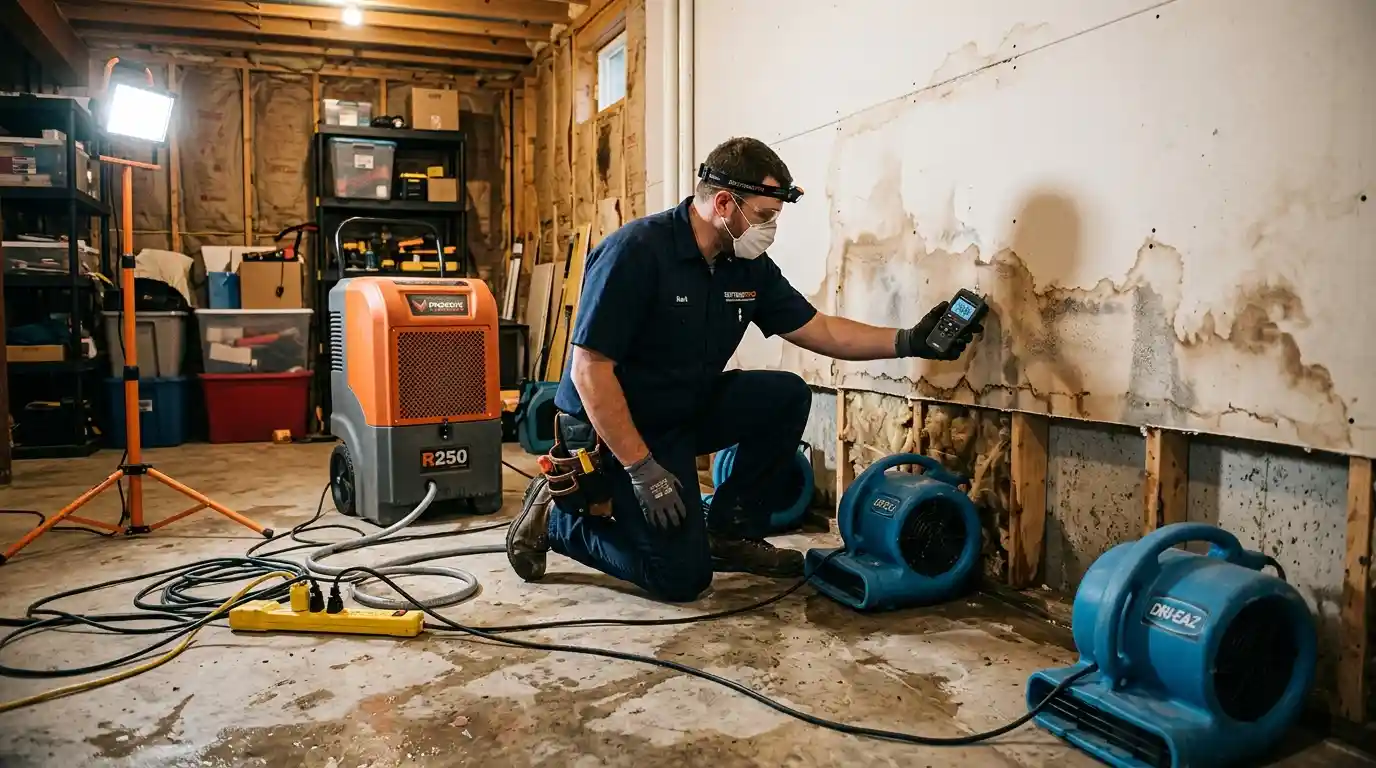
He had air movers running in his basement within about six hours of finding the flood, mostly out of panic rather than any real strategy, but it probably saved him a much bigger bill down the line. Mold remediation itself runs considerably higher than straightforward water repair, sometimes climbing into the tens of thousands for a full-home situation, so that early scramble ended up being the smartest thing he did that whole night even if it didn’t feel like it at the time.
How Quickly Does Mold Start Growing After Water Damage?
Somewhere around 24 to 48 hours of standing moisture is usually enough, based on most restoration industry guidance, though humid climates and poorly ventilated spaces like basements shrink that window further. My neighbor’s six-hour head start with fans running probably had more to do with luck and adrenaline than planning, but it worked. Getting air movement going immediately, even before anyone professional shows up, genuinely buys real time.
DIY vs Calling a Professional
Some jobs are genuinely fine to handle yourself, and I’d push back on anyone insisting every water incident needs a full restoration crew. A small, clean-water stain caught early and fully dried often just needs a stain-blocking primer and some paint, materials running somewhere in the $50 to $150 range if you’re doing it solo on a weekend.
My neighbor actually wanted to handle the whole basement himself at first, said as much while I was standing there watching him mop, right up until he realized the water had soaked into the wall insulation behind the drywall. That’s where DIY stopped making sense for him fast. Professional gear, industrial dehumidifiers, moisture meters reading below the visible surface, catches things a guy with a shop-vac and stubborn optimism just can’t.
Can I Fix Minor Water Damage Myself Without Hiring a Professional?
Yes, for small clean-water damage caught quickly, doing it yourself is often perfectly reasonable and a lot cheaper than calling someone in. A stained ceiling or a patch of discolored drywall, dried thoroughly inside that 48-hour window, usually just needs basic materials and a free afternoon. My neighbor’s mistake wasn’t attempting DIY, it was not realizing the insulation was wet until he’d already started painting over the wrong problem.
Getting a Fair Quote Without the Panic Tax
Emergencies are exactly when people overpay, and restoration companies generally know it whether they’d admit it or not. My neighbor’s first quote, gathered while he was still standing in ankle-deep water at 2am half asleep, came in noticeably higher than the second one he got the next morning after he’d actually calmed down and called around properly.
Getting at least two estimates matters even during a real emergency, most reputable companies will still show up same-day even if you take an extra hour to make a second call first. Ask specifically what’s included in the number, extraction, equipment rental days, any mold prevention treatment, since vague estimates tend to balloon once the actual work starts. IICRC certification’s worth checking too, my neighbor didn’t think to ask either company about it, which in hindsight he said he regretted a little.
Should I Get Multiple Quotes During a Water Damage Emergency?
Yes, even mid-emergency, a second quote is almost always worth the extra hour it costs to get one. My neighbor’s second quote landed meaningfully lower than his panicked first call, which turned out to be a pretty predictable pattern once the adrenaline actually wore off. Most reputable companies still respond same-day, so that extra hour rarely means real additional damage while you wait.
Conclusion
Water damage repair costs come down almost entirely to which category of water you’re dealing with, how long things sat wet, and whether structural elements got involved. Clean water caught fast, like my neighbor’s basement, is often manageable and reasonably affordable. Grey and black water, or anything that sat for days before anyone noticed, usually needs a professional and a real budget behind it. Move fast on drying no matter what, that 48-hour window is the single biggest lever you actually control, and get more than one quote before committing, especially if the first call happened while you were still half asleep and panicking.
Frequently Asked Questions
How much does water damage repair cost on average?
National averages run from around $450 to $16,000 depending heavily on severity, with a typical job landing closer to $3,867. Minor cosmetic damage stays far below that average, while severe structural damage pushes well above it.
Is water damage repair covered by homeowners insurance?
Coverage depends on the cause, sudden and accidental damage like a burst pipe is typically covered, while gradual leaks or flooding from an outside source often aren’t. Check your specific policy and document everything with photos before cleanup begins, since insurers usually require proof of the original damage.
How do I know if water damage has caused mold?
Visible mold, a musty smell, or discoloration that keeps spreading after an area seems dry are the clearest signs. Materials that stayed wet beyond 48 hours are at meaningfully higher risk even without visible signs yet, so a professional inspection is worth considering if you’re unsure.
What’s the difference between water mitigation and water damage repair?
Mitigation refers to the immediate steps, extraction, drying, stopping further damage, taken right after water exposure happens. Repair covers the actual reconstruction afterward, replacing drywall, flooring, or insulation, and typically starts once mitigation has already stopped things from spreading further.

2 thoughts on “Water Damage Repair: 7 Costs Homeowners Get Wrong Before Calling a Pro”