
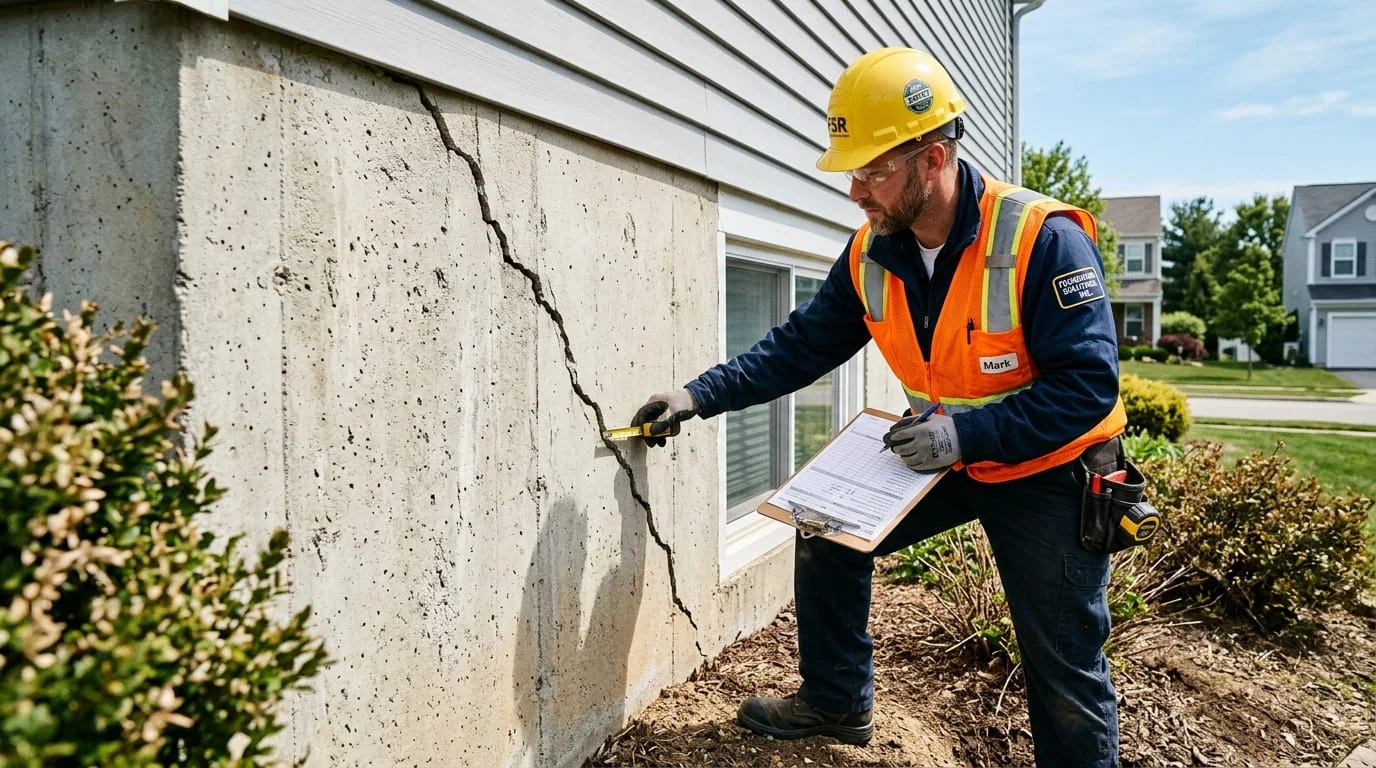

When I found myself standing in front of a diagonal crack in the doorway frame of the house, which was under my supervision, the homeowner had been monitoring it for two whole years. “It’s just the foundation of the house settling down,” they said. It wasn’t. By the time we got an inspection, the foundation of the house had moved in such a way that it changed the course of actions from crack injection to push piers. This particular story stuck with me for quite some time. House Foundation Repair issues don’t stand still, and by the time you notice them, their cost multiplies greatly.
This book will provide you with all the necessary information related to house foundations, from their symptoms to possible ways of fixing the problem and expenses associated with those repairs.
Definition of House Foundation Repair and Causes
Foundation repair is a construction technique designed to restore structural stability to a building that has had foundation settlement, foundation movement, cracks in the foundation, or foundation damage due to soil movement, moisture intrusion, or environmental pressure. In all cases, the purpose is the same; that is, to ensure that the building’s structural stability remains intact.
The reasons behind foundation damage are essential in determining the best course of action. There are many factors causing foundation damage, but most of them occur beneath the surface of the building.
One factor that causes foundation damage is expansive soil, which includes various types such as montmorillonite clay, bentonite, smectite, chlorite, illite, and vermiculite. These soils expand considerably when exposed to moisture, shrink when dry, and apply tremendous pressure to any building constructed upon them. Building structures without soil stabilization in such soils are prone to foundation settling and require foundation repair.
Poor drainage exacerbates the situation. Water-filled gutters, improper placement of downspouts, poor soil grading, and plumbing leaks are just some ways in which your foundation is being soaked by excessive moisture. The weakening of foundation support and eventual washing away of earth under your house will cause what is known as differential settlement, when your house settles on an uneven surface due to different rates of settlement.
Fill dirt, improperly compacted during construction of the house, leads to an uneven load bearing surface for the foundation. Droughts allow tree roots to suck up any remaining moisture in clay soils. In turn, this causes the earth to shrink. Extreme changes in temperatures also lead to expansion and contraction of soil surfaces.
Foundation Types and Their Importance
Any foundation repair strategy must first consider the type of foundation that supports your house because they behave differently depending on how the soil moves around and interacts with moisture. Different strategies are applied to each foundation type for successful repair.
Concrete slab foundations, commonly referred to as slab-on-grade, are made up of a single level of concrete measuring between 4 and 6 inches thick, which is often strengthened by reinforcing bars or wire mesh. Since utility connections pass through this concrete, foundation repairs can be challenging when working with a slab foundation. Post tensioned slab foundations involve pre-installed cables within the concrete that are pulled taut once the concrete hardens.
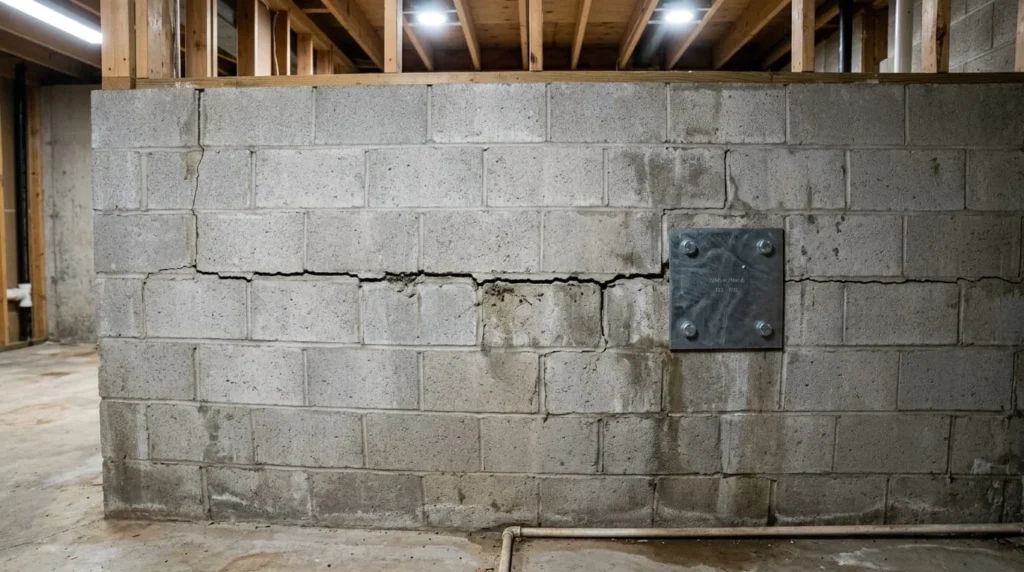
The basement foundations are constructed below ground level where the walls are usually 8 inches in thickness and are supported with footings on all sides. Such structures are susceptible to hydrostatic pressure, i.e., the pressure exerted by the water saturated soil pushing inwards causing bowed walls, horizontal cracks, water seepage. Waterproofing is an inevitable feature of foundation repair in such basements.
The raised foundations that include the crawl space foundations elevate the structure above ground level using the stem wall structure that supports the building above. Crawl space foundations provide easy access during repairs, although they may get affected from sagging joists and moisture.
Pier and Beam foundations use vertical piers set into concrete pads which in turn support horizontal beams. Such foundation types are popular with the old houses and those located in shifting soil regions. Although easy access for repair exists, they are susceptible to rodent infestation and wood rot among other hazards in the crawl space region.
Warning Signs You Should Never Ignore
Foundation issues rarely come up and make their presence known. They make their presence felt through tiny symptoms that the homeowner ignores or delays acting on. Identifying them early makes all the difference.
The first and foremost visible indicator of foundation problems is cracks. Vertical cracks could have been caused due to the settling of the foundation and differ in seriousness according to the size of the crack. Diagonal and stair-step cracks in masonry usually mean there is differential settlement occurring. Horizontal cracks in basement foundation walls are among the worst because they show inward soil pressure, which will eventually cause the wall to fall.
Widenings in foundation cracks indicate foundation movement and call for a professional inspection.Hairline cracks should not be taken lightly either. They allow water infiltration into the foundation and will cause further damage to the interior parts of the foundation.
Cracks in drywall above the door frames or along the ceiling, as well as stair-step cracks in brick veneer, point to structural movement. The same can be seen on the outside through stucco cracks growing within weeks or months. Foundation problems can be easily spotted in slab foundations through cracks in the flooring of such structures, especially if the cracks include heave or displacement.
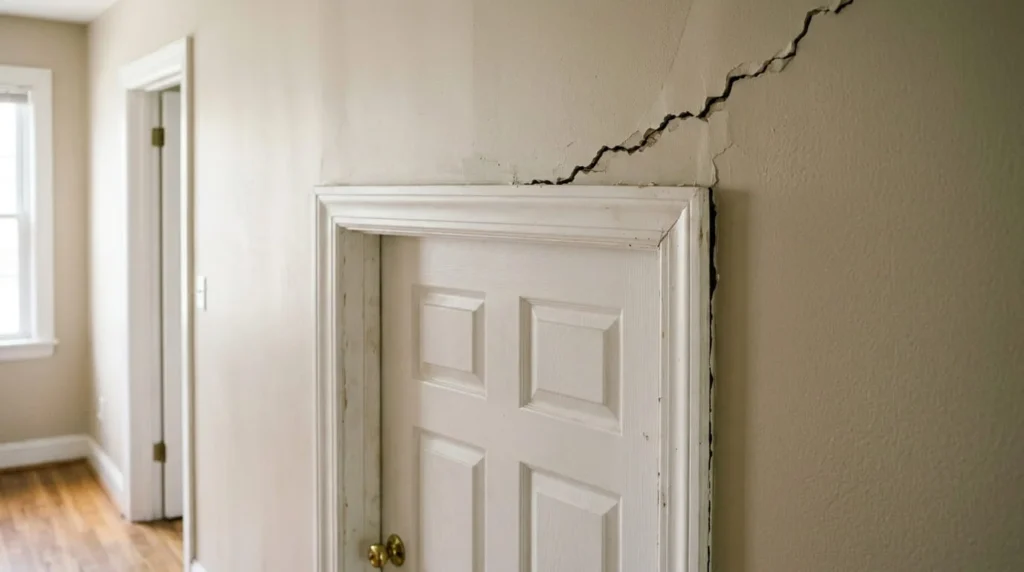
Doors and windows that won’t shut because they are stuck, especially if the condition persists after repair, indicate frame warping due to foundation settlement. A leaning chimney that has pulled away from the building’s exterior surface, or one that has chimney cracks at its base or chimney cracks around the firebox, indicates a serious threat to health and safety, usually requiring push piers or helical piers for repair.
A smell of dampness in the basement or crawlspace indicates problems with water that weaken the foundation soil, result in mold and mildew formation, induce wood decay, and compromise the strength of your house structure, all without showing any visible cracks. The white chalky residue called efflorescence on the walls of your basement foundation indicates water penetration through concrete. In addition, if you see pests such as termites and rodents in your crawl space, you should deal with both the pest and moisture control issues.
Effective Foundation Repair Techniques
After accurately assessing your foundation problem, choosing the appropriate repair technique will depend on factors such as the type of foundation you have, soil type, and existing symptoms.
Push Piers System
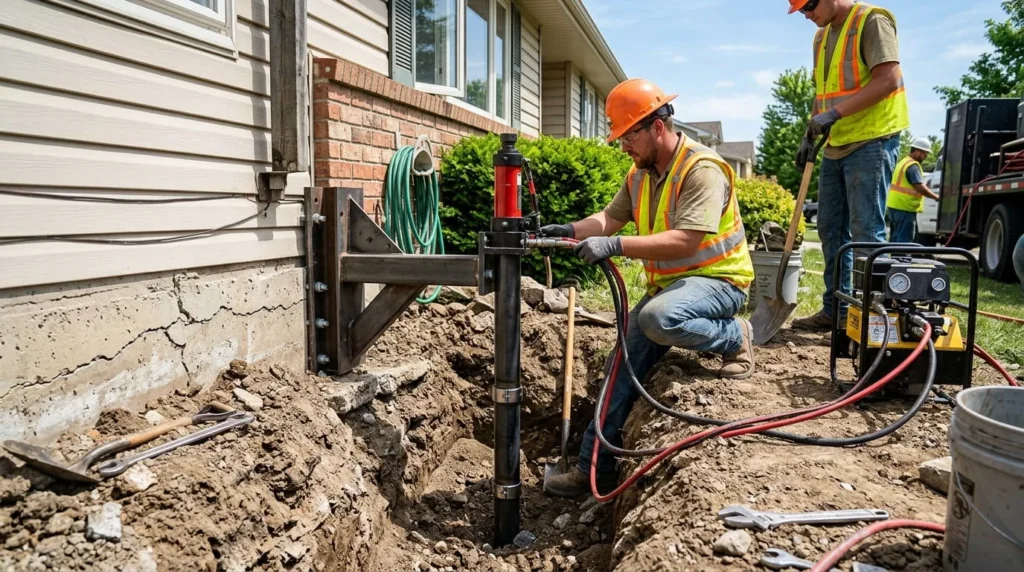
Push piers involve inserting long steel pilings deep into the earth using a hydraulic system until they hit bedrock or a stable soil layer. Brackets made of steel connect the pier with the perimeter footing, and hydraulic jacks are then used to raise the foundation back to its initial state. Push piers are one of the most durable foundation repair techniques, especially when dealing with foundation settling and extreme differential settlement.
Helical Pier System
The helical pier system employs the use of helical plates that allow for mechanical insertion into the ground without any structural load for installation purposes. Therefore, helical piers are suitable for light loads such as porches, room additions, and situations where immediate loading capability is needed without any additional settlement. Moreover, helical piers are favored when there is variation in soil composition and insufficient overhead clearance for the use of hydraulic jacks. Helical piers cost between $1,700 and $2,200 each compared to push piers that cost between $1,300 and $1,600 each due to deeper penetration into difficult soils.
Slab Pier System
The slab pier system involves drilling a small hole into the concrete slab and advancing into the soil using hydraulic jacks to raise the slab back into alignment. Compared to push piers, no soil removal is necessary hence minimal disruption of the home’s interior environment since this system works from inside the home.
Wall Anchors
Wall anchors address bowing walls caused by hydrostatic pressure and expansive soil. Steel brackets are installed inside the basement foundation wall, a rod is drilled through to stable soil 10 to 20 feet away, and the interior plate is tightened to pull the wall back into alignment over time. Carbon fiber straps and carbon fiber reinforcement offer a lower-profile alternative for walls with less severe horizontal cracks or slight inward lean that does not yet require full wall anchors.
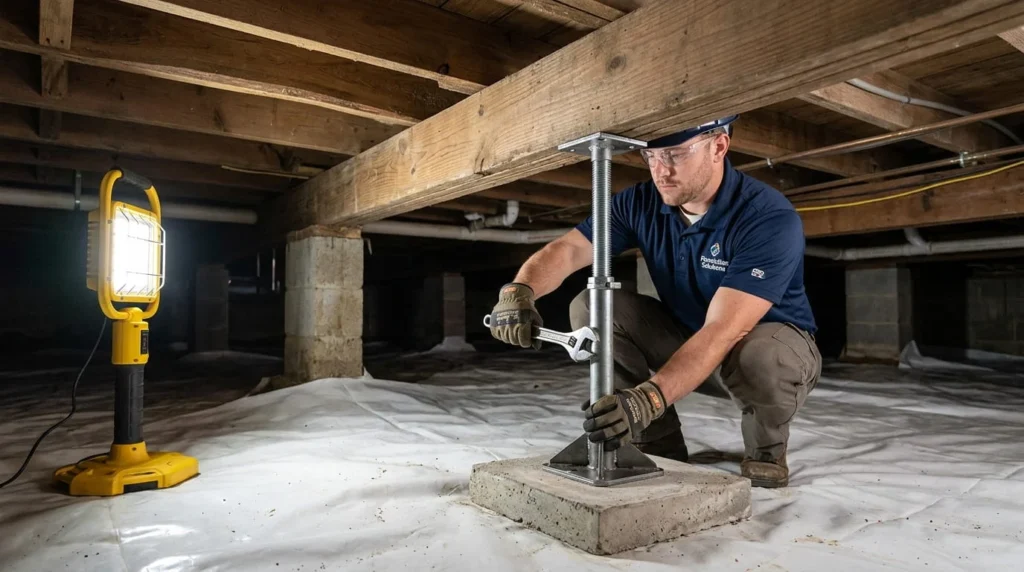
Crawlspace Jacks
Crawlspace jacks which are alternatively referred to as smart jacks are metallic piers which are fixed at concrete foundations under the floors and beams whose structures have been weakened causing them to bend and sink. These crawlspace jacks lift the floors back to normal position, reduce bouncing and squeaking due to structural instability, and can be used together with vapor barrier installation, sump pump installation, and dehumidifiers.
Technique Of Crack Injection
The technique of crack injection which includes polyurethane injection or epoxy injection repairs minor cracks or hairline cracks as well as minor vertical cracks and prevents them from further damage or spreading. Polyurethane injection repairs and seals hairline cracks to prevent water intrusion. On the other hand, epoxy injection provides structural bonding of the weakened cracks.
Mudjacking, slabjacking, or polyjacking are effective ways of leveling concrete that have been affected by erosion, insufficient soil compaction, or water infiltration underneath the slab surface. Polyjacking involves the use of highly dense expanding foam to raise the concrete slabs rapidly and effectively. The mudjacking process entails pumping a heavy slurry mixture below the sunken area. They are both much more economical compared to the replacement of concrete, and the rates are between $9 to $11 per square foot externally, and $12 to $14 per square foot internally.
Costs of Foundation Repairs: Be Prepared for Reality
Foundation repairs will depend on the method used, type of foundation, soil conditions, and size of the house and its excavation. The following are realistic estimates of foundation repair costs.
Pier push foundation repair: $1,300 to $1,600 per pier. A corner settlement requiring 4 piers runs $5,000 to $7,000. Cracks extending 12 or more feet from a corner typically require 6 piers at $7,000 to $9,000. Full-side or two-wall settlement needing 7 or more piers runs $14,000 to $16,000. Pier depth significantly affects cost in some markets, piers reach standard depths under 30 feet with no surcharge, while others require 100 feet or more of steel and labor.
Helical Piers: Ranging between $1,700 and $2,200 each, and similar cost structures apply to the entire project based on push pier pricing according to number needed.
Basement Waterproofing: Full-perimeter basement waterproofing that includes 140 linear feet with wall liner is priced at around $14,000. Additional features include a commercial-grade dehumidifier ($2,500), second sump pump for systems larger than 140 linear feet ($1,500), and DuraWall ($2,000
Crawl space encapsulation: Base pricing runs approximately $8 per square foot. An average 1,300 square foot crawl space encapsulation including drainage matting, dehumidifiers, sealed vents, foundation piers, and a quality sump pump lands between $14,000 and $16,000.
Exterior push pier installation adds $300 to $400 per pier over interior installation due to additional excavation and site access requirements. OSHA staging requirements for deeper excavation particularly when 6 to 10 feet of additional digging is needed to reach bedrock also increase total project cost.
Insurance or Home Warranty Coverage for Foundation Repair
Foundation repair is rarely included in homeowner insurance since it does not apply to damage caused by natural settlement, ground movement, or defective workmanship when the foundation was initially constructed. Nevertheless, insurance can cover repairs due to accidents such as the bursting of a water pipe, natural disasters with additional coverage, or fires. On the other hand, foundation repair is usually not covered in home warranties but could be found in higher-end warranty packages with some coverage of structural elements’ failures due to natural wear and tear.
The options for financing foundation repair include in-house financing provided by the company repairing the structure (with zero percent interest on the loan for 24 months), home improvement loans, personal loans, home equity lines of credit or cash-out refinance, credit cards for smaller repairs, and installment payments, whereby the total amount is divided into monthly payments. Additionally, many firms provide discounts to military personnel, veterans, law enforcement officers, firefighters, and teachers as recognition for their services to the community.
Preventative Measures That Actually Work
All foundations are not going to be damage-free and are certainly less likely to remain so where there is expansive soil or large amounts of rainfall. However, many foundation damages are the result of minor errors that can easily be corrected.
Ensure that your downspouts extend 5 to 10 feet away from the foundation and that your gutters are always clean and in working order. Make sure that your landscape grading slopes away from the house. For clay soils in areas where there are frequent droughts, make sure that you use a soaker hose system around the base of your foundation during drought periods.
Make sure that areas around crawl spaces remain well sealed using vapor barriers and that dehumidification works properly.
Also, check for possible leaks around plumbing lines running underneath slab foundations because they contribute to weakening soil structure through soil erosion. Trees should be planted far enough from buildings as the projected maximum heights at which they will reach maturity. This way, the roots of these plants will not deprive clay soil located close to the footers of moisture.
If there are plans for constructions near your home, especially big excavation works and piling operations, take photographs of your foundation before they start. Ground vibrations from such machinery may enlarge cracks in a foundation or bring about differential settlement or changes in ground water levels. It will make it easier to prove that any damage to your foundation was not there originally.
Buying or Selling a Home With Foundation Repair History
Real estate deals aren’t always automatically terminated on account of foundation issues, although the way they are handled could make a huge impact on the process. Foundation problems that go uncorrected, including wall bowing, floor slanting, or even existing foundation cracks, often lead to low-ball offers, financing failure, or an outright rejection from potential homebuyers. On the other hand, homes with corrected foundations especially those certified by warranty sell for their true worth.
The need for disclosure is absolute. Being open about the repair details, the process employed, the qualifications of the repair contractors, and the warranty details enhances consumer trust instead of undermining it. Accompanied by cosmetic repairs that mend cracked drywall surfaces, repainted surfaces, and the restoration of curb appeal, a repaired foundation issue makes any house very competitive in its sales price range.

A home with an unaddressed foundation problem typically sells at a 10 to 20% discount relative to other homes in the same neighborhood that do not have any issues. In itself, that discount could justify foundation repair costs before putting the house up for sale.
Conclusion
When it comes to foundation issues, there is no such thing as self-repairing solutions. Any new crack on the horizontal level, any worsening door jamming, or further tilting of the floors indicate the fact that soil around your house is still shifting and its consequences will keep accumulating. Luckily for today’s homeowners, innovative foundation repair methods such as push piers, helical piers, wall anchors, carbon fiber, and crawlspace stabilizers provide permanent results if they are done by professionals.
Not only will such foundation repairs be backed by a transferable warranty but also there is an option for flexible financing plans and thousands of successful stories to refer to. It doesn’t matter whether you require simple epoxy injection of cracks or more complicated differential settlement correction involving 7 piers or more; the only thing you need is professional consultation. Your house will be the biggest investment of your life. Therefore, all aspects of its performance deserve to be addressed.
Frequently Asked Questions (FAQ’s)
Foundation repair is the process of fixing structural problems caused by soil movement, moisture issues, settlement, or damage beneath a home. It is usually needed when signs like expanding cracks, uneven floors, stuck doors, or wall movement appear.
Common warning signs include widening foundation cracks, diagonal or stair-step cracks, sticking doors and windows, leaning chimneys, and moisture problems in basements or crawl spaces. Early inspection can help prevent more serious structural damage.
The right repair method depends on the foundation type, soil conditions, and the severity of the problem. Options may include push piers for settlement, helical piers for lighter loads, wall anchors for bowing walls, or crack injection for smaller cracks.
Foundation repair costs vary based on the repair technique, house size, soil conditions, and project complexity. For example, push piers may cost around $1,300–$1,600 per pier, while helical piers generally range from $1,700–$2,200 each.
Many foundation issues can be reduced with proper maintenance, including keeping gutters clean, extending downspouts away from the house, maintaining drainage, and controlling moisture around the foundation. Regular checks can help identify small problems before they become major repairs.

13 thoughts on “House Foundation Repair by Rapid Home Direct: The Complete Guide to Signs, Costs and Solutions”