
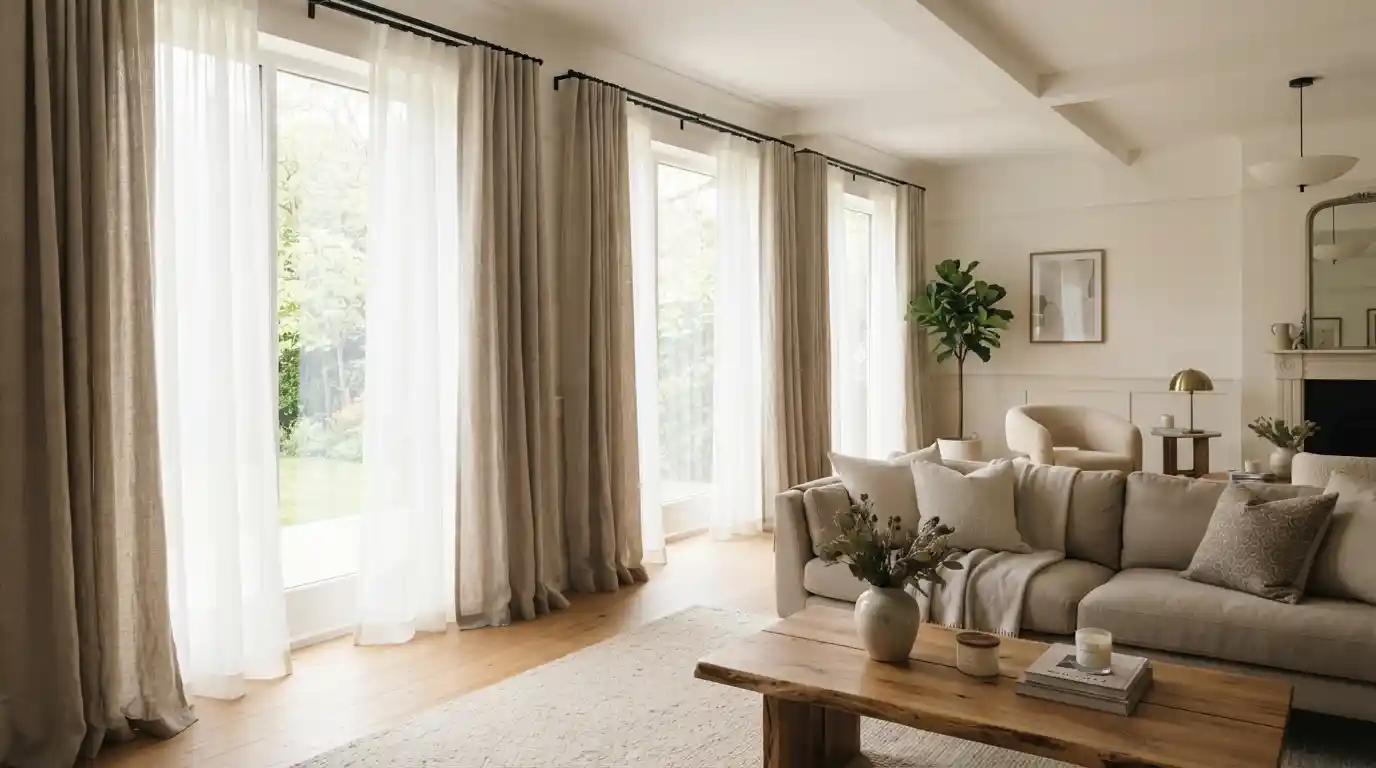

I spent an entire Saturday afternoon with my cousin trying to figure out why her new curtains looked wrong. Right fabric, right color, even the right length on paper. Turned out her installer had mounted the rod flush with the top of the window frame, barely two inches of clearance, and the whole wall looked squashed because of it. She’d spent three weeks agonizing over linen versus velvet and maybe four minutes on where the rod actually went. That order of priorities is backward more often than not. Fabric gets the attention. Rod height, width, and fullness get a guess, and a guess is usually where lounge room curtains quietly go wrong.
Rod Placement Decides More Than the Fabric Ever Will
A curtain that photographs badly rarely has a fabric problem. Nine times out of ten the issue sits higher up, literally, at the rod itself, long before anyone gets to choosing colors or textures.
Mounting Height and Why Higher Almost Always Wins
Four to six inches above the window frame is the number most interior designers default to, and going even higher, sometimes halfway up toward the ceiling, tends to work better than people expect. My cousin’s living room had decent ceiling height on paper, but with the rod sitting right on the frame, the room felt squat regardless of what color she’d painted the walls. Remounting it just six inches higher changed that within an afternoon, no other renovation required. Width deserves equal attention here, and it gets ignored constantly.
A rod needs to run six to twelve inches past the window frame on each side so curtains can stack fully open without blocking any glass during daylight hours. Too many people buy a rod that barely spans the window itself, and the whole setup ends up looking pinched rather than deliberate. Once a rod stretches past roughly seventy inches, a center support bracket stops being optional, since an unsupported span that long will sag under real fabric weight within a season or two. None of this calls for a contractor. A tape measure, a level, and patience to check twice before drilling anything cover most of what’s needed here.
Fullness Ratio and the Flat Curtain Problem
Fullness gets skipped by more people than any other measurement, and it’s usually the reason a ready made curtain looks thin next to a custom one hanging in a showroom. Most designers work from a ratio of one and a half to two times the rod’s width, so a sixty inch rod calls for ninety to one hundred twenty inches of total fabric split across both panels. Heavier drapery and blackout fabric want closer to two to two and a half times that width, since dense material needs the extra volume to actually fold rather than hang flat. Sheers get away with a lighter one and a half times ratio without looking sparse.
A neighbor of mine bought panels technically wide enough to cover her window, but nowhere near full enough for the rod she’d installed, and the fix wasn’t a new fabric, it was simply doubling the yardage. The transformation from flat vertical sheets to soft moving folds happened the moment she reordered with the right ratio in mind. Heading style adds its own small math on top. Grommets need roughly an extra inch of fabric per ring, pinch pleats closer to an inch and a half per pleat. Skip this step, and even beautiful fabric ends up looking like a bedsheet pinned above a window.
How Length Changes What a Lounge Room Curtain Actually Says
Length decisions carry more weight than most people assume walking into a fabric store. The wrong drop can make an expensive fabric look accidental, while the right one dresses up something as plain as a linen panel.
Sill, Floor and Puddle Length, Side by Side
Sill length curtains stop about half an inch above the windowsill, giving a casual, practical look, though anything below the window, a radiator, an outlet, scuffed skirting, stays visible. Apron length runs four to six inches past the sill, covering a bit more ground without going all the way to the floor. Floor length is what most lounge rooms end up choosing, hanging to within half an inch of the ground for a clean finish that doesn’t sweep up dust along the hem.
Puddle length adds another two to six inches that pools deliberately on the floor, reading as more formal, though it’s a genuinely poor fit for a busy lounge room with kids or a dog underfoot most days.My aunt’s house in Yorkshire has floors that settled unevenly decades ago, and one side of her lounge window sat a full inch lower than the other when we measured it last winter. She learned the hard way to always go with the shorter side for sill or float length, since the alternative left one panel dragging on the ground while its twin hovered awkwardly above it. First washes catch people out too.
Bay Windows, Patio Doors and Floor to Ceiling Glass
A standard rectangular window follows the rules above without much fuss, but bay windows, sliding doors, and full height glass each ask for their own approach. Bay windows generally need a curved or angled track that follows the wall’s shape, or separate rods per section if a curved track isn’t available locally. Sliding and patio doors tend to suit a track system better than a rod, mostly because ripple fold fabric moves across that wider span without catching halfway.
My uncle has a full wall of patio glass in his lounge, and dressing it in floor to ceiling curtains made the whole room look taller almost overnight, the kind of change you notice the second you walk back in after painting a room but forgetting the windows.A wide expanse of glass usually wants two jobs done at once, something sheer for daytime and something heavier for evening, rather than one fabric trying to cover both. I’ve seen plenty of lounge rooms with genuinely stunning floor to ceiling windows left bare, and they read colder than a modest window dressed properly, no matter how good the glazing itself looks.
Fabric and Color Choices Built to Last, Not Just to Photograph Well
The fabric picked for a lounge room curtain sets both the mood of the space and how much upkeep it’ll demand down the line. Getting this part right is really about balancing looks against what survives a decade of ordinary family life.
Linen, Velvet and Sheers for Different Lounge Moods
My own lounge room has linen curtains, and three years in they still look slightly rumpled in exactly the way linen is supposed to, never quite ironed flat, which somehow suits the room more than something crisper would. A blend around three hundred forty grams per square yard filters roughly a third to just under half the light coming through, enough brightness without losing all privacy during the day. Velvet belongs in a dressier room, something my sister leaned into with a deep emerald pair that catches the lamp light beautifully once the sun goes down.
Sheers sitting around one hundred seventy grams do their best work layered behind something heavier, letting daylight in while still offering privacy once the sun’s out. A double rod setup, sheer tucked behind a substantial outer drape, tends to suit rooms that catch strong afternoon sun through west facing glass better than a single fabric ever could. The trick that actually makes that combination work is contrast, a barely there sheer paired against something with real visible weight behind it. Ivory or white sheers get along with almost any outer drape color you throw at them.
Color Decisions That Won’t Look Dated in Five Years
Beige, warm gray, and soft ivory remain the picks I keep coming back to for clients who don’t want to repaint or re-curtain every couple of years. A gentle stripe or subtle check adds texture without pinning the room to a particular decade the way a loud graphic print eventually will. My own favorite trick, deep teal curtains against a paler teal wall, gives a room real depth instead of everything blending into one flat surface. Sage and olive suit a room already leaning into plants and natural textures, while clay and terracotta sit nicely against wood furniture under warm lamp light.
A darker gray works well in a more industrial feeling lounge, especially paired with black or matte hardware throughout the room. Two tone curtains, a tonal border or just a contrasting edge along the leading side, add a bit of personality without going fully bold across the whole panel. I’ve watched more than one client fall for a trend color, only to regret it within two years once the trend moved on and the walls hadn’t. My honest suggestion after seeing that pattern repeat is to pick something durable enough to outlast at least one full furniture swap, since curtains sit high on the list of textiles nobody wants to replace on a whim.
Conclusion
Most disappointing lounge room curtains started with a fabric decision and never really got back to the numbers. Rod height, width, and fullness aren’t the exciting part of the project, but skip them and even a gorgeous fabric ends up looking slightly wrong on the wall. Sort those out early, pick a length that actually suits the traffic through the room, and choose a fabric built for the way the space gets used rather than a trend photo, and the whole thing starts to look considered rather than guessed at. A tape measure and a bit of patience get most of the way there, no big budget or professional visit required.
Frequently Asked Questions (FAQ’s)
Four to six inches above the frame is the standard starting point, though mounting higher, sometimes halfway to the ceiling, creates a stronger sense of height. This one adjustment often changes how spacious a room feels more than any fabric or color decision that follows it.
Floor length is the most common choice, sitting within about half an inch of the ground. Puddle length, with a few extra inches pooling on the floor, looks more formal but works poorly in a household with kids or pets moving through the space regularly.
A ratio of one and a half to two times the rod’s width is the standard most designers rely on, with heavier blackout fabric pushing closer to two and a half times for proper folds. Skipping this math is the single most common reason ready made curtains end up looking flat instead of full.
Linen fits most lounge rooms thanks to its versatility and natural texture, while velvet suits something more formal or dramatic. A layered setup, sheer behind a heavier drape on a double rod, covers both daytime privacy and evening blackout without settling on a single fabric weight for everything.
