

My uncle spent nearly two hundred dollars on bermuda grass seed one April. Spread it across his backyard in Texas, waited, and got almost nothing back. Turns out he jumped the gun by about three weeks, planting right after a late cold snap had knocked the soil temperature back down. Bermuda seed just sits there in cold ground. Sometimes it rots before it ever gets a shot at sprouting.
He tried again in late May once things had actually warmed up properly, and that second round filled in beautifully within a couple weeks. Same bag of seed, same yard, same guy out there spreading it. Soil temperature was the only real variable that changed, and it turned out to matter more than almost anything else people stress about with bermuda.
Timing Is the One Thing That Makes or Breaks Bermuda Grass Seed
A lot of what looks like bad seed or bad luck actually just comes down to planting at the wrong moment. Bermuda’s picky about temperature, even though everyone talks about how tough it is once it’s grown in.
Why Soil Temperature Matters More Than the Calendar
Bermuda needs soil sitting at 65 to 70 degrees consistently before it germinates reliably. That’s the actual ground temperature, not how warm the air feels standing outside. My uncle went off the calendar instead of checking the dirt, which is an easy trap. A sunny afternoon in early spring can feel plenty warm while the soil six inches down is still cold from weeks of chilly nights. Late spring into early summer is really the window most places, once nights stop dipping and the ground’s had time to warm all the way through.
Go too early and seed just sits there, sometimes rotting before it gets a real shot. Go too late and the young grass doesn’t get enough warm weather left to build real roots before things cool back down. Fall plantings need to wrap up at least ninety days before your area’s first expected frost, so there’s time to establish before dormancy sets in. A five dollar soil thermometer, pushed a couple inches down, tells you more than any t shirt weather guess ever will. My uncle bought one after that first failed attempt and hasn’t gotten it wrong since.
Reading the Difference Between Hulled and Unhulled Seed
Bermuda seed shows up in two forms, and it’s worth knowing which one’s in the bag before you buy it. Hulled seed’s had its outer coat mechanically stripped off. Water gets in faster, germination speeds up. Unhulled seed keeps that coat intact, so water absorption is slower, but germination spreads out over a longer window, nature’s own insurance policy against one bad stretch of weather. If your conditions are genuinely dialed in, warm soil, water on schedule, hulled seed gets you there quickest. If you’re not totally confident you’ll water consistently every single day, mixing hulled and unhulled hedges things a bit, since not every seed is racing to sprout the second things dry out slightly.
My neighbor down the street always buys a blend for exactly this reason. Her sprinkler system skips a zone every so often and she knows it. Improved varieties like TifTuf, Sahara, or Princess 77 establish faster and hold up better than plain old common bermuda, especially somewhere hot and dry where that better genetics actually earns its higher price tag. None of that matters much though if the ground’s still too cold. That’s really the first box to check before seed type becomes worth thinking about at all.
Getting the Ground Ready Before a Single Seed Goes Down
Seed quality and timing only get you so far if the dirt underneath hasn’t been prepped right. This is the unglamorous part, and it’s the part that decides whether all that seed actually takes.
Clearing, Testing and Amending the Soil First
Before anything goes down, kill off existing weeds and old grass entirely. A non selective herbicide, applied a few times over a week or two, usually gets the job done properly. My uncle skipped a thorough kill his first time around, and he spent that whole first season fighting weeds that outcompeted his struggling new grass for water and light. A basic soil test is worth running here too, since bermuda likes a slightly acidic to neutral pH, somewhere between 5.8 and 7.0. Outside that range, lime brings pH up and sulfur brings it down, though either one needs a little time to actually work through the soil before you seed.
A lot of bagged or delivered dirt shows up full of rocks and junk that make for a genuinely lumpy lawn down the road. A starter fertilizer heavy in phosphorus backs up root growth during those first critical weeks, and it matters more than nitrogen at this early stage. Grading the yard to roughly a two to six percent slope helps water actually drain instead of pooling somewhere annoying, and mowing gets a lot easier once everything’s grown in. Skip any of this to save a weekend and you’ll usually spend more time fixing it later than it would’ve taken to just do it right the first time.
Spreading Seed at the Right Rate and Depth
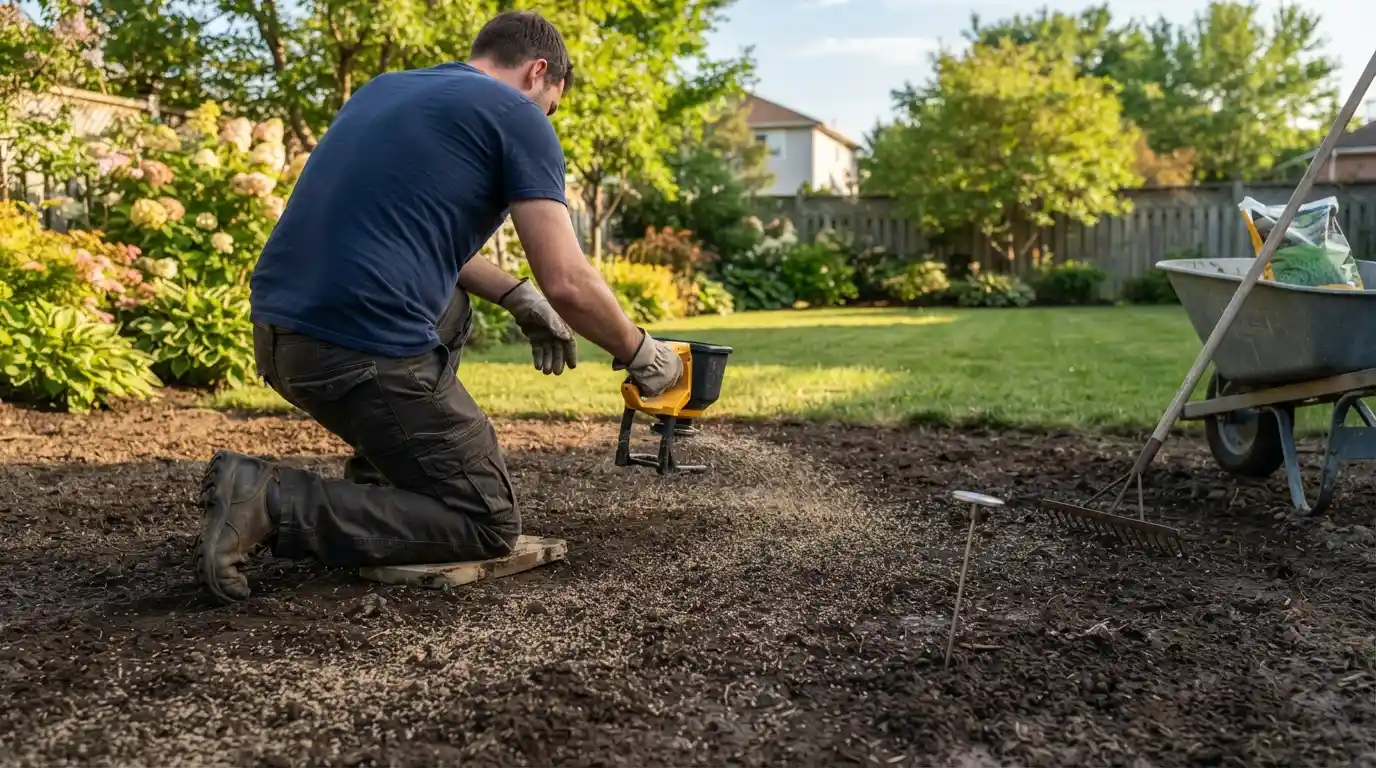
Seeding rate trips people up more than you’d think, and heavier isn’t automatically better. A new lawn generally wants somewhere between one and three pounds of coated bermuda seed per thousand square feet. Overseeding a thin existing lawn only needs a half pound to a pound in that same space. My uncle actually went a bit heavier than the label suggested on his second try, figuring more seed meant a thicker lawn faster, and ended up with crowded patches fighting each other for light and nutrients. A broadcast or drop spreader spreads things far more evenly than tossing seed by hand, which almost always leaves thin strips next to overlapping heavy patches.
Depth matters just as much as rate. Bermuda seed needs sunlight to germinate, so cover it lightly, no more than a quarter inch of soil or a thin layer of mulch. Bury it deeper than that and it just won’t sprout, no matter how well everything else went. After spreading, a light rake works the seed into decent contact with the soil without pushing it too deep, and a light roll or tamp afterward firms it all in. Getting good seed to soil contact is honestly one of the most skipped steps in this whole process. Seed sitting loose on top of dry dirt struggles to germinate even when everything else is perfect.
Watering, Mowing and the Mistakes That Undo Early Progress
Once seed’s down and germinating, the next few weeks demand real consistency. This is exactly where a lot of otherwise solid bermuda projects fall apart.
Getting the Watering Schedule Right From Day One
Bermuda seed wants frequent, light watering during germination. Aim to mist the area three or four times a day, keeping that top half inch of soil moist without ever letting it dry out completely. My uncle’s second, successful attempt involved literal phone alarms for watering during that first week. Let the soil dry out even once and it can kill seedlings that have barely broken the surface. Germination typically takes seven to fourteen days under decent conditions, though it can drag on to three or four weeks depending on temperature and how consistent your watering actually is.
Once seedlings hit about an inch tall, drop to once a day watering with a bit more water each time, gradually teaching the roots to grow down instead of staying shallow near a constantly damp surface. Overwatering at this stage causes its own headaches too, since standing water or runoff actually starves developing roots of oxygen instead of helping anything along. Once the lawn’s fully established, usually around ninety days in, watering drops back to about an inch total per week, applied deep rather than in frequent light doses. A grayish tint to the grass, or footprints that stick around instead of bouncing back, is bermuda telling you it’s actually thirsty and due for a deeper soak.
Mowing Timing and Long Term Maintenance That Keeps It Thriving
Two inches is the magic number for that first mow, and honestly, waiting is the hard part. Everybody wants to walk on their new grass right away. My uncle made his whole family, dog included, stay off the lawn until he could tug on a blade and it wouldn’t pull loose easily. Cut too soon and you risk yanking young grass right out before it’s really anchored. A dull mower blade doesn’t help either, it just tears through blades rather than slicing them, which stresses the whole lawn at the exact point it can least afford it. He sharpened his mower blade specifically before that first cut, something he’d never bothered with on his old fescue lawn.
Six weeks in is usually when fertilizing starts, and slow release nitrogen keeps things growing at a steady pace instead of surging then stalling out. Weeds are trickier than you’d think here too. You want to hold off on pre emergence products until you’ve mowed the new grass two or three times, since spraying too early can just as easily stop your bermuda from coming up as it stops the weeds. After that, bermuda mostly runs the show on its own, sending stolons and rhizomes out in every direction to patch up bare spots without anyone lifting a finger.
Conclusion
Two tries, same bag of seed, completely different lawns. That’s really the whole lesson my uncle learned the hard way. It wasn’t the seed’s fault the first time, it was cold dirt he never bothered checking. Prep the soil properly, don’t oversow just because more feels like it should mean better, and stay on top of watering those first couple weeks without skipping a day. Do that, and a soil thermometer and a little patience will get you a lot further than luck ever will.
Frequently Asked Questions
How Long Does Bermuda Grass Seed Take to Germinate?
Bermuda grass seed typically germinates within 7 to 14 days under warm, consistently moist conditions. Cooler soil or inconsistent watering can stretch that window to three or four weeks, or prevent germination entirely.
What’s the Difference Between Hulled and Unhulled Bermuda Seed?
Hulled seed has had its protective coat removed, allowing faster water absorption and quicker germination. Unhulled seed retains that coat, spreading germination over a longer window as a natural hedge against inconsistent conditions.
When Is the Best Time to Plant Bermuda Grass Seed?
Late spring through early summer, once soil temperatures consistently reach 65 to 70 degrees Fahrenheit, is the ideal window. Fall planting should wrap up at least 90 days before the area’s first expected frost.
How Much Bermuda Grass Seed Do I Need Per Square Foot?
New lawns typically need one to three pounds of coated bermuda seed per 1,000 square feet, while overseeding an existing lawn only requires a half pound to a pound in that same area.
