
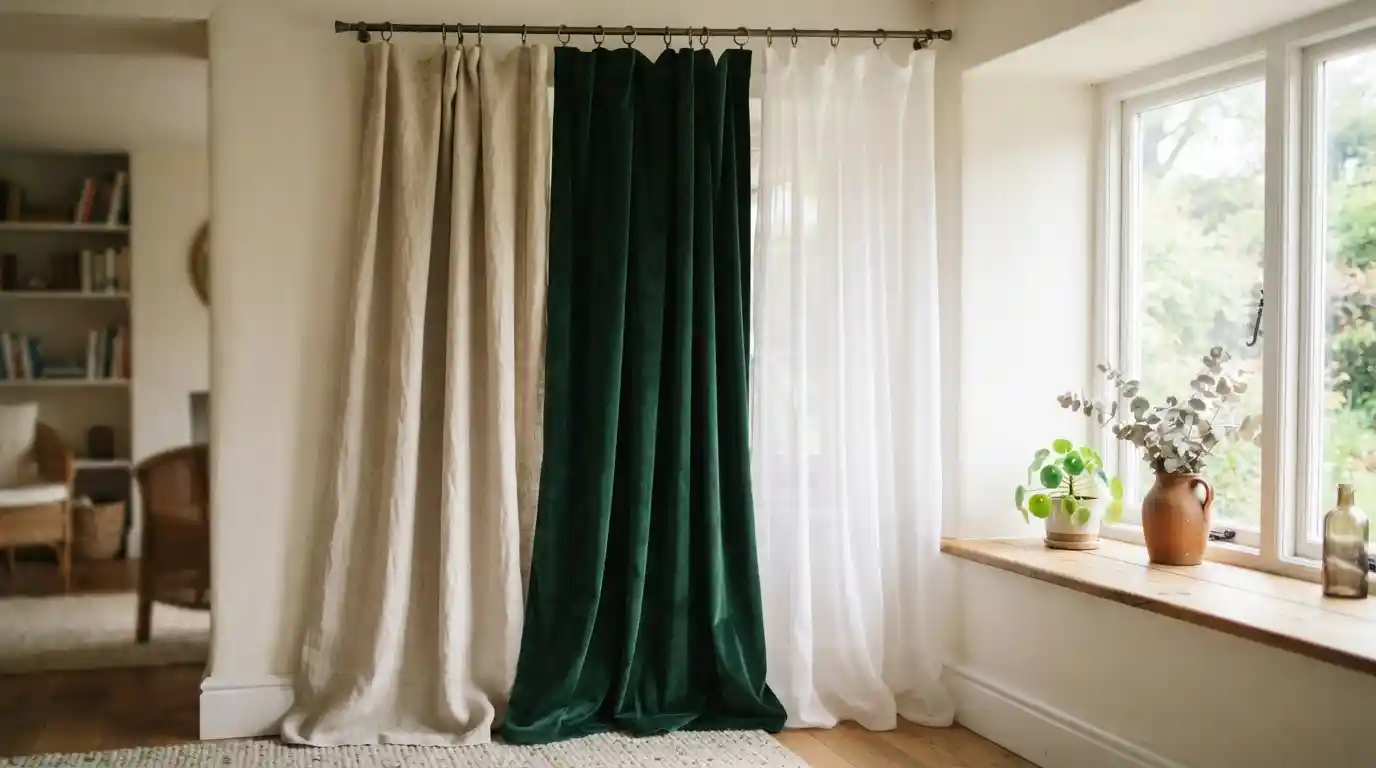

My uncle picked silk curtains for his Arizona sunroom because they felt incredible in his hands at the store, and honestly I get it, there’s something about silk that makes you want to believe it’ll last forever. It didn’t. By the time he called me about it a year and a half later, every fold facing the window had gone stiff and yellowed, almost like old newspaper that’s sat in a car dash too long. He hadn’t thought to ask what desert sun does to silk, and to be fair, nobody at the store brought it up either. This is basically how curtain regret works. You fall for the fabric in the showroom, not for what your actual window is going to throw at it for the next five years.
Fabric Comes Before Color, Before Pattern, Before Anything Else
I’ve rearranged enough rooms at this point to know a curtain can look perfect the day it goes up and still be wrong for the space. The showroom moment doesn’t tell you anything about year three.
Cotton and Linen Handle the Rooms Where Life Actually Happens
Cotton is what most people end up with eventually, and there’s a reason for that. It’s forgiving. My sister’s kitchen curtains are cotton and they’ve survived four years now, one very messy toddler, spaghetti nights, a dog who apparently thinks curtain hems are a personal chew toy. There’s one thing worth knowing before you buy unlined cotton though. At night, with the lamps on inside, a thin panel can look kind of flimsy from the street, almost translucent in a way that photographs badly. Adding a lining fixes that, if your budget has room for it. Linen is a different animal entirely. It’s got this loose, slightly rumpled quality that I personally love and my mother, for the record, cannot stand.
Give it enough washes and it actually gets better, softer, more textured, unlike a lot of synthetics that just wear thin and sad over time. The tradeoff is that linen wants a bit of babying, usually a warm iron or steaming it while it’s still damp off the line. Neither cotton nor linen belongs in a steamy bathroom or above a stove that runs constantly, since both fabrics soak up moisture and mildew shows up faster than you’d think in that kind of humidity. Everywhere else in a normal house though, one of these two fabrics is probably your answer.
Silk and Velvet Want a Quiet Room, Not a Busy One
There’s a reason silk shows up in every glossy dining room photo you’ve ever scrolled past. That soft sheen and heavy drape look genuinely expensive, and honestly they are. What nobody tells you upfront is how badly direct sun destroys it, the exact thing that wrecked my uncle’s sunroom curtains. Velvet is a completely separate story. It’s heavy in a good way, blocks light properly, and does something interesting acoustically too, it just quiets a room down a little. Bedrooms and media rooms love velvet for this reason.
The catch is that it bruises easily if you handle it wrong, crush marks show up if someone leans against it or brushes it the wrong direction, and you’re basically stuck taking it to a dry cleaner rather than tossing it in a machine. My honest take, after watching my uncle’s sunroom disaster and hearing a couple similar stories from friends over the years, is that silk and velvet deserve a room that doesn’t get hammered daily. Formal spaces. Adult bedrooms. Windows that aren’t baking in afternoon sun for six hours straight. If you’ve got kids or a dog with a taste for fabric, save yourself the heartbreak and put cotton or a tough polyester blend somewhere the chaos actually happens.
Some Rooms Need a Fabric That Can Take a Hit
Certain windows don’t need elegance so much as they need something that survives spills, sun, and constant hands touching it.
Polyester Deserves More Credit Than It Gets
People write polyester off as the cheap option and I think that’s unfair. It doesn’t wrinkle without effort. It holds its color under sun exposure longer than most natural fabrics manage. It goes through a washing machine without complaint, which matters more than you’d expect. A friend of mine runs a daycare out of her own living room, and her curtains are polyester on purpose, because they get washed monthly and still look decent years in. There’s a version of polyester now that’s woven to look almost exactly like silk, at a much lower cost, which is probably why it turns up in so many budget renovations without looking cheap once it’s actually hanging.
The one real downside, if I’m being honest, is smell. Polyester holds onto odors more stubbornly than natural fibers do, which matters if your kitchen sees a lot of frying or heavy cooking. Then there’s performance fabric, which takes the durability thing even further. The color gets dyed all the way through the fiber instead of sitting on top, so years of sun don’t fade it the way a regular cotton curtain eventually will. These started out in boats and patios before making their way indoors, and they’re honestly the smartest choice for a sunroom or a window near a patio door that gets pounded by daylight all afternoon.
Sheer or Blackout Depends Entirely on What the Room Needs From It
Sheer curtains have exactly one job. Let light in, offer a little privacy, nothing more ambitious than that. Voile and light chiffon are the fabrics you want here, airy stuff that moves if a window’s even cracked open. Blackout is the opposite end of things, thick weave or a special lining built to stop light almost completely, and that matters a lot more than people expect in a bedroom or especially a nursery. My cousin put blackout curtains in her newborn’s room last spring after weeks of naps falling apart the second afternoon sun hit the crib. She noticed a difference within days, not weeks.
Semi sheer sits in the middle, letting in a decent amount of light while still giving more privacy than a plain sheer panel ever could. A living room usually doesn’t need true blackout. A bedroom almost always benefits from it. My cousin actually ended up doing both in the nursery, a sheer for daytime and a blackout panel that only closes for naps and bedtime, because picking just one meant giving something up either way.
Keeping Whatever You Bought From Falling Apart Early
Even the right fabric choice wears out faster than it should if nobody takes care of it, and honestly the care part is simpler than people assume.
How You Wash and Dry Matters More Than People Think
Cotton and polyester both survive a gentle cold cycle without much drama, which covers most curtains in most houses. Linen wants a delicate cycle, then hang it up right away instead of leaving it crumpled in a dryer, that’s exactly when the worst wrinkles get baked in permanently. My mom steams her linen curtains while they’re still a little damp off the line, and it works better than ironing them once they’ve already dried stiff, trust me on that one. Silk and velvet are where people try to cut corners and regret it.
Both really do need a dry cleaner, not a home wash, since machine washing can wreck the texture for good. A soft brush vacuum attachment run over curtains every couple weeks clears out dust before it builds up, something almost nobody does until the fabric starts looking dingy. For small stains, a damp cloth and a bit of mild detergent handles it, as long as you catch the spill before it dries in. Read the actual care tag before doing anything drastic. Blended fabrics sometimes behave completely differently than the base material would lead you to expect.
Fading, Mildew and Shrinkage Sneak Up Slowly
Fading is sneaky. You usually don’t notice it until you move a couch or a lamp and see the true, unfaded color hiding underneath where sun never reached. Performance fabric barely fades at all, while regular cotton or linen loses color noticeably under years of steady sun. Swapping which panel gets the worst afternoon light every so often stretches even an ordinary fabric’s life by a fair bit. Mildew is mostly a bathroom problem, or a coastal humidity problem.
A relative of mine near the Florida coast found dark spots across her linen curtains after just one summer, something that a plain polyester panel in that same window would’ve shrugged off without issue. Shrinkage tends to surprise people after the very first wash, since natural fibers pull up a bit no matter how gently you treat them. Ordering a little extra length before you hang anything for the first time saves you from discovering that shrinkage as an unpleasant surprise a month later.
Conclusion
Most curtain regret comes down to falling for a fabric in a showroom without asking what your actual room is going to do to it. Cotton and linen work for most everyday spaces. Silk and velvet deserve a quiet room that doesn’t see much abuse. Polyester and performance fabric earn their place wherever sun, spills, and daily handling are just part of life.
Layer sheer with blackout and one window can handle both daytime brightness and nighttime privacy without giving anything up. Get the fabric right for the room first, then keep up with basic washing and a little attention to fading, and that same set of curtains still looks good years down the line instead of falling apart in a single season.
Frequently Asked Questions
What Is the Best Fabric for Curtains in a Sunny Room?
Polyester and performance fabrics handle steady direct sunlight far better than silk or plain cotton. The solution dyed versions especially resist fading since the color runs all the way through the fiber, which matters a lot in a room getting hammered by afternoon light every day.
Can Curtains Be Machine Washed at Home?
Cotton and polyester generally handle a gentle cold water cycle just fine. Silk and velvet really do need a professional dry cleaner instead, since a home wash can permanently ruin their texture and sheen.
What’s the Difference Between Sheer and Blackout Curtains?
Sheer curtains let daylight filter through with only partial privacy, good for daytime living spaces. Blackout curtains use a dense weave or lining to block light almost completely, which matters most in bedrooms and nurseries where real darkness affects sleep.
How Do I Stop Curtains From Fading in Direct Sunlight?
Solution dyed or performance fabric curtains hold their color far longer than standard cotton or linen. Rotating panels now and then, so one side isn’t always taking the brunt of the sun, also helps stretch the color out over several years.
