
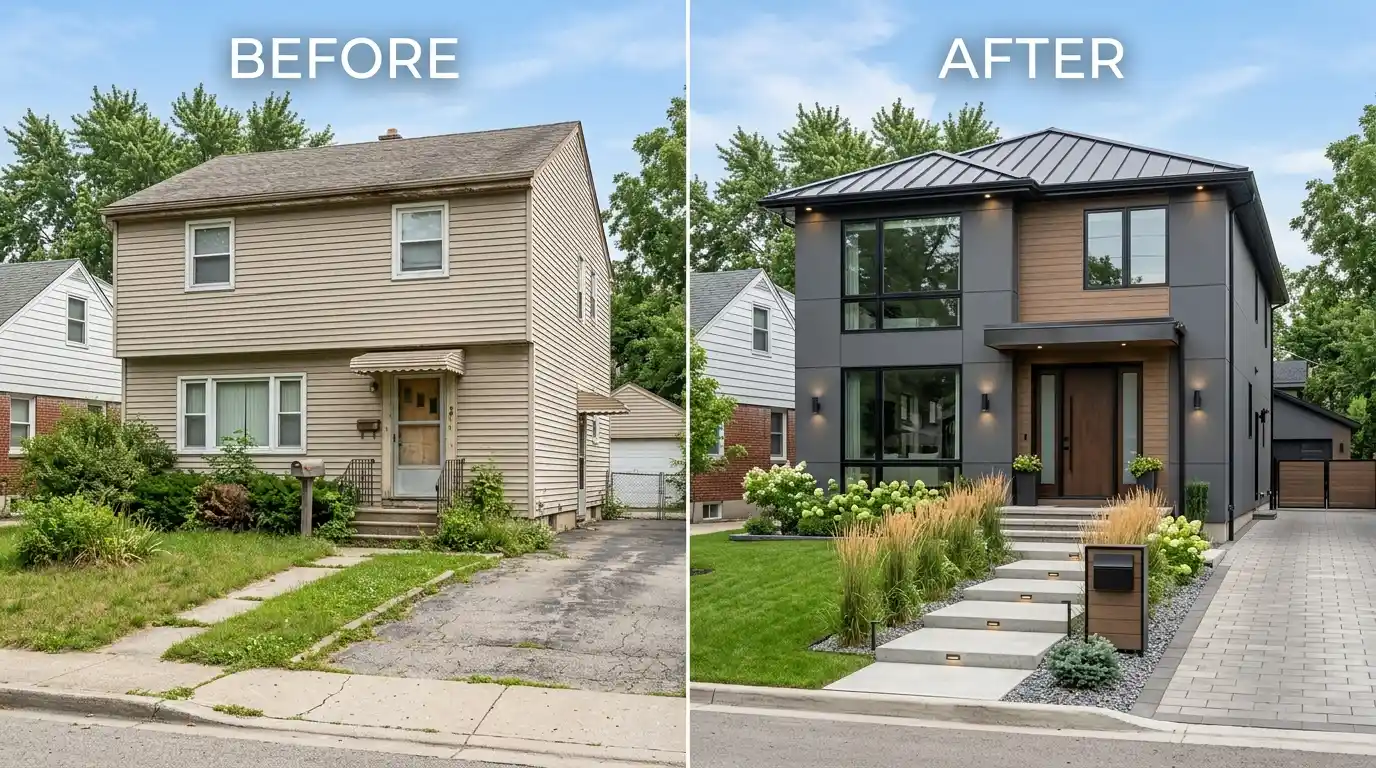

The first step that most homeowners begin when renovating their homes completely is usually to come up with an initial number in mind. This is usually inaccurate not because they are poor in mathematics, but because they have no clue on what they are really supposed to pay for until the time comes for demolition work and opening up of the walls. I have seen budget conscious people under budget their projects by 20% to 40%.
I have seen a client shocked upon discovering knob and tube wiring in a kitchen they had assumed needed just new cabinets. The project was true, but the budget was not. This guide will help cut the myth and give you the real figures for whole home renovations costs in 2026.
What Whole Home Renovations Actually Cost in 2026
Cost is where whole home renovation planning either succeeds or collapses. The numbers vary widely but they vary predictably, once you understand the drivers.
Understanding the Real Price Range for Whole Home Renovations
The majority of homeowners renovating their whole house in 2026 have costs ranging from $19,500 to $88,400. The national average cost comes around $52,275 for a 1,250 to 1,600 square foot house. But Renoworks analysis of this issue indicates that the average whole home renovation ranges from $80,000 to $200,000 for full structure and systems upgrades. The Angi research states that the full range goes from $3,000 for basic cosmetic renovation to $190,000 for full house renovation.
The per square foot cost is $15 for basic renovation up to $150 for luxurious finishing. The majority of homeowners who use moderate materials and scope have costs ranging from $60 to $100 per square foot. The cost of gut renovation projects where systems are entirely renewed is $100 to $250 per square foot for a 2,000 square foot house.
Room by Room Cost Breakdown for Whole Home Renovations
Knowing how much each room costs is crucial for homeowners to be able to prepare a realistic budget prior to even contacting their first contractor. The cost breakdowns of renovations in 2026 provided by Renoworks are clearly organized into scope tiers. Budget kitchens range between $10,000 and $25,000, mid-range are priced between $25,000 and $65,000, while premium costs exceed $65,000. Powder rooms, basic finishes in bathrooms, are priced at $5,000-$15,000, full baths at $15,000-$35,000, while master baths cost more than $35,000.
Basement finishing ranges between $10,000 and $25,000 basic, between $25,000 and $50,000 mid-range and exceeds $50,000 for a full suite. Cosmetic living room changes are priced from $3,000 to $8,000 and up to $50,000 for an open concept living room. Basic bedroom finishes range from $2,000-$6,000 to $80,000 for bedroom additions. Most exterior projects range between $5,000-$40,000. All together, whole-home renovations in Pennsylvania
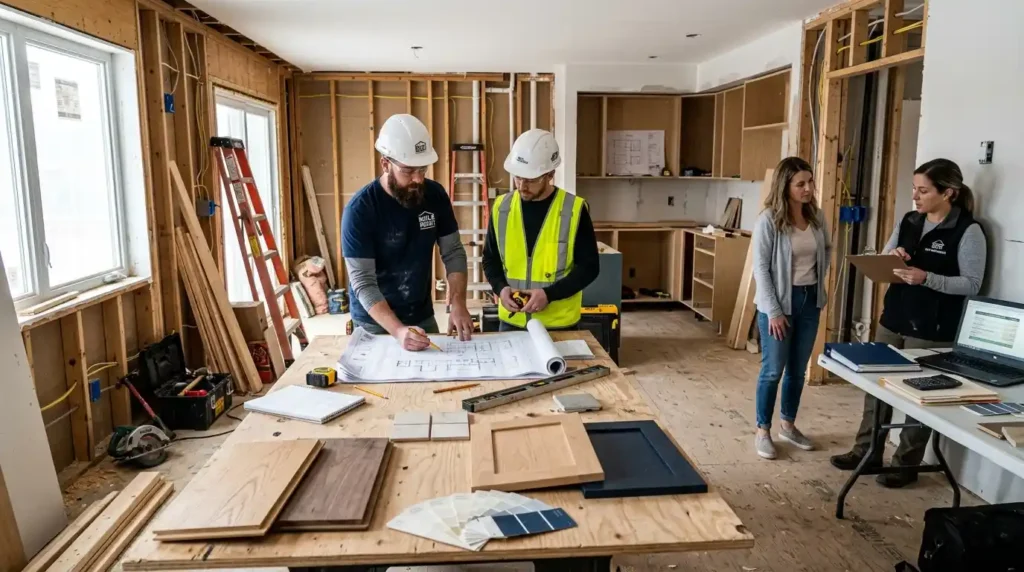
The Hidden Costs That Derail Whole Home Renovation Budgets
Whole home renovations rarely go wrong because of bad design decisions. They go wrong because of costs nobody planned for and surprises hiding inside the walls.
Structural Surprises and System Failures Inside the Walls
Remove a wall from a house built prior to 1980 and you may discover asbestos plan to spend between $2,000 and $8,000 for removal of asbestos. Find out that the wiring in the house is knob and tube and you will be spending another $5,000 to $15,000 to fix this problem alone. It turns out that the wall that was supposed to be removed is actually a load bearing one and you will be adding another $3,000 to $10,000 straightaway. Water damage and termite damage in older houses are additional issues.
As per Angi, older home renovations cost about $100,000 and go up from there since all the old plumbing, electrical, and HVAC will require replacements, not repairs. Such problems are not the exception they are the norm in any whole house renovation that involves older houses. This is why every renovator and contractor that I know recommends that you budget a 15 to 20 percent contingency fee on top of the initial estimate.
Scope Creep, Permits, and the Costs You Forgot to Include
Costs of scope creep in general amount to 10 to 25 percent of overall budgets in full home renovations. It usually begins with one additional outlet, next comes recessed lighting, and next goes tiling to the ceiling rather than 6 inches above counter level. It doesn’t take much time to transform mid-range kitchen into a premium one. Permits are another independent type of costs which are easily overlooked. Building permits range between $500 and $2,500 for full home renovation. Comprehensively issued permits (for additions, changes in structure, whole house renovations) will cost you $1,000 to $3,000.
Permit approval takes 2 to 6 weeks in most cases and even up to 12 weeks for complex constructions. Temporary accommodation in case renovations render the house uninhabitable is $2,000 to $10,000. Also, labor costs and overall project management are significantly higher than one may expect. Professional electrician is $75 to $150 per hour. Plumbers will charge you from $85 to $200 per hour. Finish carpenter will be $60 to $120 per hour. In a busy market it takes 3 to 6 months to book good contractors; rushing into whatever is available is how home renovations fail.
How to Plan and Execute Whole Home Renovations Without Losing Control
Planning separates the whole home renovations that finish on budget and on time from the ones that do not. The process is straightforward but only when followed correctly.
The Five Step Budget Planning Process That Actually Works
Founder of VM Power Construction Vincent Karaca, who has 23 years of practical experience in the field, provides an approach to budget planning, which avoids most of the mistakes made during renovations. First, you need to determine all the scope of works prior to receiving any quotes. The second step is to estimate the cost of permits from your township or municipality. Next, obtain at least three quotes from contractors and compare them to each other. Then, increase your estimate by 15-20 percent.
Finally, set your budget and lock pricing prior to construction starts. Prices for materials increased by 3-15 percent for major plumbing brands such as TOTO, Moen, Delta, and Kraus from December 2025 to February 2026. On January 1, 2026, flooring and slab manufacturers Emser and Cosentino raised their prices by 6-10 percent. People who locked pricing in 2025 managed to avoid all these price increases, which is the real reason for locking material selection earlier.
Hiring the Right Contractor for Whole Home Renovations
It is not the design, nor the material, nor even the budget, but the contractor who you choose will determine the success of your entire home renovation project. Make sure that they have certifications and licenses. Ensure that you check their BBB profile. Inspect past projects from those with similar requirements. Also, make sure that you know how long they have been in the business and how they communicate during the process. Steer clear of contractors that pressure you to sign the contract immediately without reviewing the entire scope of work.
Take note of contractors that cannot respond quickly to simple questions during the quoting process and continue doing so during the construction. As stated in the Harvard Joint Center for Housing Studies, annual spending on improving and maintaining owner-occupied housing is expected to rise to a record $526 billion by Q1 of 2026, an increase of 2.5% year over year. This means that more contractors are busy and that good contractors are booked. Make sure you book yours soon.
Conclusion
Whole house renovations are some of the biggest financial investments that anyone ever makes in their life. Those who win the whole deal are always those who knew the real cost margin before putting any money down on the table, those who allowed for 15 to 20 percent of margin from day one in their budget and those who employed contractors with the required experience and not the cheapest option. Be it a gut job or a modest whole house renovation, everything follows the same pattern: define the scope, budget after that, select your contractor and get your materials at stable prices.
Frequently Asked Questions (FAQ’s)
The majority of home renovations will generally take from two to eight months on average. For example, the total gut renovation for a 2,000-square feet house usually takes from three to six months. For complicated projects that involve structural modifications, system replacement, and higher quality materials, the duration may range from four to twelve months or even more. Always leave additional time for the permit approval, which will take two to six weeks in most places.
Normally, yes, remodeling a house will be cheaper by 20 to 50 percent compared to demolishing an old one and constructing the new. In case the structure has a damaged foundation or needs replacement of all outdated HVAC, plumbing, and electrical systems, a new construction will be more economical. To build a house costs from $350,000 to $800,000 on average, while the price of home renovation will start from $100,000 to $200,000.
There are several renovation projects that bring you back more than 85 percent of your investment: siding replacement, replacing the garage door, adding bathrooms, windows replacement, and roofing replacement. The majority of home remodeling projects provide an ROI of 50 to 85 percent. The kitchen remodeling project brings 60 to 80 percent of return on investment in resale value in the majority of cases. The basement finishing returns around 70 percent of investment.
Major renovations usually require permits, especially if you plan to change structure, update plumbing or electrical system, replace heating and cooling system, and add rooms. Permits for major renovations cost between $500 and $2,500, while permits for complete structural alterations and additions cost $1,000 to $3,000. Cosmetic changes, such as painting or replacing flooring, usually do not require any permits.

3 thoughts on “Whole Home Renovations: 7 Powerful Truths That Save Smart Homeowners From Costly Mistakes”