
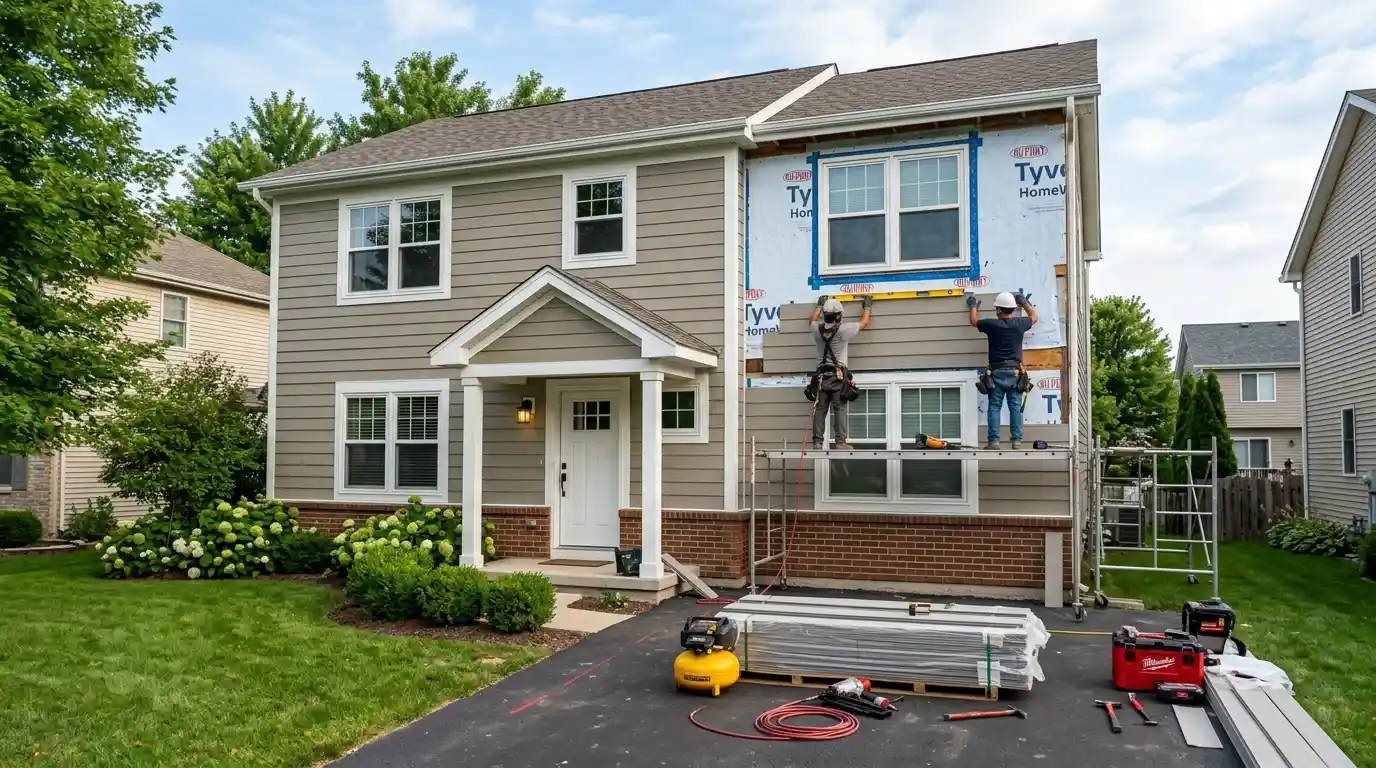

Most homeowners start the siding contractor search in the wrong place. They open a browser, search “siding contractor near me,” collect three names from the first page of results, and treat the lowest bid as the starting point for a negotiation. That sequence produces a predictable outcome a siding company selected primarily on price, installed by a crew whose material-specific experience nobody verified, backed by a warranty whose terms nobody read until something went wrong eighteen months later.
I’ve watched this play out enough times including one particularly instructive situation involving a Minneapolis homeowner who got a vinyl siding installation at a price that seemed genuinely competitive, only to find moisture infiltration behind the panels by the second winter because the house wrap had been overlapped in the wrong direction and what moisture infiltration behind wall cladding eventually produces inside the home is exactly the kind of compounding problem that a $50 per hour licensed contractor with correct installation technique prevents and a low-bid crew creates to know that the contractor selection process matters more than the material selection process. You can upgrade the material. You cannot retrofit the installation.
The siding contractor who gets the job right is rarely the cheapest one. They’re the one who asks the right questions before quoting, discloses their subcontractor arrangement upfront, pulls the permit without being asked, and hands over warranty documentation at project completion rather than promising to email it later.
The Material Decision That Changes Everything About Which Contractor You Need
Before the contractor search starts in earnest, the siding material decision shapes which contractors are actually qualified to do the work and understanding what the building material underneath the cladding is doing structurally gives you a clearer picture of why the installation sequence and moisture barrier requirements matter as much as the siding panel itself. This is the sequencing error most guides skip: treating contractor selection and material selection as parallel tracks when they’re actually sequential. Material first. Then contractor.
Vinyl siding is the most forgiving material from an installation standpoint it’s lightweight, cuts with standard tools, and the installation process is well understood across a wide range of contractor experience levels. Insulated vinyl panels add a layer of rigid foam backing that improves the R-value and thermal performance meaningfully, which matters in cold climate zones where energy savings across the heating season justify the modest cost premium over standard vinyl.
Fiber cement siding James Hardie siding specifically, which dominates the category is a different conversation entirely. HardiPlank and Hardie Board products are heavy, require specialised fiber cement cutting tools, generate silica dust that requires a respirator during cutting, and have specific fastening patterns and moisture barrier requirements that directly affect both the finished installation quality and the manufacturer warranty coverage. A James Hardie preferred contractor or manufacturer-approved installer has documented installation training specific to the product. A general exterior contractor who has installed Hardie Board a handful of times has not. That distinction matters when the 30-year non-prorated transferable warranty is part of the value proposition you paid for.
Engineered wood siding LP SmartSide and TruWood being the primary brands sits between vinyl and fiber cement on the installation complexity spectrum. It’s lighter than fiber cement and cuts with standard woodworking tools, which reduces labour costs and makes it more approachable for a broader range of residential siding contractors. LP SmartSide carries a 30-year transferable warranty with a 7-year replacement warranty; CertainTeed WeatherBoards offers a 50-year transferable warranty on fiber cement. These warranty lengths only deliver their value if the installation meets the manufacturer’s installation guidelines which brings the contractor’s material-specific experience back to the centre of the decision.
Metal siding aluminium, steel, or the seamless steel panels with concealed fasteners at the premium end requires skilled labour that accounts for 45% to 60% of the total project cost per square foot. Factory-cut panels reduce on-site cutting and handling time, but scheduling deliveries efficiently and managing material handling on site requires a siding contractor whose project management matches their installation skill. Cedar siding, redwood siding, and board and batten wood siding sit at the high-maintenance end of the material spectrum beautiful, expensive to install properly, and entirely dependent on correct caulking, sealing, and flashing details to perform over time.
The Credential Verification That Most Homeowners Skip and Shouldn’t
Licensed and insured is not a contractor description. It’s a minimum floor. Every reputable siding contractor should be able to produce a certificate of insurance, a license number, and bonding documentation without hesitation. What separates the verification step from the conversation step is actually doing the lookup rather than accepting verbal assurances.
State licensing board verification is a ten-minute process. Search your state’s contractor license lookup tool each US state maintains one enter the license number the contractor provided, and confirm the status reads active or current rather than expired, suspended, or revoked. Check the license type covers residential exterior work specifically, not just a general contracting classification that technically includes siding but doesn’t reflect any specialisation. The National Association of Remodeling Industry notes that verifying these documents meaningfully reduces project risk which is a measured way of saying that the contractors who resist the credential conversation are telling you something important about how they operate.
Insurance verification goes one step further than requesting a certificate. Call the insurer directly and confirm the liability insurance and workers’ compensation coverage are current. A certificate of insurance has a date on it. It doesn’t guarantee the policy hasn’t lapsed since the document was printed. Workers’ compensation coverage matters specifically because a siding crew working at height on scaffolding or lift equipment represents a genuine injury risk, and without current workers’ compensation, the financial liability for an on-site injury can transfer directly to the homeowner.
Manufacturer certification James Hardie preferred contractor status, GAF certified contractor designation, CertainTeed certified contractor classification adds a layer of product-specific credential on top of the state licensing baseline. These certifications require documented installation training and are tied to enhanced warranty terms that uncertified installers cannot offer. If the siding material you’ve selected carries a manufacturer certification programme, hiring a certified installer is not a premium add-on. It’s how the warranty performs as advertised.
Reading the Estimate Before It Becomes the Contract
Three minimum quotes is the standard recommendation. The reason isn’t to find the lowest number — it’s to establish what the actual scope looks like across qualified contractors and identify any outliers whose pricing reflects either a misunderstanding of the project or an intentional underestimate designed to win the job before change orders arrive.
Reputable contractors offer a free estimate they visit the property, calculate the materials, tools, and man-hours necessary, and provide a written breakdown. What distinguishes a useful estimate from a number on a piece of paper is line-item detail: material cost separated from labour cost, old siding removal cost listed independently, permit fees identified, and any allowances for hidden damage discovery written explicitly into the scope rather than excluded silently.
The cost per square foot reality across materials runs from $4.50 to $8.20 per square foot for vinyl siding installed, through $8 to $20 per square foot for fiber cement repair, to $16 per square foot for seamless steel panels with concealed fasteners. Labour alone runs $2 to $12 per square foot depending on material type and installation complexity, with most professional siding contractors charging $50 to $75 per hour on a time-and-materials basis or a flat rate for the full project. Multi-storey homes requiring scaffolding and lift equipment add to the labour calculation meaningfully the equipment hire and additional set-up time are real costs that honest estimates include and optimistic ones don’t.
Tariff impact on siding materials is a live variable in 2026 that any contractor quoting a project of meaningful scale should be addressing proactively. Material costs aren’t always predictable, and some siding products have seen noticeable price changes from supply chain and tariff pressures. The payment schedule in the written contract should reflect this reality a reasonable deposit, progress payments tied to verified project milestones, and a final payment held until the walkthrough confirms the scope is complete. Any siding contractor requesting full payment upfront is demonstrating something about their cash flow position that the homeowner should take seriously.
What the Contract Must Contain Before Anything Gets Signed
The written contract is where the verbal understanding of the project becomes legally enforceable, and the gap between what most homeowners assume the contract covers and what a typical contractor agreement actually specifies is where most disputes originate.
Start date, completion date, and the process for weather delays need to be explicit rather than approximate. Material specifications not just “fiber cement siding” but the specific brand, product line, colour specification, and finish prevent the contractor substituting a comparable product without disclosure. Subcontractor disclosure matters here too: if the siding company winning the bid plans to run the project through a subcontractor crew, the homeowner has a right to know, and the subcontractor’s credentials should meet the same verification standard as the primary contractor.
The warranty section of the contract should document both the manufacturer warranty and the labor warranty separately. A 30-year manufacturer warranty on Hardie Board siding and a one-year workmanship warranty from the contractor are two different instruments covering two different failure modes. Moisture damage from an installation error is a workmanship claim against the contractor’s labor warranty, not a product defect claim against James Hardie. Understanding which warranty applies to which failure mode before signing is significantly easier than determining it after the fact when the relationship has already deteriorated.
Transferable warranty documentation increases home resale value and buyer appeal in ways that a verbal warranty assurance from a previous owner does not. Ask for warranty registration confirmation in writing at project completion. The final walkthrough sign-off, the lien waiver confirming all subcontractors and suppliers have been paid, and the warranty documentation packet should be in hand before the final payment leaves the homeowner’s account.
A siding contractor who delivers on all three without being chased for them is demonstrating the same professionalism in the close of the project that they showed at the credential verification stage and that consistency is exactly what distinguishes a reputable siding contractor from one you find yourself writing a BBB complaint about six months later.
Conclusion
The siding contractor decision is not made at the point of signing. It’s made earlier at the credential verification stage, at the estimate comparison stage, at the moment you ask for references and actually call them rather than filing the list away. By the time a contract lands in front of you, most of the important signals about how a contractor operates have already been visible. The question is whether you were paying attention to them.
Material selection and contractor selection are connected, not parallel. The right fiber cement siding contractor is not interchangeable with the right vinyl siding contractor, and treating them as equivalent because both descriptions include the word “siding” is how installations fail despite decent materials. Match the contractor’s documented experience to the specific product going on the house. Verify the credentials rather than accepting them verbally. Read the warranty terms before the installation starts rather than after something goes wrong.
The $50 to $75 per hour labour cost, the 30-year transferable warranty, the line-item estimate that breaks out old siding removal separately from new installation these are not premium expectations. They are the baseline that any reputable siding contractor should meet without negotiation. Hold that line from the first conversation to the final walkthrough sign-off, and the siding project that follows will be one that holds up across seasons rather than one that becomes an expensive lesson in contractor due diligence.
Frequently Asked Questions (FAQ’s)
A reliable siding contractor should have licensing, insurance, relevant experience, and clear warranty documentation. Verify material-specific skills before choosing one for your project.
The right contractor depends on the type of siding you plan to install. For example, fibre cement siding such as James Hardie requires installers with specific training, whereas vinyl siding may require less specialised experience.
Siding contractor costs vary based on material, labour complexity, and property size. Labour rates commonly range from $50 to $75 per hour, while installed siding prices depend on the material and installation requirements.
Yes, comparing at least three written estimates helps homeowners understand the project scope and identify unrealistic pricing. A detailed estimate should separate materials, labour, removal costs, permits, and possible hidden repairs.
A siding warranty protects against issues depending on whether the problem comes from the product or installation work. Homeowners should review manufacturer and labour warranties before signing the contract to understand what coverage applies.

1 thought on “Siding Contractor: The Complete Hiring Guide for Materials, Costs, Credentials and Contracts”