
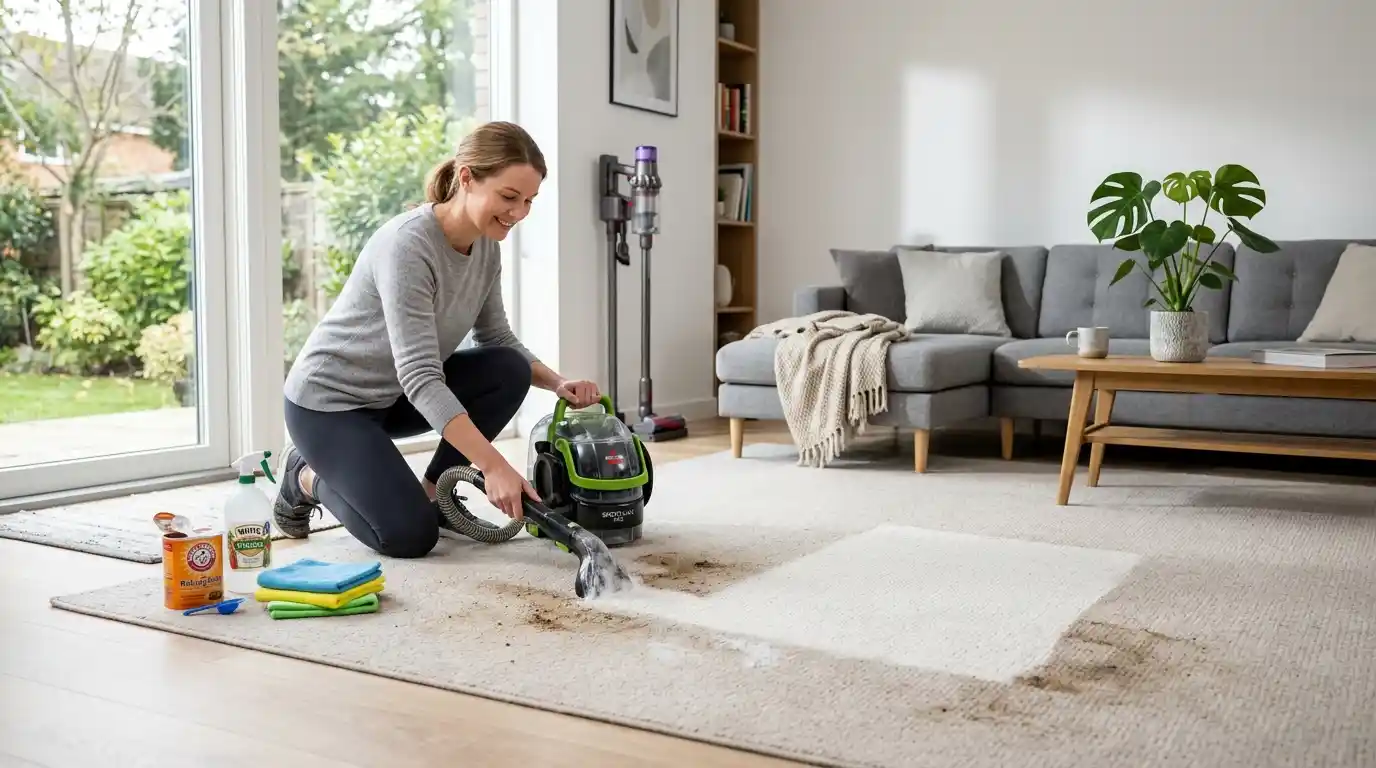

However, when carpets stop being forgiving is when you really start noticing. I saw firsthand how quickly a glass of red wine can turn a cream colored living room carpet into a sight that can actually make you upset, taking roughly twelve seconds. Whether it is an easy-to-remove stain or a permanently dirty patch depends on speed, technique, and avoiding the temptation to scrub. How to clean a carpet seems easy enough, but there is at least one thing that even those who know how to clean a carpet usually do wrong. Let’s go through all the methods that are worth trying when you want to clean a carpet properly.
How to Clean a Carpet Using the Right Approach From the Start
Before reaching for any cleaning product, the type of stain and the type of carpet fiber must guide every decision. Getting this wrong costs time, money, and sometimes the carpet itself.
Why Carpet Fiber Type Changes Everything
Natural fibers like wool do not react well to aggressive cleaning agents and scrubbing. Synthetic fibers like nylon and polypropylene can tolerate tougher treatment methods but can also succumb to residues when not thoroughly rinsed out. Expensive or delicate carpets require a more careful approach right from the beginning. Never use a product without first testing it on a small patch and waiting for 24 hours to see the results. It is the only thing that will stop you from making costly errors when cleaning your carpets at home.
The Blotting Rule That Applies to Every Stain
Whether the stain comes from juices, coffee, pet urine, blood, or mud, the universal rule to follow is blot, don’t rub. Take a clean white towel or paper towel and apply pressure, and then lift. Start blotting from the edges to the middle in order not to spread the stain. Rubbing will drive the stain even deeper into carpet fibers and may damage the delicate pile permanently. If there is a thick stain with some solid residue, then it should be scooped out first using a spoon or butter knife. Speed is crucial since newly made stains remain closer to the surface of carpet fibers and thus can be removed much easier.
How to Clean a Carpet With DIY Solutions That Work
Homemade carpet cleaners are genuinely effective for most common stains when used correctly. The key is knowing which solution matches which stain type.
Baking Soda and Vinegar for Odors and Stubborn Stains
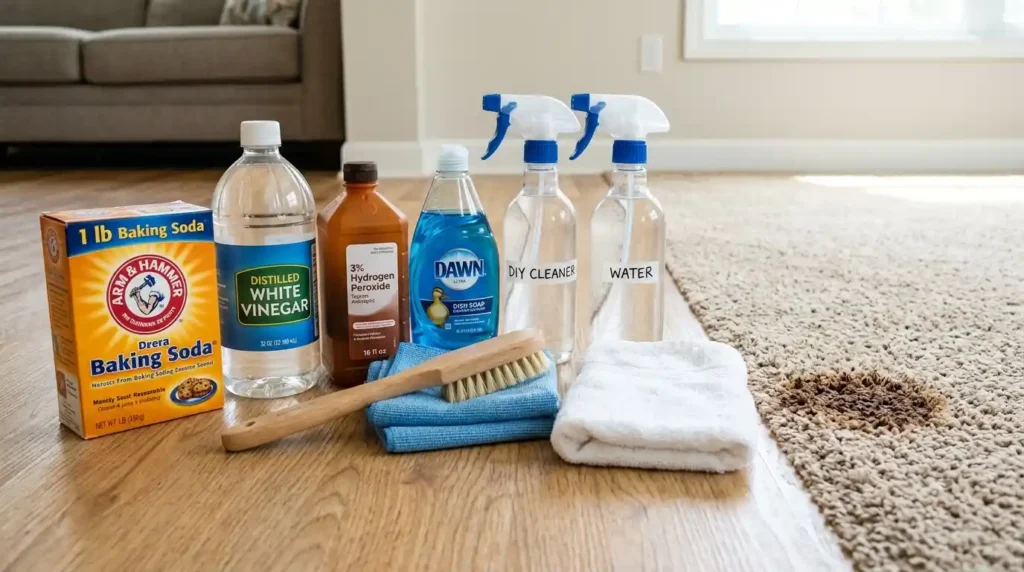
The second most dependable tool for how to clean a carpet from pet smell and other odor is baking soda. Spread it heavily all over the stain and let it sit there for at least 30 minutes or even for a night if the smell is hard to get rid of. Next, vacuum it all up. If baking soda does not manage to deal with some stubborn stains, spray a little bit of white vinegar and hot water mixture onto it after the use of baking soda. Its foaming effect will loosen any residues that are stuck to the carpet fibers. After the spot is dry, vacuum it again.
Hydrogen Peroxide and Dish Soap for Tough Stains
Coffee stains, red wine stains, as well as spills containing high amounts of tannin, should be treated by using a solution consisting of warm water, dish soap, and white vinegar sprayed onto the carpet from the spray bottle. The solution needs to stand for 5 to 15 minutes before being blotted off with a dry cloth. Old stains as well as dark stains on light carpets may be successfully removed with the help of diluted hydrogen peroxide which is a very mild oxygen-based cleanser. One needs to use cold water to wash protein-based stains such as blood because warm water fixes those kinds of stains.
Enzyme Cleaners for Pet Stains and Urine Odors
Pet stains prove to be some of the most difficult stains to get rid of when it comes to carpets. This is because the urine of the pets penetrates into the carpet fiber, the carpet backing, and finally the sub-flooring of the carpet. Enzyme-based cleaners help in breaking down the proteins responsible for the stain and the smell in the carpet. Apply the cleaner generously and cover the treated area with a damp cloth for 10 to 15 minutes to keep it moist while the solution works. Never use any ammonia-based cleaners for pet stains, since it will only encourage them to go back to the same place due to its smell.
How to Clean a Carpet Deeply Without Always Hiring a Professional
Deep cleaning a carpet at home is possible without renting expensive equipment, though knowing the limits of each method helps set realistic expectations.
How to Clean a Carpet Without a Machine
Cleaning carpets without the use of any equipment involves the usage of the baking soda-vinegar mixture in a large area along with a scrub brush to get the solution into the pile before blotting. The best way to clean would be to thoroughly vacuum the carpets first and then apply the mixture in parts. This should be done systematically moving across the whole carpet in one direction, rather than cleaning patches of the carpet randomly.
The tools required for the cleaning process include a clean spray bottle, a bucket of warm water for rinsing and several microfiber cloths. The final step would be pressing dry towels against the pile after the cleaning process and airing out the room using fans or opened windows. Do not walk on the carpet while it is still wet as wet carpets soil very easily.
When to Rent a Machine or Call a Professional
The carpet cleaning equipment sold at Home Depot, Angi-listed services and specialized stores utilizes the process of hot water extraction, which is highly effective at removing dirt from the carpets in contrast to manual cleaning. Never use low-foaming cleaners that are suitable for your particular cleaning equipment and consult the instructions before you use anything else. Homemade solutions can clog the air flow and damage some parts inside the equipment if they create too much foam.
In case you have a wool carpet, valuable rug or if you have recurring stains in the case of the process called wicking when the dirt in the pad pulls the liquid back up, professional extraction is your best bet. ServiceMaster Clean and similar services offer specialized solutions for dealing with wicking and odors removal and eliminating allergens at once. Annual professional cleaning is also required by many carpet warranties.
Conclusion
Learning how to clean your carpets properly is one of the most helpful things you could ever learn, because all carpet issues will only worsen with time. With techniques like using baking soda for deodorizing, enzyme-based cleaners for pet stains, and hot water extraction to get rid of dirt, there’s pretty much everything you would ever need to know about the maintenance of most carpets. Remember to blot and not scrub, to match your cleaner to the type of stain and carpet fibers, to rinse all soap residues, and to ensure complete drying before any steps that require walking on a freshly cleaned carpet surface.
Frequently Asked Questions
How frequently should I deep clean my carpet?
In most cases, once a year is sufficient for both aesthetic purposes and keeping your carpet clean. In case you have pets or kids, or there’s high traffic in your home, twice a year deep cleaning would be more preferable. Weekly vacuuming helps to keep the amount of dust low between deep cleans.
Why does my carpet stain reappear?
The phenomenon is referred to as the wicking residue the moisture in the padding layer of your carpet attracts the stains while drying up. This situation appears when the carpet was excessively wetted during the process of cleaning. Professional extraction tools get rid of moisture much better than hand cleaning techniques.
Is white vinegar safe for all types of carpets?
White vinegar is not going to cause any harm to synthetic carpets such as nylon or polypropylene. On the contrary, natural wool can be ruined because of the acidic properties of the liquid. You need to do a test on a non-visible part of the carpet for 24 hours first.
Is white vinegar safe to use on all carpets?
It is perfectly safe to use white vinegar on synthetic carpets such as nylon and polypropylene. The only issue is that the acidic nature of vinegar will damage wool and other natural carpets eventually. It is best to always test a vinegar solution on a small area first.
